
Findings revealed from first UK study into experiences of mothers who are survivors of rape pregnancy


UWE Bristol academics have revealed the findings of the first UK-based study of the experiences of mothers who are survivors of rape pregnancy.
The researchers listened to parenting survivors of rape pregnancy to find out about their lived experiences.
Findings showed that the participants in the research had bonded strongly with their children but held deep trauma which had not been disclosed to services.
The study, led by Hannah Jackson, a Counselling Psychologist trainee and therapist at Somerset and Avon Rape and Sexual Abuse Support (SARSAS), and supported by Dr Jane Meyrick, found that those willing to come forward to talk about their experiences were all young Black mothers who all have daughters. They talked about frequently relying on informal friendship, family, or church communities.
In response to the findings, the researchers have drawn up a list of recommendations. Among these is one calling for the systematic collection of data on rape-pregnancy in maternity services.
On Wednesday 17 December, the researchers will present their groundbreaking research at a parliamentary roundtable event hosted by Natalie Fleet MP and SARSAS. The event comes two months after the announcement of a proposal to change the law which would ensure men convicted of rape would have their parental rights automatically removed concerning any children conceived through rape.
The roundtable event at Portcullis House will bring together policymakers, survivors’ organisations, researchers and frontline organisations to address the urgent need for trauma-informed, culturally sensitive support for women and children affected by rape pregnancy.
Hannah Jackson said: “The study shows that the trauma women went through often meant they didn’t realise they were pregnant until much later. Their young age, life situations and religious pressures also made it hard for them to feel they truly had a choice about whether to continue the pregnancy. Mothers then carried the heavy responsibility of knowing the truth about how their daughters were conceived, constantly weighing up if, when, and how to share that truth.”
"The study shows that the trauma women went through often meant they didn’t realise they were pregnant until much later. Their young age, life situations and religious pressures made it hard for them to feel they truly had a choice about whether to continue the pregnancy. "
Hannah Jackson, lead researcher on the study
Despite its profound impact, rape-pregnancy remains a hidden issue in UK policy and practice. The team's research revealed that an estimated 3,356 rape pregnancies took place in England and Wales in 2021, with an estimated 50 to 70 per cent giving birth. Around five babies a day are born in the UK as a result of rape, yet survivors’ voices are almost entirely absent from the public discourse.
The study was designed with SARSAS. As all eight participants were London-based young Black mothers, a panel of racially minoritised survivors from Little Ro (a racially minoritised survivors’ charity) provided the researchers with their reflections on the data to improve cultural insight, made possible through a grant award from Higher Education Innovation Funding.
Five key themes emerged from the study, and the researchers then compiled a list of eight recommendations in response to their talks with the mothers:
- Asking and telling should be facilitated for survivors in maternity care. There is a clear evidence base for this in parallel services (sexual health, primary care).
- Systematically collect data on rape-pregnancy in maternity services to undo structural stigma and silencing.
- Ensure trauma-informed, culturally attuned care and disclosure practices.
- Reframing motherhood post rape as potentially reparative.
- Culturally attuned therapists with greater diversity in the offer.
- Strengthen collaboration/co-production with community and third-sector organisations and existing lived experience groups.
- Frame rape-pregnancy as a structural issue influenced by inequality, not solely individual trauma.
- Fill the gaps in the research, the diversity of mothers, and explore the role of the baby's gender.
Dr Jane Meyrick, an Associate Professor of Health Psychology in the School of Social Sciences at UWE Bristol, said: “I was really struck that after an open call for participants to take part in this study, the response was overwhelmingly from young Black mothers, from London, with daughters and from Christian backgrounds. This told us so much about who could tell this story and who couldn’t.”
The parliamentary roundtable event will also present resources for sexual abuse survivors and professionals working with them from Dr Elsa Montgomery, of King’s College London. It will be attended by MPs Jess Asato, the new Violence against Women and Girls (VAWG) lead at the Department of Health and Social Care, and Jess Phillips, Parliamentary Under-Secretary of State for Safeguarding and VAWG, and lead on the upcoming new VAWG strategy. The VAWG strategy is due to be published on Thursday 18 December.
A narrated video of a presentation explaining the research study can be found at: https://www.drjanemeyrick.com/vlog-and-video-presentations
Related news

08 October 2026
Innovative new app created to help stroke patients with rehabilitation
A UWE Bristol researcher led a project to develop an innovative new app to help patients recover after having a stroke.

19 August 2026
Researcher to lead £455k body image project supporting people with head and neck cancer
A UWE Bristol researcher has been awarded almost half a million pounds to lead a project to develop a body image programme for people living with and beyond head and neck cancer.

16 July 2026
‘When I got the chance, I followed it with my heart’ – nurse graduates at the age of 64
An electronics technician who retrained as a registered nurse has graduated at the age of 64.
17 June 2026
Scientists develop low-cost tests for people with bleeding and clotting disorders
Patients with bleeding and clotting disorders living in low-income countries could benefit from new low-cost testing devices being developed at UWE Bristol.
15 June 2026
Researchers develop new approach for connecting people with substance use dependency to community support
UWE Bristol researchers have developed a toolkit to help people living with drug and alcohol dependency access community services that support their long-term health and wellbeing.

02 June 2026
International conference on body image and appearance research set to be staged in Bristol
Leading experts from across the globe are preparing to travel to Bristol for a major conference dedicated to body image and appearance research.

02 April 2026
Hypothermia rates halved in babies born before arrival at hospital, new research finds
Rates of hypothermia in babies born before arriving at hospital in the South West of England have halved over the last five years, according to a new evaluation by UWE Bristol researcher Dr Laura Goodwin.
02 April 2026
New NIHR Senior Investigator reflects modern research leadership
Professor Nicola Walsh, Professor of Knowledge Mobilisation and Musculoskeletal Health, has been announced as a Senior Investigator by the NIHR.
17 March 2026
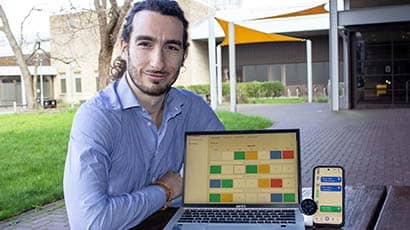
Researcher develops new digital tool for people with anxiety disorders
A UWE Bristol researcher is developing a new digital tool to help people with anxiety disorders.
10 February 2026
Work by UWE Bristol lecturer features in Government’s National Cancer Plan
Work by a UWE Bristol academic has been included in the Government’s National Cancer Plan.
22 January 2026
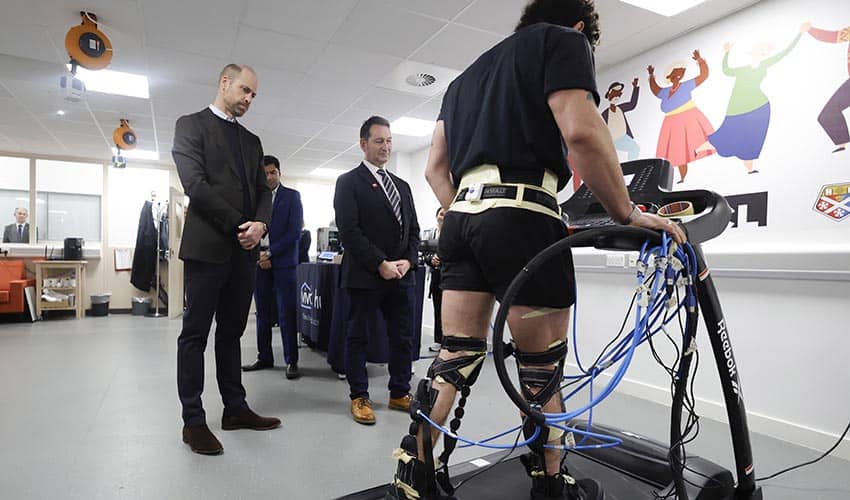
Prince of Wales visits UWE Bristol to see pioneering robotic tech tackling societal health challenges
The Prince of Wales visited the Bristol Robotics Laboratory (BRL) at the University of the West of England’s (UWE Bristol) Frenchay campus today (22 January 2026) to learn about the pioneering robotic technologies being developed to help the ageing and disabled population maintain mental and physical wellbeing and remain independent for longer.
21 January 2026
Dementia support groups developed by professor adopted across globe
A programme started by a UWE Bristol academic to provide emotional and practical support for people with dementia is now being adopted around the world.
You may also be interested in

Media enquiries
Enquiries related to news releases and press and contacts for the media team.
Find an expert
Media contacts are invited to check out the vast range of subjects where UWE Bristol can offer up expert commentary.

Research
Our active, collaborative research community of bold, original thinkers break boundaries, immerse themselves in the now and open the way to new futures.

College of Health, Science and Society
The College of Health, Science and Society is a large, diverse and dynamic part of the University, bringing together experts from Health and Social Wellbeing, Applied Sciences, Education and Social Sciences.