
Social media influencer work is far more demanding than it looks, research finds


A study exploring the mental health impacts of social media influencer work has revealed that life online is far more demanding than it appears.
Researchers from UWE Bristol are conducting research exploring the experiences, practices, and mental health and wellbeing of social media influencers and content creators.
The study, which is currently in the first of two stages, involved in-depth interviews with a small sample of individuals who work as social media influencers and content creators. It discovered concerns from participants that fitted into five broad themes: mental health, follower relationships, authenticity, work–life balance and the commercial aspects of influencer work.
Participants referred to struggles with mental health pressures such as a dependency on engagement and emotional ups and downs linked to performance. One participant said: “If something goes viral, it makes you feel like you're on top of the world and then, if it doesn't, you get really frustrated.”
Influencers mentioned that relationships with followers were both supportive and challenging. While many reported enjoying strong communities, they also discussed facing high audience expectations, pressure to stay constantly active, and occasionally hurtful trolling or criticism. Authenticity was a concern highlighted in the interviews, with creators reporting an expectation to be “real” while also maintaining a consistent personal brand and building trust. They said they tried to balance what they wanted to share with what audiences expect.
Participants in the research said work-life balance was difficult because the job never really stopped. Income for influencers and creators could be unstable, the study found, and they often feel they must always be online to stay relevant. Influencers reported that they were managing brand deals, protecting their personal reputation and navigating the commercial side of content creation, all while trying to stay true to themselves.
"Some viewed the role very positively, highlighting the flexibility, autonomy and creativity it gave them. Others, however, reported far more troubling experiences, including being bullied, trolled and even stalked online."
Dr Moya Lerigo-Sampson
The study is being led by Dr Moya Lerigo-Sampson, supported by Dr Issy Bray and Dr Yvette Morey.
Dr Lerigo-Sampson, an Associate Director for Strategy and Operations in UWE Bristol’s College of Business and Law, said: “The people we spoke to described a surprisingly wide range of experiences. Some viewed the role very positively, highlighting the flexibility, autonomy and creativity it gave them. Others, however, reported far more troubling experiences, including being bullied, trolled and even stalked online. Hearing these latter accounts was particularly concerning and underscores the urgent need for stronger protections for people working in digital spaces.
“It’s possible that people’s perceptions of these job roles are influenced by the coping mechanisms they’ve developed, and this is an area we intend to explore further. Our findings may help inform future policies for brands and agencies that work with creators and influencers. Additionally, given that many people in this industry are self-employed, we hope this research will enable us to develop practical recommendations that individuals can easily incorporate into their working practices.”
Influencers and content creators, whether working full-time or supplementing existing businesses, represent a rapidly expanding area of work. YouTube creators alone contributed £2.2 billion to the UK economy in 2024 and supported 45,000 jobs (Oxford Economics), while global estimates suggest more than 64 million people create content for YouTube. These figures exclude other major platforms such as Instagram, TikTok and Facebook, indicating that the true scale is considerably larger. Influencers have also become integral to contemporary marketing practice, with 75 per cent of advertisers incorporating them into brand promotion strategies (Association of National Advertisers, 2024).
Explaining the decision to conduct research into the mental health impacts of social media influencer work, Dr Lerigo-Sampson said: “My own engagement with social media highlighted how frequently influencers publicly discuss their mental health challenges, which prompted me to question whether academic research had examined this issue.
“While substantial literature exists on the impact of social media use on the mental health of users, particularly young people, there was a notable absence of research focused on those who work within the industry itself. This clear gap motivated us to investigate the experiences and wellbeing of influencers and content creators, emphasising the need for robust evidence and greater awareness to support those working in these online environments.”

For the study, the team of researchers carried out semi-structured in-depth qualitative interviews with influencers. Participants were recruited purposively, based on awareness of their social media profiles, and were included in the study if: they were 18 years of age or older, had a minimum of 1,000 followers on at least one platform, and had done at least one of the following: worked as a brand ambassador, worked with brands to create advertisements, had a sponsorship deal, or received gifts from a brand or company.
Ten interviews were conducted with influencers whose profiles focused on a range of activities and interests, including books, travel, food, beauty, fitness, sports, fashion, and sustainability. All participants had profiles on Instagram, and some had profiles on several different platforms including YouTube, TikTok and Facebook. Follower counts ranged from 1,000 to 521,000.
The team of academics is now planning to expand on their research by conducting a survey, based on initial themes discovered in the interviews.
Dr Lerigo-Sampson added: “We are aiming to examine these themes across a broader group of influencers and content creators. We are seeking participants who create and share content on platforms such as Instagram, TikTok, YouTube, or similar. Participation involves completing an online survey after reviewing an information sheet. The survey should take approximately 10–15 minutes to complete.”
As a token of appreciation, participants to the survey will have the opportunity to enter a prize draw to win one of three vouchers (£300, £100, or £50). The survey can be accessed at https://uwe.eu.qualtrics.com/jfe/form/SV_1NcrHoLXLH3MxPo
Related news
08 October 2026
Innovative new app created to help stroke patients with rehabilitation
A UWE Bristol researcher led a project to develop an innovative new app to help patients recover after having a stroke.

29 September 2026
Findings from study suggest Government guidance on smartphones in schools may not go far enough
A Government decision to leave interpretation of new smartphone policy guidance to individual schools has been questioned by new research from UWE Bristol academics.
24 September 2026
Professor receives international honour during commemorative event for historical Ethiopian diplomat
A UWE Bristol professor whose research has highlighted Bath's connections with Ethiopia's history has received an international honour recognising his work.
14 September 2026
Immersive Arts announces £8.5m second phase funding
Immersive Arts has secured over £8.5 million to continue supporting UK artists working with immersive technologies until 2030.

11 September 2026
New book delivers decades of machine vision research into the hands of students, engineers and researchers
Practical Machine Vision: 2D, 3D and Deep Learning Systems for Real-World Applications is a new practical guide to machine vision that draws on almost three decades of research.
04 September 2026
Most money laundering arrests involve people under the age of 30
A new study has highlighted gaps and inconsistencies in law enforcement of money laundering offences in England and Wales.

19 August 2026
Researcher to lead £455k body image project supporting people with head and neck cancer
A UWE Bristol researcher has been awarded almost half a million pounds to lead a project to develop a body image programme for people living with and beyond head and neck cancer.
08 July 2026
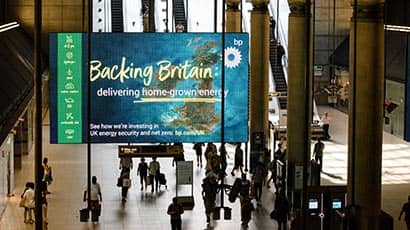
Researchers develop guidance to tackle ‘high carbon’ advertising on London’s transport network
Researchers have answered the Mayor of London’s call for guidance regarding a possible ban on the advertising of ‘high carbon’ products and services on the capital’s public transport network.
01 July 2026
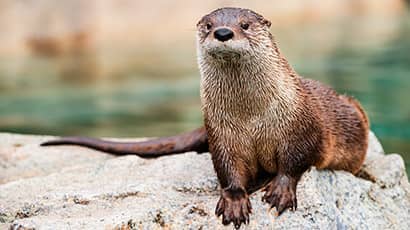
Volunteers experience life as wild animals for pioneering nature conservation project
A group of volunteers experienced life as if they were wild animals for an innovative nature conservation project co-led by UWE Bristol.

23 June 2026
UWE Bristol awarded £233k for project working with children to develop water efficiency solutions
UWE Bristol been awarded £233,000 for a project that will see researchers work with children across the UK to explore their ideas for sustainable water use.
17 June 2026
Scientists develop low-cost tests for people with bleeding and clotting disorders
Patients with bleeding and clotting disorders living in low-income countries could benefit from new low-cost testing devices being developed at UWE Bristol.
15 June 2026
Researchers develop new approach for connecting people with substance use dependency to community support
UWE Bristol researchers have developed a toolkit to help people living with drug and alcohol dependency access community services that support their long-term health and wellbeing.
You may also be interested in

Media enquiries
Enquiries related to news releases and press and contacts for the media team.
Find an expert
Media contacts are invited to check out the vast range of subjects where UWE Bristol can offer up expert commentary.
College of Business and Law
The College of Business and Law comprises Bristol Business School and Bristol Law School who provide a range of undergraduate, postgraduate, higher research and professional courses.

College of Health, Science and Society
The College of Health, Science and Society is a large, diverse and dynamic part of the University, bringing together experts from Health and Social Wellbeing, Applied Sciences, Education and Social Sciences.