
UWE Bristol researchers awarded grant to explore impact of asset recovery on offenders


UWE Bristol academics have been awarded funding to explore of the impact of asset recovery on deterring offender behaviour and disrupting crime networks.
A team led by Dr Amber Phillips, supported by Dr Jonathan Gilbert and Dr Ian Walmsley, has received £90,000 from the National Crime Agency (NCA) and Home Office to evaluate asset recovery and its impact on organised crime groups.
The 15-month project is notable for being funded entirely from proceeds of crime through the Asset Recovery Incentivisation Scheme (ARIS).
Asset recovery is the process of identifying, tracing, freezing, seizing, and recovering assets that have been stolen, embezzled, or acquired through illegal means. Experts believe asset recovery is of key strategic importance in the fight against economic crime, but evidence of its impact remains limited.
The aim of the research project is to examine how asset recovery shapes offender behaviour, focussing on its capacity for deterrence and disruption.
The project aims to generate actionable evidence on the impact of specific interventions across different offender profiles, as well as insights into how offenders adapt and respond. These insights will support the development of more targeted, effective policy and enforcement responses.
Dr Amber Phillips, a Senior Lecturer in Criminology in UWE Bristol’s School of Social Sciences, said: “Using the proceeds of crime to contribute to positive social change is something I’ve been passionate about throughout my career, so I’m especially excited that this project will be funded through ARIS.
“As a team, our hope is that this work will contribute to broadening the evidence base for asset recovery interventions and help lay the foundations for future work on this topic, building on UWE’s growing reputation for research on economic crime.”
Sal Melki, Deputy Director Illicit Finance at the National Economic Crime Centre at the NCA, said: “Money laundering underpins and enables almost all forms of organised crime. Recovering and confiscating criminal assets is one part of the law enforcement response, designed both to act as a deterrent and to return criminal funds to the public purse.
“Understanding more about the impact of asset recovery on criminals and their behaviour will enable us to develop and use the most targeted and effective interventions. We were so excited by the research proposal submitted by the University of the West of England and are looking forward to working with them as they undertake this important piece of work.”
Related news

19 August 2026
Researcher to lead £455k body image project supporting people with head and neck cancer
A UWE Bristol researcher has been awarded almost half a million pounds to lead a project to develop a body image programme for people living with and beyond head and neck cancer.
01 July 2026
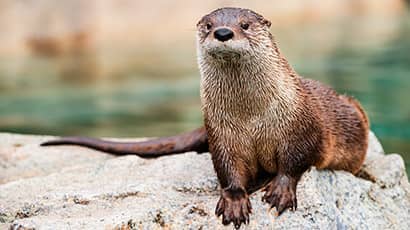
Volunteers experience life as wild animals for pioneering nature conservation project
A group of volunteers experienced life as if they were wild animals for an innovative nature conservation project co-led by UWE Bristol.
02 June 2026
International conference on body image and appearance research set to be staged in Bristol
Leading experts from across the globe are preparing to travel to Bristol for a major conference dedicated to body image and appearance research.
11 March 2026
Lecturer awarded grant for research study aimed at improving Alternative Provision
A UWE Bristol criminology lecturer has received a research grant to help improve education for children and young people who cannot attend a mainstream school due to exclusion, illness or special educational needs.

17 December 2025
Findings revealed from first UK study into experiences of mothers who are survivors of rape pregnancy
UWE Bristol academics have revealed the findings of the first UK-based study of the experiences of mothers who are survivors of rape pregnancy.
07 October 2025
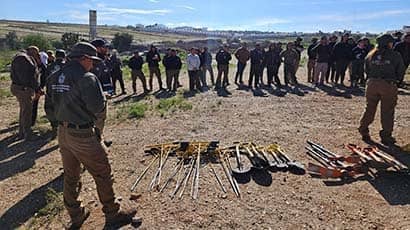
Academic playing role in project to find hidden graves in Mexico using drone technology
A UWE Bristol lecturer is playing a part in a project using drone technology to locate concealed graves in Mexico.

16 September 2025
Dedicated liaison roles ‘instrumental’ for police forces to build trust with sex workers, research finds
A new study from UWE Bristol researchers has found that a dedicated liaison officer could help rebuild trust between the police and sex workers.

11 September 2025
New study to investigate augmented reality as an intervention for emotionally based school avoidance
A UWE Bristol researcher will support a new study exploring whether an augmented reality board game can help young people with emotionally based school avoidance (EBSA).

22 July 2025
Angellica Bell receives honorary doctorate from UWE Bristol
Angellica Bell, a prominent figure on British television and radio, has been awarded an honorary degree by UWE Bristol.

17 July 2025
Want social change? A deeper understanding could be key, study suggests
New study suggests a deeper understanding of social change could help close the gap between challenges and actions, especially on issues like climate change.
16 July 2025
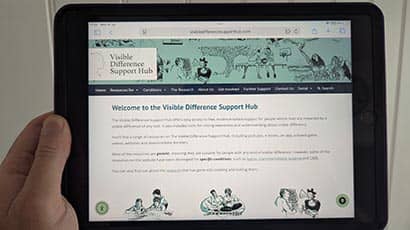
Researchers launch support hub for people with visible differences and their families
A first of its kind website offering evidence-based psychological support for people with visible differences and their families has been launched by university researchers.
27 June 2025
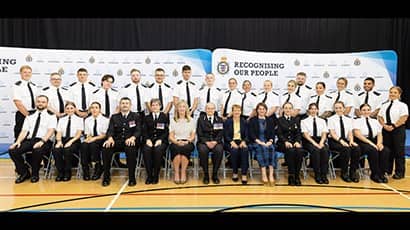
UWE Bristol and Avon and Somerset Police renew partnership to advance police education
UWE Bristol and Avon and Somerset Police have signed a new 10-year agreement, extending their successful partnership to deliver high-quality, forward-thinking police education and training.
You may also be interested in

Media enquiries
Enquiries related to news releases and press and contacts for the media team.
Find an expert
Media contacts are invited to check out the vast range of subjects where UWE Bristol can offer up expert commentary.

School of Social Sciences
If you want a career in social sciences, our inspiring courses will teach you to apply what you've learnt so you can start making a difference as soon as you graduate.