
Immersive theatrical reimagining of Moby Dick brings unique creative captioning to a live audience


A bold new experimental theatre experience by Bristol-based writer and UWE Bristol lecturer Sharon Clark, and artist and creative director Jack Hardiker-Bresson, introduces a new form of creative captioning to make storytelling more accessible and dynamic than ever before.
Premiering at FRAMELESS in London, ‘The Whale’ reimagines the literary classic Moby Dick, blending live performance with technology, art, music and audience exploration to push beyond the boundaries of traditional theatre.
The project was one of nine to receive £50,000 in the first round of Immersive Arts funding – a UK-wide initiative supporting artists to make and share extraordinary immersive work.
Designed for audiences aged 12+, the 20-minute experience is a showcase event, pioneering a new hybrid form of theatre combining large-scale 180° projections, live performance, a physical set, spatial sound and an original score.
A specially developed system of spatial creative captioning weaves text directly into the environment. Developed with Deaf, deafened and hard of hearing communities, it responds to a growing demand for captioned experiences.
Sharon, senior lecturer in professional and creative writing and creative director of Raucous at Pervasive Media Studios in Bristol, and Jack Hardiker-Bresson, creative director of Office of Everyone and tutor (research) on the Digital Direction MA at the Royal College of Art (RCA), co-led a team of theatre and XR professionals, including Deaf video designer and creative captioner Ben Glover.
“As a theatre maker and writer, I’m genuinely excited about ‘The Whale’ – it’s become a piece that has kept on surprising the creative team as we design and create it,” said Sharon. “There’s something about live performance being sited in large scale projection that delivers an immersive story world that is vital and vibrant, and I can’t wait for audiences to make that discovery.”
Jack said: “In our work, immersive technology is less about spectacle, and more about deepening the connection between audience and story. The first time I stepped into an immersive projection gallery, I was struck by the potential of bringing the fragility and immediacy of live performance together with technology at this scale. With the support of our partners, we’ve been able to test ideas that genuinely feel very new, building on processes that have been around for hundreds of years. Projection has been part of theatre since the magic lantern in the 1600s, but enveloping both performers and audiences inside 180° projected worlds creates new connections between performance and audience, and between the digital and physical.”
In ‘The Whale’, captioning – which is often treated as an afterthought or add-on in traditional performance – is a core creative element, integrated into the storytelling. Every aspect of the production has been designed with the audience’s experience of viewing them in mind, from character movement to audience positioning. They are creative and expressive, using visual effects to reflect tone and emotion, like an animated picture book.
Jack continues: “A real artistic turning point came during early R&D at the RCA when we first layered Ben Glover’s creative captions into the spatial animation. Seeing the text sit inside the visual world felt like stepping into a living, breathing picture book. That was when the possibilities really opened up, and accessibility became a vital creative force in the work. I’m excited to see how audiences respond and what new possibilities it opens up for ‘The Whale’ and across inclusive live performance.”
Learnings from this experimental run with a live audience will inform and drive the creation of a full-length production at a later date.
Research and development for ‘The Whale’ has taken place in, and been supported by, the RCA’s Snap Visualisation Lab and staff. The team also worked with UWE Bristol drama students at the university’s new Bridge Studios – an interactive space used during the project’s development.
Sharon added: “Having the support of Immersive Arts has given us the freedom to be truly ambitious with this piece. The funding allowed us to explore the scale, projection work and imagining that ‘The Whale’ really needed to achieve what we had hoped it could. It’s meant we can follow the vision wherever it has led and held space for us to take creative risks we might not otherwise have been able to explore.”
‘The Whale’ premieres at FRAMELESS immersive art experience over the weekend of the 6 – 8 March with a number of performances open to the public. More information is available on the FRAMELESS website.
Funding for the Immersive Arts programme is provided through a collaboration between the UKRI Arts and Humanities Research Council (AHRC), Arts Council England (ACE), the Arts Council of Wales (ACW), Creative Scotland and the Arts Council of Northern Ireland (ACNI). Funding from Creative Scotland, ACW and ACNI is provided by The National Lottery.
What is Immersive Arts?
Immersive Arts is a UK-wide research and development programme, supporting over 200 UK-based artists and organisations to explore the creative potential of immersive technologies.
The consortium delivering the Immersive Arts project is led by UWE Bristol, with the lead hub at Pervasive Media Studio in Bristol, and Watershed as Executive Producer.
Working in close partnership with the University of Bristol and cultural organisations in Belfast and Derry (Nerve Centre), Cardiff (Wales Millennium Centre) and Glasgow (Cryptic), as well as Crossover Labs, Unlimited, XR Diversity Initiative and the Innovate UK Immersive Tech Network, Immersive Arts includes a rich programme of inclusive and accessible opportunities, breaking down the barriers for artists of all backgrounds to engage with immersive tools.
Artists have the opportunity to access training, mentoring, specialist facilities and vital funds, with at least £3.6 million in grant funding available between 2024 and 2027 to get ideas off the ground and further develop existing projects.
Related news
09 October 2026
UWE Bristol Fine Art graduate wins prestigious painting prize
Charli-Ann Padilla’s painting was chosen from a shortlist of 12 undergraduate student artists from across the UK to win the Freelands Painting Prize.
08 October 2026
Innovative new app created to help stroke patients with rehabilitation
A UWE Bristol researcher led a project to develop an innovative new app to help patients recover after having a stroke.
14 September 2026
Immersive Arts announces £8.5m second phase funding
Immersive Arts has secured over £8.5 million to continue supporting UK artists working with immersive technologies until 2030.

11 September 2026
New book delivers decades of machine vision research into the hands of students, engineers and researchers
Practical Machine Vision: 2D, 3D and Deep Learning Systems for Real-World Applications is a new practical guide to machine vision that draws on almost three decades of research.
10 August 2026
Graduate photographer breathing life into Weston-super-Mare’s own identity
A graduate photographer from Weston-super-Mare has created a 'love letter' to his home town to shine a light on struggling coastal communities.
27 July 2026
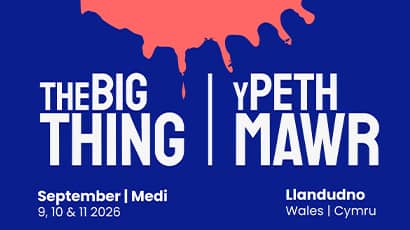
North Wales to host major UK immersive arts event ‘The Big Thing’
Artists, producers and technologists will gather in Llandudno in September as a national event exploring the future of immersive arts heads to North Wales.
03 July 2026
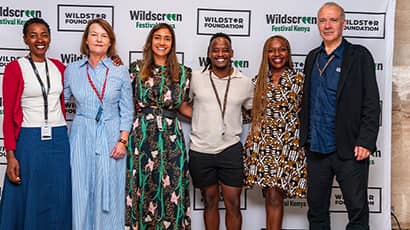
UWE Bristol strengthens international wildlife filmmaking links at Wildscreen Festival Kenya
UWE Bristol played a key role at Wildscreen Festival, Kenya, bringing together established and aspiring filmmakers, educators, and industry professionals.
02 July 2026
Postgraduate Art and Design students showcase personally-inspired work
Discover emerging talent at UWE Bristol’s MA Showcase at Spike Island, with art and design work spanning illustration, photography and more.
18 June 2026
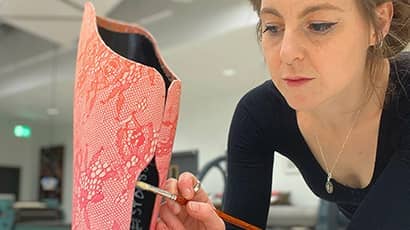
‘It allowed me to embrace my disability rather than hide it’ – print experts create prosthetic leg cover for bride
Print experts from UWE Bristol developed an innovative solution for a bride-to-be – by creating a bespoke covering for her prosthetic leg to match her wedding outfit.
17 June 2026
Winners at RTS Student Television Awards
UWE Bristol students have won four categories at a national competition celebrating the best audiovisual work from university filmmakers.
15 June 2026
Graduate-led mural project creates opportunities for next generation of creatives
A partnership to create three murals in newly built student accommodation has generated paid opportunities for current art students and recent graduates.
08 June 2026
Students’ success at national film awards
Filmmaking students from UWE Bristol have won five awards at the Kodak Student Commercials Awards, held at the Regent Street Cinema, London.
You may also be interested in

Media enquiries
Enquiries related to news releases and press and contacts for the media team.
Find an expert
Media contacts are invited to check out the vast range of subjects where UWE Bristol can offer up expert commentary.