
Researcher develops new digital tool for people with anxiety disorders


A UWE Bristol researcher is developing a new digital tool to help people with anxiety disorders.
Luigi Moretti, a doctoral researcher, is harnessing existing wearable technology for his service MEMoPAD.
An app he has developed draws on data produced by smartwatch sensors monitoring heart rate, skin temperature and sweat levels (electrodermal activity). This data is used to highlight ‘emotions’ that the user is experiencing, including episodes of anxiety.
When signs of anxiety appear in the data, the app offers a timely prompt to try a grounding intervention (such as meditation or deep breathing) to help the user cope in their moment of difficulty.
Users can share recorded data from the app – and any self-reported contextual notes they have added – with clinicians to enable better-informed conversations about their anxiety. The note taking function is aimed at linking emotions to daily activities, triggers, and coping strategies. Clinicians can access the shared data on a web version of the app.
It is hoped the patterns and trends that reveal themselves in the data, along with active self-reported notes, can help users better understand their wellbeing and work more effectively with clinicians to improve their mental health.
Anxiety disorders affect one in 10 people in the UK. Luigi, a medical doctor working at UWE Bristol’s Health Tech Hub, believes his service has the potential to help people experiencing generalised anxiety disorder, obsessive compulsive disorder, post-traumatic stress disorder, and eventually other conditions such as personality disorders and seasonal affective disorder.
He says there is a gap in the market for using technology to support mental health, as the major tech companies manufacturing wearables such as smartwatches have focused their devices and software on recording levels of stress rather than anxiety, without a clear narrative or aim for implementation in clinical pathways.

Explaining the inspiration behind MEMoPAD, he said: “I’ve watched loved ones navigate the complexities of mental healthcare.
“Faced with their long-term struggles and feeling powerless to help despite my medical background, I saw a clear and urgent need for better tools and a more empathetic system, an opportunity to make a meaningful difference that couldn’t be ignored.”
Luigi is designing MEMoPAD (Multimodal, Emotion, Monitoring, in Clinical Pathways for Anxiety Disorders) in close collaboration with patients, mental health clinicians and unpaid/informal carers. More than 450 people have subscribed to the project newsletter, and approximately 20 participants took part in each of the five completed co-design phases of the project, which received funding from the NHS Bristol, North Somerset and South Gloucestershire Integrated Care Board. The project is supported by a multidisciplinary team with expertise ranging from smart sensing (Dr David Western) and digital health (Dr Michael Loizou) to clinical psychology (Dr Miles Thompson) and data science (Dr Paul Matthews).
He said: “Technology built in a vacuum often fails. Our foundation is built on listening. We use a co-design methodology, actively partnering with patients, clinicians, and carers at every stage.
“Their lived experiences and professional insights are not just feedback: they are the blueprint for building a tool that is truly relevant, safe, and effective.
“This project is an active and evolving journey. I am currently developing the initial prototype and preparing for the next phases of longitudinal user testing and evaluation.
“The goal is clear, continuous, interpretable emotion data that helps people understand themselves, manage their wellbeing proactively, and have deeper conversations with their care team.”
Luigi added: “The MEMoPAD project directly supports the UK's 10-Year Health Plan by developing the framework needed to integrate wearable devices and artificial intelligence into clinical pathways. By empowering patients with their own data, we can enable a more personalised and self-aware approach to care.
“This focus on prevention addresses a key challenge identified by our co-design participants: supporting individuals in seeking help for the first time. By improving emotional wellbeing and supporting timely help-seeking, MEMoPAD contributes to the wider societal goal of prevention-first healthcare.”
Related news

22 October 2026
UWE Bristol graduate leads startup focused on improving e-scooter safety
A startup founded by a UWE Bristol graduate has secured £350,000 from investors to develop new technology to improve e-scooter safety.

09 October 2026
UWE Bristol Fine Art graduate wins prestigious painting prize
Charli-Ann Padilla’s painting was chosen from a shortlist of 12 undergraduate student artists from across the UK to win the Freelands Painting Prize.
08 October 2026
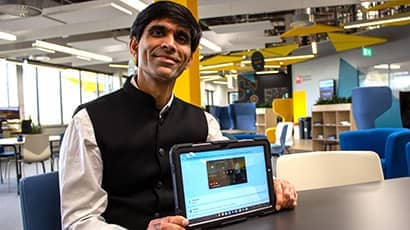
Innovative new app created to help stroke patients with rehabilitation
A UWE Bristol researcher led a project to develop an innovative new app to help patients recover after having a stroke.

14 September 2026
Immersive Arts announces £8.5m second phase funding
Immersive Arts has secured over £8.5 million to continue supporting UK artists working with immersive technologies until 2030.

11 September 2026
New book delivers decades of machine vision research into the hands of students, engineers and researchers
Practical Machine Vision: 2D, 3D and Deep Learning Systems for Real-World Applications is a new practical guide to machine vision that draws on almost three decades of research.

10 August 2026
Graduate photographer breathing life into Weston-super-Mare’s own identity
A graduate photographer from Weston-super-Mare has created a 'love letter' to his home town to shine a light on struggling coastal communities.
27 July 2026
North Wales to host major UK immersive arts event ‘The Big Thing’
Artists, producers and technologists will gather in Llandudno in September as a national event exploring the future of immersive arts heads to North Wales.

03 July 2026
UWE Bristol strengthens international wildlife filmmaking links at Wildscreen Festival Kenya
UWE Bristol played a key role at Wildscreen Festival, Kenya, bringing together established and aspiring filmmakers, educators, and industry professionals.

02 July 2026
Postgraduate Art and Design students showcase personally-inspired work
Discover emerging talent at UWE Bristol’s MA Showcase at Spike Island, with art and design work spanning illustration, photography and more.
18 June 2026
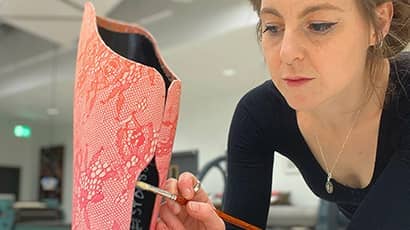
‘It allowed me to embrace my disability rather than hide it’ – print experts create prosthetic leg cover for bride
Print experts from UWE Bristol developed an innovative solution for a bride-to-be – by creating a bespoke covering for her prosthetic leg to match her wedding outfit.
17 June 2026
Winners at RTS Student Television Awards
UWE Bristol students have won four categories at a national competition celebrating the best audiovisual work from university filmmakers.
15 June 2026
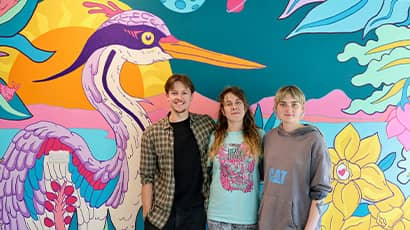
Graduate-led mural project creates opportunities for next generation of creatives
A partnership to create three murals in newly built student accommodation has generated paid opportunities for current art students and recent graduates.
You may also be interested in

Media enquiries
Enquiries related to news releases and press and contacts for the media team.
Find an expert
Media contacts are invited to check out the vast range of subjects where UWE Bristol can offer up expert commentary.

Innovation
We’re passionate about taking ideas into solutions that positively impact people, communities and our planet.
Harnessing creativity and technology
Harnessing creativity and technology to power economic growth, we're working with industry and the public sector to develop skills, talent, and innovation for the future economy.