
UWE Bristol researchers expand their work on smartphone use among young people


Academics who conducted the most comprehensive survey of its type on smartphone experiences and school policy in the UK have expanded their research work.
The pioneering study led by Dr Benjamin Knight and Dr Paul Redford last year gathered the views of thousands of pupils, parents and teachers on the use of smartphones among children at schools in inner city, suburban and rural settings in and around Bristol.
Among the headline findings from the Bristol Smartphone Experience and School Policy Project were that smartphone use was hitting struggling pupils the hardest, parents were underestimating the types of harmful content their children are accessing, and that teachers and parents were broadly supportive of stricter school policy on smartphone use.
Now Dr Knight and Dr Redford, from UWE Bristol’s School of Education and Childhood, have been successful in securing two additional funding grants for research projects on smartphone use among young people, and have attracted interest from Parliament.
The academics are leading a second study, in conjunction with the States of Guernsey, exploring smartphones and their place in schools in the Channel Islands. Views on current school policies will be collected from parents, students and staff at every school on the islands of Guernsey and Alderney, to help make future education and public health policy decisions. Headline findings are expected to be published in the summer.
In addition, the Nuffield Foundation has awarded the researchers £27,690 to further analyse their original Bristol data set from 2025 over the next 12 months, deriving findings which can inform government policy about school smartphone rules and young people’s digital wellbeing. The academics will be using their findings to respond to the Government's Growing Up in the Online World national consultation, which closes at the end of May.
Separately, the work of Dr Knight and Dr Redford has attracted the attention of policymakers. They were invited to attend a roundtable event on smartphones in schools organised by Baroness Diana Barran MBE, who tabled an amendment to the government's Children’s Wellbeing and Schools Bill for a statutory ban on smartphones in schools.
The academics, members of the Education and Childhood Research Group at UWE Bristol, were among eight experts invited to give evidence at an open event for Peers and MPs. Other experts included head teachers, an educational psychologist and the director of the charity Parentkind.
They shared some preliminary findings from the Bristol Smartphone Experience and School Policy Project, including evidence about:
- Limitations of the 'not seen/not heard' policy which is prevalent across the country.
- Harms young people report experiencing on their smartphones.
- Young people who self-report struggling academically (versus coasting, thriving) experience most harm - and those most harmed are least likely to want more restrictions on their smartphones in school.
- Parents underestimating the prevalence of harmful experiences for young people using smartphones.
Presentations from experts were followed by a Q&A from the floor, with questions raised by a number of Peers and MPs.
Evidence presented at the roundtable event contributed towards a vote in the House of Lords in favour of Baroness Barran’s amendment on Monday 20 April. The vote in part prompted the Government to announce on Tuesday 21 April the introduction of a legal ban on smartphones in schools in England.
Dr Knight, Senior Lecturer in Education, said: “It is encouraging to see our work beginning to bear fruit, with evidence from the study informing parliamentary discussion and shaping debate on this important national issue. Presenting our findings at Westminster was a privilege.”
Related news
29 September 2026
Findings from study suggest Government guidance on smartphones in schools may not go far enough
A Government decision to leave interpretation of new smartphone policy guidance to individual schools has been questioned by new research from UWE Bristol academics.
13 July 2026
Emotional graduation for mature student who collects degree after mother’s death
A mature student whose mother passed away three months before he completed his degree has graduated in an emotional ceremony.

11 June 2026
Research study identifies best ways to encourage weaker readers to take up reading for pleasure
Young children who struggle with reading would be more inclined to read for pleasure if they were offered books that matched their interests, a UWE Bristol study has found.
23 April 2026
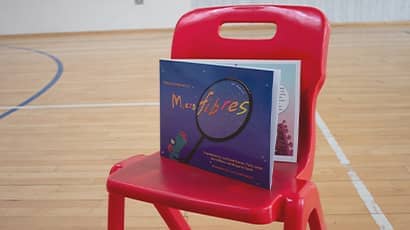
Young researchers launch children’s microfibre book to celebrate Earth Day
School pupils from Bristol, Luton and Pembrokeshire have helped create a new children’s book exploring airborne microfibres, after taking part in pioneering research with UWE Bristol.
01 April 2026
UWE Bristol receives highest possible grade after inspection of international teaching qualification
Teacher training delivered by UWE Bristol for trainee teachers working at schools overseas has been given top marks following a government inspection.
29 September 2025
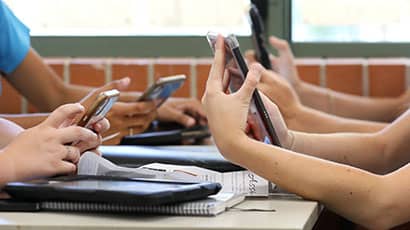
Smartphone use hitting struggling pupils hardest, major study finds
Young people struggling with their studies at school are much more likely to have negative experiences on their smartphones than their better performing peers, a major new study has found.
09 September 2025
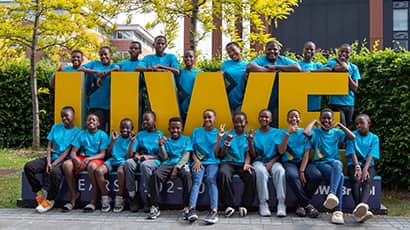
Project Zulu choir celebrates another record-breaking tour
Nearly £37,000 was raised during three unforgettable weeks of the 2025 Project Zulu choir tour – setting a new fundraising record since the tour began.
03 February 2025
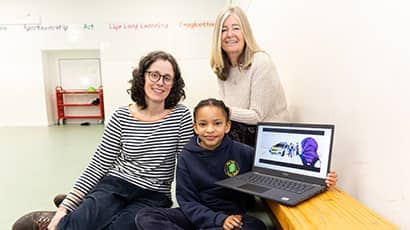
Groundbreaking UWE Bristol project based on children’s lived experiences of racism in the UK set to transform police training
UWE Bristol researchers have worked with over 1,000 primary-aged children to explore everyday experiences of racism to inform future police training.

15 January 2025
Pupils’ work produced in anti-racism lessons to be displayed at Bristol Cathedral
Work produced by school children in response to specially designed lessons on anti-racism will go on show at an exhibition at Bristol Cathedral.
26 April 2024
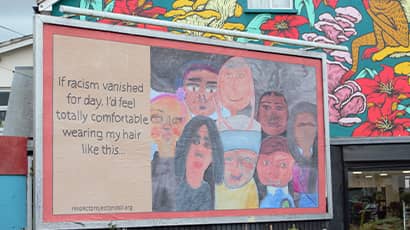
New billboard to encourage conversations about what life might be like without racism
The billboard displays an illustration from the book ‘If Racism Vanished for a Day’, which explores the impact of racism on children's wellbeing.
22 January 2024
New teaching resources to tackle under representation of Black British voices in the classroom
A new educational project, which aims to remove barriers to teaching Black British literature in schools, will be officially launched this month.
26 July 2022
Technology, education, sports and filmmaking students to volunteer in South African townships
Students from UWE Bristol are travelling to South Africa this summer to volunteer in township schools in KwaZulu-Natal Province.
You may also be interested in

Media enquiries
Enquiries related to news releases and press and contacts for the media team.
Find an expert
Media contacts are invited to check out the vast range of subjects where UWE Bristol can offer up expert commentary.

School of Education and Childhood
The School of Education and Childhood at UWE Bristol is a vibrant community committed to enhancing and transforming the lives of our students, and the children, young people and adults they work with.

Research
Our active, collaborative research community of bold, original thinkers break boundaries, immerse themselves in the now and open the way to new futures.