
More than 140 UK projects receive over £2 million in second Immersive Arts funding round


Over £2 million has been allocated to 142 artist-led projects across the UK in the second round of Immersive Arts funding - a scheme supporting artists of all backgrounds and experience to work with immersive technologies.
With three distinct grant amounts available - £5,000, £20,000 and £50,000 – the funding supports artists at different stages of their creative development: to explore, experiment or expand how they make work that uses technology to actively involve an audience.
Immersive Arts received over 2700 applications from across England, Wales, Scotland and Northern Ireland – surpassing the number received in the programme’s first funding round. The response shows a strong and continuing demand from the UK’s artists to be able to develop brave, innovative, sensitive and challenging work using immersive technologies as an integral part of their creative toolkit.
The 142 successful artists represent a truly UK-wide cohort. They are based as far north as the Outer Hebrides, to Falmouth in the south, from the Llŷn Peninsula in the west to Margate in the east, as well as across the border regions of County Derry and Tyrone in Northern Ireland – reflecting the breadth and geographic diversity of immersive talent across the UK.
£2,060,000 has been awarded in this second round of Immersive Arts grant funding – nearly double that of the first round:
- 80 x £5,000 - Explore grants
- 48 x £20,000 - Experiment grants
- 14 x £50,000 - Expand grants
Funded artists are working across a breadth of artforms including sound, music, theatre, dance, game design, visual arts, sculpture, photography, animation, architecture and filmmaking. They will be working with a huge range of immersive technologies including virtual, augmented and mixed reality, 360o film, spatial sound, haptics and tactile interfaces, artificial intelligence, biofeedback and responsive environments.
Verity McIntosh, Director of Immersive Arts and Professor of Immersive Arts and Culture at University of the West of England (UWE Bristol), said:
“We are delighted to be able to support so many extraordinary UK artists and projects through this latest funding announcement. Our thanks to the incredible partners and funders who continue to make it possible for artists to develop their practice and make bold new works with powerful cultural impact, connecting UK creativity with audiences around the world.”
Commenting on behalf of the programme funders, the UKRI Arts and Humanities Research Council (AHRC), Arts Council England (ACE), the Arts Council of Wales (ACW), Creative Scotland and the Arts Council of Northern Ireland (ACNI), AHRC executive chair Christopher Smith said:
“The first cohort of Immersive Arts-supported artists have illustrated how immersive technology can fuel growth and innovation within the arts and culture sector. We are very excited to support an even larger cohort of UK artists through this latest funding round, and very much look forward to following their progress as the work evolves.”
Further details of all funded projects can be found on the Immersive Arts website. Some of the funded projects include:
London, England: Sound and Fury by Pinny Grylls – awarded an Expand grant (recipient of Experiment grant in 2025).
Sound and Fury is a hybrid theatrical experience that reimagines Shakespeare’s Macbeth within the virtual world of an online game. Performed simultaneously on stage and inside the game, it bridges physical and digital spaces. Audiences are not just spectators but 'players' – joining flashmob battles in-game, shaping scenes, and feeling the impact through responsive lights, sound, and haptics. Integrated BSL and creative captioning ensure access is woven into the performance’s fabric, making this hybrid experience inclusive, immersive, and unpredictable.
Pinny Grylls is an acclaimed filmmaker and 2025 BAFTA Breakthrough recipient. Her debut feature Grand Theft Hamlet, co-directed with Sam Crane, won SXSW’s Best Feature Doc Jury Award, two BIFA Awards, a Grierson Award and a BAFTA longlist nomination. Distributed by MUBI, it chronicles their Stage Innovation Award winning production of “Hamlet” performance within Grand Theft Auto. Pinny is a proud member of the deaf community.
Liverpool / London, England: The Distance Between Beats Is The Only Distance Between Us by Myra Appannah – awarded an Experiment grant.
The Distance Between Beats Is The Only Distance Between Us is an ancient and intimate rhythm game built from beats created with migrant communities, where players unlock worlds of migration, memory and myth by holding beat patterns. Through rhythm, the story of how people arrive and find each other in the UK becomes something shared, something felt. Created in collaboration with Asylum Link in Toxteth with support from Music Futures, Liverpool John Moores University and FACT Liverpool, creative sessions with migrant participants will generate beats, stories and mythic characters that will directly shape the prototype.
Myra Appannah is a self-taught artist and co-director of BRiGHTBLACK. A BAFTA-longlisted writer and Creative Lead of “one of the most influential UK immersive experiences of the last 20 years” (UKRI), her work spans and blends large-scale immersive experiences, interactive installations, XR, games, film, audio, AI and live performance.
Belfast, Northern Ireland: Becoming by Helena Hamilton – awarded an Expand grant (recipient of Experiment grant in 2025).
Becoming is an interactive installation about matrescence, the profound transformation of motherhood. It draws on qualitative research with 25 mothers, reflecting recurring themes including isolation, overwhelm and joy. Many participants described the ineffability of matrescence. In response, the work combines sound, haptics, image and interaction to communicate what language alone cannot.
Helena Hamilton is an artist working at the intersections of visual art, sound, and digital interaction. Their practice explores dynamic relationships between sound, image, and site, bridging the digital and physical to create experiences that evoke meaning rather than impose it.

Dundee, Scotland: The Game by Biome Collective (Malath Abbas and Andy Truscott) – awarded an Expand grant.
The Game is an immersive sound-walk artwork in Dundee by Biome Collective. Audiences are invited to download a mobile app, wear headphones, and walk through the city. The route, pace, and pauses trigger layered audio, chants, conversations, music, and field recordings. Each walk produces a different composition, shaped by how people move through place.
The work explores football as lived culture, centred on memory, ritual, and local identity rather than stadium spectacle. It draws from the memories of Andy Truscott’s father, a lifelong Dundee United supporter living with dementia. It preserves everyday journeys and matchday routines as a public artwork.
The project will expand the current prototype through co-design with Alzheimer Scotland and local partners including Dundee United Community Trust, UNESCO City of Design Dundee, and V&A Dundee. This phase deepens accessibility and community authorship, moving toward a robust public release and a city-wide launch event rooted in Dundee’s football heritage.
Newport, Wales: Becoming a Monster by Connor Allen – awarded an Expand grant.
The award-winning multidisciplinary artist and former Children’s Laureate of Wales, Connor Allen will bring the idea of ‘Becoming a Monster’ to life through an immersive XR headset experience that invites audiences to step inside a series of interconnected memories drawn from his poem Remove the Knot.
Allen invites people fully into his world – shaped by abandonment, anger and loss yet ultimately transforming into hope and self-acceptance. Through intuitive immersive technology, audiences don’t watch these memories from a distance; they experience them from the inside.
Blending spoken word with immersive 3D environments, the work pushes his storytelling into a new dimension – exploring the limits of language, the power of memory and how stories evolve when technology opens new doors.
Strengthening representation in immersive arts
Once again, the Immersive Arts team is encouraged to see that artists with a broad range of backgrounds and lived experiences chose to apply to the scheme. Over a quarter of applications and awarded artists in this round are from the global majority, over 55% identify as a woman, transgender, non-binary, genderqueer, agender, or other marginalised gender, and over 45% identify as disabled, D/deaf, neurodivergent or having a long-term physical or mental health condition or chronic illness.
Professor McIntosh added:
“Research suggests that each of these communities remain significantly under-represented in the arts and technology sectors, and we are delighted to see such strong representation from incredible artists across the cohort.”
Asha Easton from XR Diversity Initiative, an Immersive Arts consortium partner, said:
“In my dual capacity representing the XR Diversity Initiative and the Innovate UK Immersive Tech Network I am deeply proud of the fact that the Immersive Arts programme has attracted applications from artists from an incredibly diverse range of backgrounds and lived experiences from across the whole of the UK.
“We are excited to see that diversity continues to be reflected in this cohort of funded projects, exceeding all targets for the second time in a row. I attribute this success to the level of care and detail the team has put into making the application process and programme delivery as inclusive as possible, while always being open and adaptable to the feedback from the artist community we serve.”
Funding for Immersive Arts is provided through a collaboration between the UKRI Arts and Humanities Research Council (AHRC), Arts Council England (ACE), the Arts Council of Wales (ACW), Creative Scotland and the Arts Council of Northern Ireland (ACNI). Funding from Creative Scotland, ACW and ACNI is provided by The National Lottery.
To sign up to the Immersive Arts newsletter and for more details about Immersive Arts visit immersivearts.uk
Related news
09 October 2026
UWE Bristol Fine Art graduate wins prestigious painting prize
Charli-Ann Padilla’s painting was chosen from a shortlist of 12 undergraduate student artists from across the UK to win the Freelands Painting Prize.
08 October 2026
Innovative new app created to help stroke patients with rehabilitation
A UWE Bristol researcher led a project to develop an innovative new app to help patients recover after having a stroke.
14 September 2026
Immersive Arts announces £8.5m second phase funding
Immersive Arts has secured over £8.5 million to continue supporting UK artists working with immersive technologies until 2030.

11 September 2026
New book delivers decades of machine vision research into the hands of students, engineers and researchers
Practical Machine Vision: 2D, 3D and Deep Learning Systems for Real-World Applications is a new practical guide to machine vision that draws on almost three decades of research.
10 August 2026
Graduate photographer breathing life into Weston-super-Mare’s own identity
A graduate photographer from Weston-super-Mare has created a 'love letter' to his home town to shine a light on struggling coastal communities.
27 July 2026
North Wales to host major UK immersive arts event ‘The Big Thing’
Artists, producers and technologists will gather in Llandudno in September as a national event exploring the future of immersive arts heads to North Wales.
03 July 2026
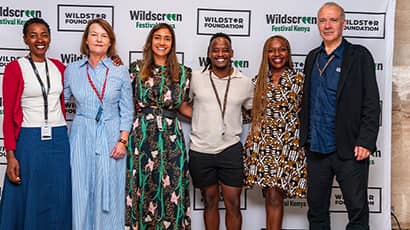
UWE Bristol strengthens international wildlife filmmaking links at Wildscreen Festival Kenya
UWE Bristol played a key role at Wildscreen Festival, Kenya, bringing together established and aspiring filmmakers, educators, and industry professionals.
02 July 2026
Postgraduate Art and Design students showcase personally-inspired work
Discover emerging talent at UWE Bristol’s MA Showcase at Spike Island, with art and design work spanning illustration, photography and more.
18 June 2026
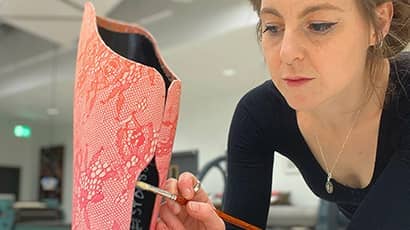
‘It allowed me to embrace my disability rather than hide it’ – print experts create prosthetic leg cover for bride
Print experts from UWE Bristol developed an innovative solution for a bride-to-be – by creating a bespoke covering for her prosthetic leg to match her wedding outfit.
17 June 2026
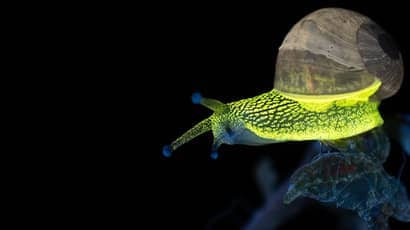
Winners at RTS Student Television Awards
UWE Bristol students have won four categories at a national competition celebrating the best audiovisual work from university filmmakers.
15 June 2026
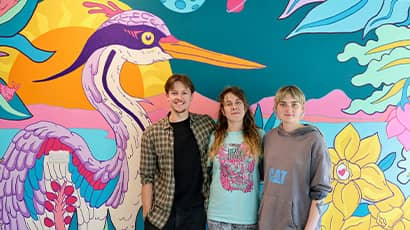
Graduate-led mural project creates opportunities for next generation of creatives
A partnership to create three murals in newly built student accommodation has generated paid opportunities for current art students and recent graduates.
08 June 2026
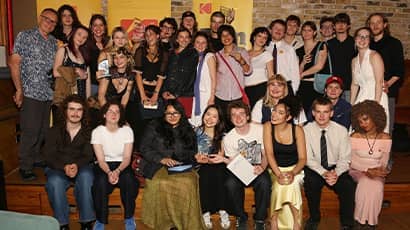
Students’ success at national film awards
Filmmaking students from UWE Bristol have won five awards at the Kodak Student Commercials Awards, held at the Regent Street Cinema, London.
You may also be interested in

Media enquiries
Enquiries related to news releases and press and contacts for the media team.
Find an expert
Media contacts are invited to check out the vast range of subjects where UWE Bristol can offer up expert commentary.