
International study to explore how digital mobility apps could improve transport for women and caregivers


A new prototype mobility app that considers the barriers to transport faced by women and carers will be created as part of a research project co-led by a UWE Bristol researcher.
Dr Eda Beyazit, Senior Research Fellow in Active Travel and Micromobility, is the UK lead on an international project called Reimagining Digital Mobility Platforms: Co-designing Gender-Responsive and Care-Aware Mobility Solutions (DigiCaRe).
The two-year study will focus on the transport system in Istanbul, Türkiye, and will consider how a new mobility app might be able to suggest safe routes, less crowded buses, accessible railway stations, playgrounds en route when travelling with children, and rest areas when needing a break or accompanying an older relative.
Dr Beyazit, an academic in the School of Architecture and Environment, said: “While these features may seem basic, they are not integrated into digital mobility platforms that optimise routes for an idealised user. This highlights a gap between digital transport technologies and the everyday realities of diverse users, which this project seeks to address by exploring what needs to be optimised, and for whom.
“Navigating a city can be challenging, especially for individuals with intersecting social and demographic disadvantages, whose mobility needs are often overlooked by authorities.
“Women are disproportionately affected due to social reproduction burdens, concerns around transport safety and personal security, cultural codes, and physical constraints during pregnancy.
“Evidence from Istanbul, the focus of this research, demonstrates that women feel less safe on public transport than men and have concerns about security both during the day and at night. They also lack confidence and independence in navigating the city.”
Dr Beyazit received funding for the project through the British Council’s Research Collaborations Programme under the UK’s International Science Partnerships Fund. Of the 174 projects considered for funding for collaboration between the UK and Türkiye, only four were successful.
The researcher said that while technology is central to the project, it also aims to raise awareness of gender inequalities in transport and the lack of integration between mobility systems and care-related infrastructure.
DigiCaRe will examine how mobility platforms can better respond to the everyday needs of people who travel for caregiving responsibilities, including those travelling with children, accompanying older relatives, caring for younger relatives with disabilities, or meeting needs such as accessing facilities including toilets and baby-changing spaces.
A dataset focused on gender and care-related mobility will be developed during the study which will then be used to create a prototype intelligent mobility app, demonstrating how digital tools can support more inclusive and accessible urban navigation for people with diverse needs.
The project is bringing together researchers from transport geography, computational science and creative technologies at UWE Bristol, along with geospatial engineering experts at Gebze Technical University, Türkiye.
Dr Beyazit said: “I’m truly delighted to receive this prestigious award from the British Council, which not only prioritises equality, diversity and inclusion – placing gender at its core – but also supports the use of AI to transform technologies through collaboration between academic institutions.
“I hope this project will help reshape digital mobility tools to better respond to care needs, while generating solutions that can be adapted in cities beyond Istanbul.”
There is a studentship available on this project. For further details, visit the postgraduate research study section of the UWE Bristol website.
Related news
23 January 2026
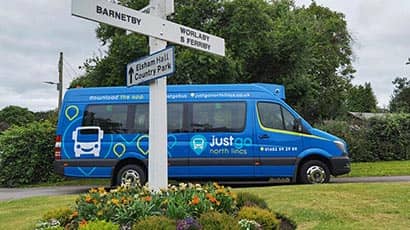
On-demand minibus services beneficial in rural areas but face financial challenges, trials suggest
Trials of ‘demand responsive transport’ minibus services boosted connectivity for people in rural and suburban areas, according to a new report produced by UWE Bristol researchers.

09 June 2025
Opinion: If you want trams, support the buses
Graham Parkhurst, Professor of Sustainability, Centre for Transport and Society, reacts to news of £800 million investment in the region's transport network.
29 November 2024
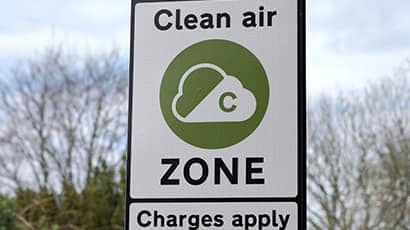
Bristol Clean Air Zone – two years on, what is the future of the CAZ?
Two years on, Professor Graham Parkhurst and Professor Jo Barnes comment on what the future of Bristol's Clean Air Zone looks like.

20 June 2024
Academic elected as President of Chartered Institute of Highways and Transportation
Professor Glenn Lyons has been announced as the new President for 2024 / 25.
28 November 2023
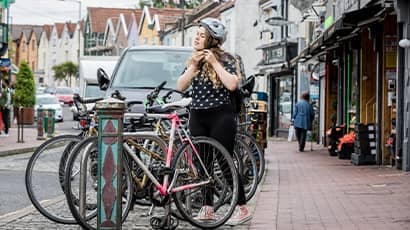
New report finds lack of transport choices is leaving young people behind
A new study warns that young people cannot access life-defining opportunities due to poor transport provision.
01 October 2023
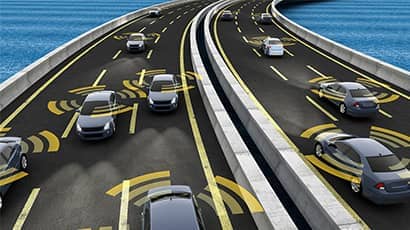
UWE Bristol wins funding to develop safer autonomous vehicles
UWE Bristol has secured government funding for research into autonomous vehicles.
18 September 2023
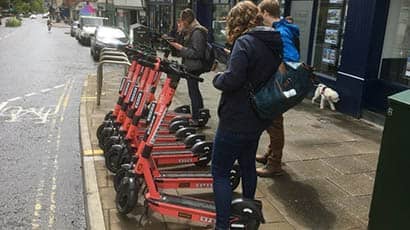
One in 15 West of England residents use public e-scooters every month
UWE Bristol researchers have published the results of the West of England rental e-scooter trial.
14 June 2023
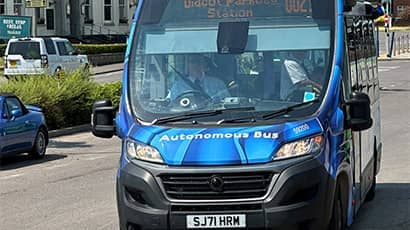
Researchers monitor autonomous bus user experience as UK's first zero emission service launches new route
Researchers monitor autonomous bus user experience as UK's first zero emission service launches new route.
31 May 2023
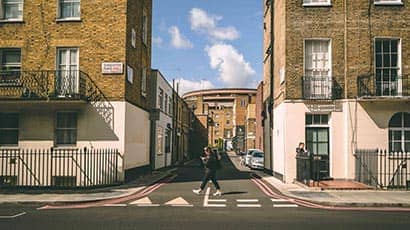
Enhanced junction designs “make it clear to drivers that they need to give way”
A research project has identified two side road crossing designs that encourage drivers to give way to people crossing and waiting to cross.
24 January 2023
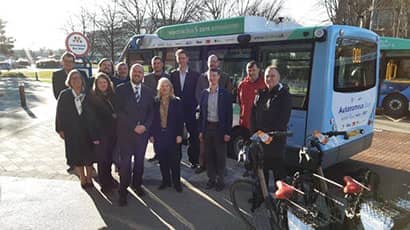
UWE Bristol joins First Bus and partners to launch UK's first zero-emission autonomous bus service
The UK's first-ever zero emission autonomous bus service reached a key milestone with trials starting on public roads in Oxfordshire on Monday 23 January 2023.
17 January 2023
Panel poses key questions about future roads spending
Report published raising seven key questions to help guide for decision-makers achieve the best value from future roads spending.

28 July 2022
Unfair bus fares risk holding young people back
Research by UWE Bristol and transport charity Sustrans finds access to free and discounted bus fares for 16–24 year olds varies significantly across the UK.
You may also be interested in
Find an expert
Media contacts are invited to check out the vast range of subjects where UWE Bristol can offer up expert commentary.

Media enquiries
Enquiries related to news releases and press and contacts for the media team.

School of Architecture and Environment
A broad-based intellectual community committed to an inter-disciplinary approach to the creation and management of sustainable buildings, whether they are in urban or rural environments, residential or commercial, new or refurbished.
Centre for Transport and Society (CTS)
More information about the Centre for Transport and Society, including research projects, transport courses, news, events and opportunities.