
Rachael Chidugu-Ogborigbo
Senior Lecturer in Biological and Environmental Sciences & Programme Leader
My career journey
I am an ecogenotoxicologist focused on environmental health and environmental justice. My work began with a commitment to addressing pollution in Nigeria’s Niger Delta, where I combined my lecturing role with positions as a research associate in marine pollution monitoring and project manager for an environmental NGO. Seeing the limits of underfunded research driving advocacy, I pursued a Commonwealth funded PhD in Environmental Toxicology, during which I discovered the marine sponge Amorphinopsis kalibiama; a promising bioindicator and a sentinel with potential anti diabetic and anti-cancer properties.
After postdoctoral research at the University of Birmingham, I joined UWE Bristol as a senior lecturer. My current research uses sea sponges to assess genotoxic effects of environmental mutagens and to explore novel extremozymes and therapeutic metabolites for biotechnology and drug discovery.

Research interests
My research focuses on environmental toxicology and marine biotechnology, with a particular emphasis on environmental pollution monitoring and discovering therapeutic compounds from marine organisms. My research work sits at the exciting intersection of biodiversity conservation and human health – addressing real-world challenges through fundamental science. The work aligns strongly with UWE Bristol’s core values of ambition, inclusivity, and impact, demonstrating how fundamental science can address pressing global health challenges while supporting biodiversity conservation.
My research approach reflects the principles of UWE Bristol’s RISE initiative, prioritising research that is socially relevant, globally connected, and capable of delivering sustainable outcomes. I am committed to building equitable research partnerships between the UK and Nigeria. Having conducted extensive fieldwork in the Niger Delta region, I recognise the importance of collaborative rather than extractive research relationships that respect local expertise and deliver mutual benefit. My vision, therefore, is for science that contributes to inclusive and sustainable development, particularly in regions where environmental and health challenges intersect.
Collectively, my research supports UWE Bristol’s strategic ambition to deliver research and innovation that advances environmental sustainability, social justice, and positive societal change.
Challenges in academia
Navigating academic spaces as a Black woman has taught me resilience and the value of authentic representation. I've learned to use my position to advocate for inclusive practices and to mentor students who see themselves reflected in my journey.
Balancing multiple roles – teaching workload, administrative demands and coordinating international research, though challenging, has honed my time management and strategic thinking skills. These demands have taught me to prioritise effectively and to seek collaboration rather than trying to do everything alone. Managing UK-Nigeria research partnerships has developed my skills in cross-cultural communication and navigating complex international collaborations, strengths that enrich both my research and teaching.
Over time, I've learned to reframe self-doubt into healthy critical reflection. It's pushed me to be rigorous in my work and to seek mentorship and professional development opportunities proactively. As someone committed to my faith in Jesus Christ, I've learned resilience in the face of daunting challenges and have also learned to bring my whole self to my work, which has strengthened my leadership and authenticity.
These challenges have shaped who I am as an academic and leader. They've given me empathy for students and colleagues facing similar obstacles and have fuelled my determination to help transform academic culture.
Hopes for completing the programme
I'm hoping this programme will provide me with a community of peers who understand these challenges firsthand. I want to develop practical skills in articulating my impact, strengthening my applications, and positioning myself strategically for promotion.
Beyond the practical aspects, I hope to build my confidence in owning my achievements without qualification or apology. I want to learn how to challenge systems that undervalue our contributions whilst thriving within them. Most importantly, I want to reach professorship so I can be visible proof for Black women students and early-career researchers that we belong in academia, that our perspectives matter, and that the path, whilst challenging, is possible.
My goal is to help create the pathways I wish had existed for me – to mentor emerging scholars, champion inclusive practices, and contribute to transforming academic culture into one that genuinely celebrates the diversity of voices and experiences we bring.
You may also be interested in
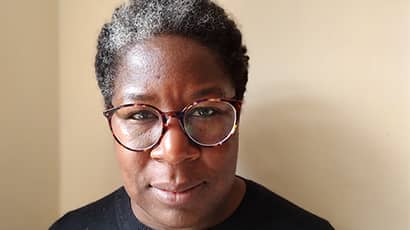
Amanda Egbe
Amanda Egbe, Senior Lecturer in Media Production and participant of the 100BWPN Programme.
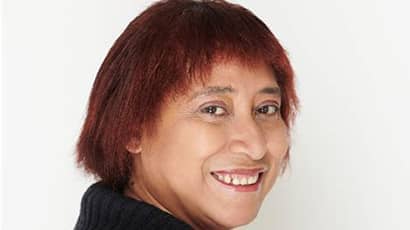
Anne Harbin
Anne Harbin is Associate Head of Media and Journalism and attendee of the 100 Black Women Professors NOW Programme.
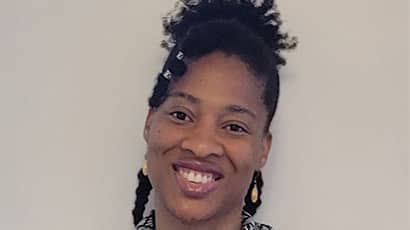
Chizoba Esio-Bassey
100 Black Women Professors NOW Programme attendee Chizoba Esio-Bassey is a Senior Lecturer in Public Health.
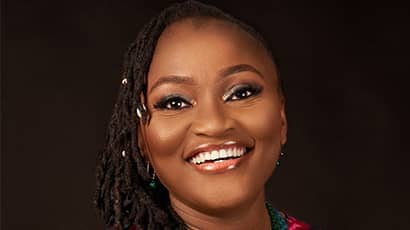
Onyeka Amiebenomo
Onyeka Amiebenomo is a participant in the 100 Black Women Professors NOW Programme and Senior Lecturer in Optometry.