
Onyeka Amiebenomo
Senior Lecturer in Optometry
My career journey
My career has been one of growth, evolution, and self-discovery. Inspired by my mother’s career, I pursued a path in education. After completing my Doctor of Optometry degree, I began my career at the University of Benin. Early in my career, I discovered an interest in paediatric optometry. This led me to a fellowship with the Nigerian College of Optometrists, allowing me to combine clinical practice with teaching. My PhD studies at Cardiff University developed my expertise in eye movements in infantile nystagmus.
I have contributed to teaching and learning in professional and higher education settings. I have trained Doctor of Optometry graduates, as well as eye care professionals at the Wales Optometry Postgraduate Education Centre.
Alongside my contributions to teaching, learning, and research, I also serve on active subcommittees of the International Society for Clinical Eye Tracking.

Research interests
My primary research interests include paediatric optometry, eye movements and binocular vision. I am especially driven to improve eye care for children and young people with additional needs. I currently lead a team of researchers from universities in England and Wales on the Promoting Eye Care Practice for Children with Learning Disabilities (PEPChiLD) project, where we are exploring ways to improve access to eye care for children and young people with learning disabilities through research.
I also serve as a reviewer for top academic journals and have presented my research at conferences locally and internationally.
Challenges in academia
Navigating academia has been both rewarding and challenging. Balancing teaching, research, and administrative responsibilities alongside family life often demands that I juggle multiple commitments simultaneously. Despite efforts to establish clear boundaries, it can be difficult to fully disconnect, leading to extended working hours.
Over time, with the guidance of experienced colleagues and through continuous professional development, I have learned the value of effective prioritisation, which has been an essential skill for achieving balance between my academic and personal life. These experiences have not only improved my resilience but also deepened my dedication to mentoring and supporting those who follow in similar paths.
Hopes for completing the programme
I believe this programme will offer the mentorship and visibility essential for my career growth. I hope to gain greater clarity in my goals and to engage with executive members who can guide my priorities as my career evolves. I look forward to meaningful conversations that support strategic career development.
I also hope to connect with and form lasting bonds with other women in academia who share similar experiences. I am confident that this sense of community will serve not only as a foundation for collaboration but also as a source of strength, enabling me to become a voice for others whom I aspire to mentor. Through this programme, I hope to further develop the skills needed to support other women in academia, enabling them to flourish and make meaningful contributions.
You may also be interested in
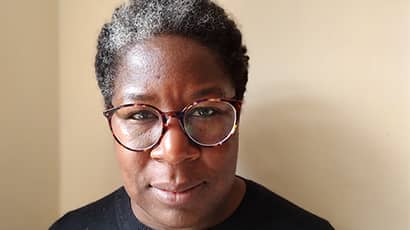
Amanda Egbe
Amanda Egbe, Senior Lecturer in Media Production and participant of the 100BWPN Programme.
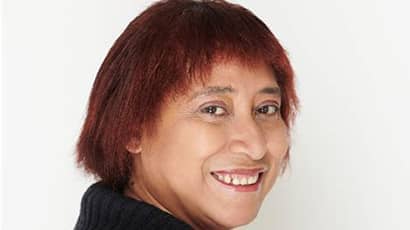
Anne Harbin
Anne Harbin is Associate Head of Media and Journalism and attendee of the 100 Black Women Professors NOW Programme.
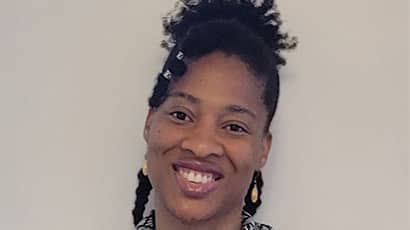
Chizoba Esio-Bassey
100 Black Women Professors NOW Programme attendee Chizoba Esio-Bassey is a Senior Lecturer in Public Health.
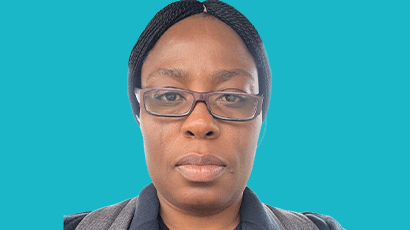
Rachael Chidugu-Ogborigbo
Senior Lecturer in Biological and Environmental Sciences, Rachael Chidugu-Ogborigbo is an attendee of the 100BWPN Programme.