
Innovative new app created to help stroke patients with rehabilitation


A UWE Bristol researcher led a project to develop an innovative new app to help patients recover after having a stroke.
Dr Praveen Kumar worked with partners to build an AI-powered prototype app that generates personalised exercise programmes using a library of rehabilitation videos.
The app – designed for patients to use in community settings – can produce tailored exercise programmes based on individual needs, abilities and recovery goals.
Funded by the National Institute for Health and Care Research (NIHR), the project saw Dr Kumar and other academics collaborate with clinicians, technology experts and stroke survivors to create the app.
Dr Kumar, an Associate Professor in Stroke Rehabilitation, said: “The successful development of this prototype app demonstrates the value of combining patient involvement, clinical expertise and technological innovation to address an important unmet need in stroke rehabilitation.
“Our vision is to improve access to personalised rehabilitation support and empower stroke survivors to continue their recovery journey within their own communities.”
Stroke affects 118,000 people in the UK annually, impacting quality of life and NHS resources. Rehabilitation exercises improve walking, fitness, daily activities and prevent future stroke, with clinical guidelines recommending at least three hours of rehabilitation per day and staying active for at least six hours daily.
The app – for use on tablets and computers – was aimed at helping people choose correct exercises, progress with them and self-manage their rehabilitation at home. The videos are existing ones of real stroke patients undertaking exercises under the guidance of physiotherapists.
The development of the app builds on earlier work carried out by Dr Kumar and fellow researchers to deliver group exercises classes in the community for 10 years, in collaboration with the Bristol After Stroke charity. Based on participant feedback, bitesize exercise videos were developed. People recovering from stroke reported that these videos were engaging, and helped their movement and independence but also noted that they felt stuck not knowing how to progress with the exercises.
Integrating AI into portable devices was suggested as an idea to assist people, by offering real-time input and improved engagement with rehabilitation at home.
"Our vision is to improve access to personalised rehabilitation support and empower stroke survivors to continue their recovery journey within their own communities."
Dr Praveen Kumar, Associate Professor in Stroke Rehabilitation at UWE Bristol
The project was awarded a grant as part of NIHR funding of more than £3 million to 34 new cutting-edge medical technologies to tackle brain injury in 2025. The projects were funded through the Invention for Innovation (i4i) Funding At the Speed of Translation (FAST) 4 Awards to support the development of innovative healthcare technologies for acquired brain injury (ABI), including the prevention, diagnosis and management of ABI as well as recovery from ABI as a consequence of traumatic brain injury, stroke, tumours and infections.
Dr Kumar was the chief investigator on the project, working alongside co-investigators Dr Michael Loizou and Dr Ali Al-Nuaimi (University of Plymouth), Professor Kenton O’Hara and Dr James Pope (University of Bristol) and Dr Maria Galvez Trigo (Cardiff University). Co-researchers on the study were Regan Shakya, Anika Pinto, Sarah Koerner and Thrisha Rajkumar.
The team worked with several partners on the development of the app. These were Claire Angell and Sarah Sparks (Patient Partners), Amrik Singh (Clinical expert, the Brightwell Centre), Zehra Haq (Community Ethnic Partner) and Rebecca Sheehy, (CEO, Bristol After Stroke).
Dr Kumar said: “In the app, AI can be used to tailor the types of YouTube rehabilitation exercise videos that patients use. Rather than viewing longer videos (20 minutes in duration) they can try shorter versions of the videos, and AI can be used to guide this process. This saves time for clinicians and therapists, and is also better for patients.
“In future through collaboration with industry, the app has the potential to allow clinicians to monitor their patients’ rehabilitation. Their exercises can be recorded and fed back to the clinician so they can see the range of movement that the patient has been experiencing. This provides a complete loop between patient and clinician.”
Over the next 17 months, with support from the UWE Bristol Strategic Research & Impact Programme (SRIP), Dr Kumar and the team will evaluate and cross-validate the app with people with stroke in real-world community settings. The project will explore whether AI-generated personalised exercise programmes align with clinical judgement and are usable, acceptable and trustworthy, as well as how they can support motivation and adherence to rehabilitation at home.
Related news
19 August 2026
Researcher to lead £455k body image project supporting people with head and neck cancer
A UWE Bristol researcher has been awarded almost half a million pounds to lead a project to develop a body image programme for people living with and beyond head and neck cancer.
16 July 2026
‘When I got the chance, I followed it with my heart’ – nurse graduates at the age of 64
An electronics technician who retrained as a registered nurse has graduated at the age of 64.
17 June 2026
Scientists develop low-cost tests for people with bleeding and clotting disorders
Patients with bleeding and clotting disorders living in low-income countries could benefit from new low-cost testing devices being developed at UWE Bristol.
15 June 2026
Researchers develop new approach for connecting people with substance use dependency to community support
UWE Bristol researchers have developed a toolkit to help people living with drug and alcohol dependency access community services that support their long-term health and wellbeing.
02 June 2026
International conference on body image and appearance research set to be staged in Bristol
Leading experts from across the globe are preparing to travel to Bristol for a major conference dedicated to body image and appearance research.

02 April 2026
Hypothermia rates halved in babies born before arrival at hospital, new research finds
Rates of hypothermia in babies born before arriving at hospital in the South West of England have halved over the last five years, according to a new evaluation by UWE Bristol researcher Dr Laura Goodwin.
02 April 2026
New NIHR Senior Investigator reflects modern research leadership
Professor Nicola Walsh, Professor of Knowledge Mobilisation and Musculoskeletal Health, has been announced as a Senior Investigator by the NIHR.
17 March 2026
Researcher develops new digital tool for people with anxiety disorders
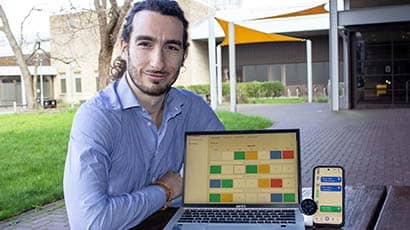
A UWE Bristol researcher is developing a new digital tool to help people with anxiety disorders.
10 February 2026
Work by UWE Bristol lecturer features in Government’s National Cancer Plan
Work by a UWE Bristol academic has been included in the Government’s National Cancer Plan.
22 January 2026
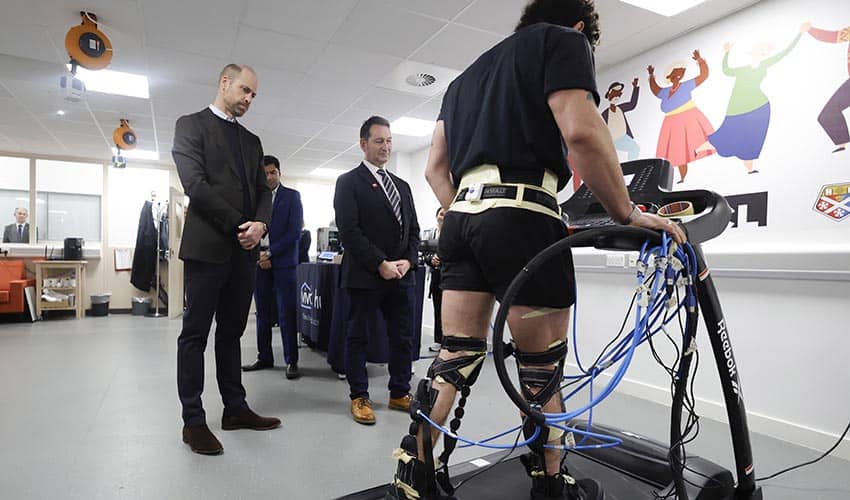
Prince of Wales visits UWE Bristol to see pioneering robotic tech tackling societal health challenges
The Prince of Wales visited the Bristol Robotics Laboratory (BRL) at the University of the West of England’s (UWE Bristol) Frenchay campus today (22 January 2026) to learn about the pioneering robotic technologies being developed to help the ageing and disabled population maintain mental and physical wellbeing and remain independent for longer.
21 January 2026
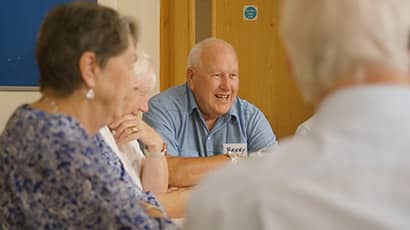
Dementia support groups developed by professor adopted across globe
A programme started by a UWE Bristol academic to provide emotional and practical support for people with dementia is now being adopted around the world.

17 December 2025
Findings revealed from first UK study into experiences of mothers who are survivors of rape pregnancy
UWE Bristol academics have revealed the findings of the first UK-based study of the experiences of mothers who are survivors of rape pregnancy.
You may also be interested in
Media enquiries
Enquiries related to news releases and press and contacts for the media team.
Find an expert
Media contacts are invited to check out the vast range of subjects where UWE Bristol can offer up expert commentary.
Research
Our active, collaborative research community of bold, original thinkers break boundaries, immerse themselves in the now and open the way to new futures.
School of Health and Social Wellbeing
The School of Health and Social Wellbeing is home to all our courses and research related to this varied and rewarding sector.