
Revolutionising stroke recovery
Bridging the rehabilitation gap
"When patients get discharged from the hospital, nothing happens with them," explains Associate Professor, Dr. Praveen Kumar, whose pioneering research at UWE Bristol is transforming stroke rehabilitation. "They feel abandoned, they get nothing." Discharged into the community, patients describe feeling abandoned and left to navigate their recovery alone, with exercises they don't understand and no professional guidance or touch points. It's a gap in care that affects over 100,000 stroke survivors annually in the UK Kumar is working to fill it.
For the past decade, Kumar has been running exercise classes for Bristol After Stroke. When COVID-19 hit, he witnessed first-hand the limitations of remote healthcare. "I was doing my assessments using Zoom," he recalls. "I was quite fixed, you know. If I wanted to do the stair assessment, I would ask them to take the tablet, place it on the floor and I watched them while they were going up and down the stairs. So it was quite challenging." Patients struggled to position tablets for assessments. And the angles needed for comprehensive support was lost. The personal touch essential for effective rehabilitation was gone.

The telepresence robot revolution
UWE Bristol, with EPSRC funding and collaboration with the University of Nottingham, responded by piloting telepresence robots in care homes across Bristol and Aberdeen. The solution of tablet-on-wheels systems that physiotherapists control remotely, enabled them to move around patients, following them through exercises, and to observe their gait, balance, and movement from every angle.
"The advantage of this telepresence robot is I can control it from here," Kumar explains. "I can come to your left side, right side, from the back. If I wanted you to walk, I can follow you through that." The system can even follow patients through home assessments, into the kitchen to prepare tea, up and down stairs. This provides the kind of detailed observation previously impossible remotely.
Kumar's team conducted comprehensive research: initial workshops with staff, patients and carers to understand perceptions; one-to-one assessments using the robots; four weeks of exercise classes; and post-assessment interviews and focus groups. The response was overwhelmingly positive. Participants appreciated the live feedback from an expert professional. One participant wanted to practice standing. Kumar knew he had the potential from assessments, but local support workers lacked confidence to supervise him. "Although given the challenges what we have currently with lack of any intervention in the community, this is a good choice," Kumar reflects. "However, not losing that in-person human touch was one of the key comments."
AI-powered exercise prescription
Kumar identified another critical barrier – generic exercise videos. Patients were receiving 15–20 minute programmes that were impossible to tailor to each individual patient, some exercises were too easy, others too hard, and many irrelevant to their specific needs. He has developed an AI-driven solution. Through NHS England funding he’s broken-down exercise libraries into 200+ individual videos. These now feed into an artificial intelligence prototype that generates truly personalised rehabilitation programmes based on each patient's age, stroke type, impairments, and goals.
"We're doing cross validation, we want to see whether the AI will generate the same programme as I would do for my patients," Kumar says. Not replacing expertise; scaling it, making personalised physiotherapy accessible to thousands who currently receive nothing.’’
Championing health equity through cultural responsiveness
Kumar's commitment to equity shapes every aspect of his research. "We know South Asians are at high risk of stroke, this is an area I wanted to target as engagement haw been more challenging in the past " Through collaboration with Dek Bhal, a Bristol voluntary organisation, and funding from UWE Bristol’s community initiatives Kumar has developed 42 exercise videos in Gujarati removing boundaries to access and improving visibility within the community.
"They wanted something in their own language, and said people like them should be in the video," Kumar explains. The videos feature community members, include culturally meaningful activities like folk dance, and address the lived experiences of South Asian stroke survivors. "So, it becomes more meaningful and culturally appropriate for that group."
These videos are now being used in weekly activities and are feeding into the AI app development. This work embodies RISE's commitment to culture, place and community. Research shaped by and for the communities it serves, addressing ethnic health inequalities head-on.
The integrated future: technology meets human touch
Kumar envisions bringing it all together: "We do assessments on patients first, face to face. Then when patients go home, they can have exercise videos through the app. But to have that observation, to watch them what they're doing on a regular basis, the role of telepresence robot comes there."
We are exploring wearable devices to monitor activity and cameras to capture exercise sessions for therapist review. Telepresence robots could remind patients of appointments, check in regularly, and provide that crucial personal touch.
This integrated approach aligns directly with the NHS 10-year plan priorities around AI and with NICE stroke guidelines. "All this is really relevant and contemporary," Kumar emphasises. This combines clinical expertise, cutting-edge technology, and community partnership.
Global impact, local roots
Kumar is building partnerships with researchers in Australia, the Netherlands, India, and South Africa. The Gujarati exercise videos can serve diaspora communities globally, and act as an example for recordings in other languages too. The World Stroke Organisation and the Stroke Association are exploring hosting our resources on their platforms, making UWE Bristol expertise accessible worldwide.
We're also longlisted for the Churchill Fellowship to study carer-mediated exercise programmes internationally, bringing global best practices back to inform UK care while sharing our innovations abroad.
Kumar also involves UWE Bristol students in his exercise classes, exposing them to technology-based interventions. He’s piloting carer-mediated exercise programmes at Bristol After Stroke day clubs, empowering families and support workers to facilitate ongoing rehabilitation.
Kumar's research is already producing impact. Nine months into the AI project, his team has published one peer-reviewed paper with a second in submission. The telepresence robot work is being written up for publication and has been presented at international conferences. An advanced fellowship application will expand the work further.
"A lot of small things are happening, but also big things together," Kumar reflects, "and hoping that this will lead to impactful utilisation of the resources in the future to benefit people, especially in the community." The whole idea is to support people, so they have ongoing rehabilitation, preventing further strokes and secondary complications.
From care homes to living rooms, from Bristol to Bangalore, Praveen Kumar is proving that technology and humanity aren't opposites instead they can be partners in recovery. And UWE Bristol is proud to support research that doesn't just observe problems but solves them.
Contribution to the UN 2030 sustainable development goals
UWE Bristol is proud to align our research to the UN sustainable development goals. This research aligns with the following goals:
You may also be interested in

College of Health, Science and Society
The College of Health, Science and Society is a large, diverse and dynamic part of the University, bringing together experts from Health and Social Wellbeing, Applied Sciences, Education and Social Sciences.
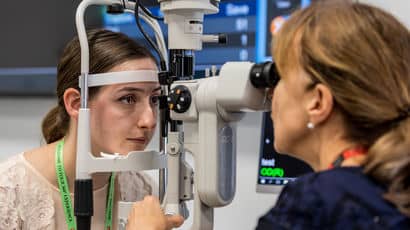
Research in the College of Health, Science and Society
Research centres and institutes in the College of Health, Science and Society at UWE Bristol. Find out what areas of research they focus on and much more.
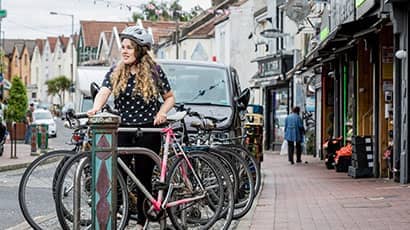
Enriching culture, place and community
We collaborate with national policymakers, local authorities, educators and industry to improve public spaces, infrastructure, and communities.
Innovation
We’re passionate about taking ideas into solutions that positively impact people, communities and our planet.