
“Unleash the West of England to power up UK growth” - The Brunel Centre publishes Economic Audit


The Brunel Centre, a new data and research centre designed to support sustainable and inclusive growth and industrial strategy in the West of England, today releases its first major publication, a Strategic Economic Audit of the region.
Its headline finding shows that the region possesses exceptional potential and is one of the UK’s most dynamic regional economies but is limited by structural constraints.
The West of England became the most productive Combined Authority area in England outside London in 2023. Its post-pandemic recovery has also been markedly stronger than the UK average.
Compiled by researchers at the University of Bath, the University of the West of England (UWE Bristol) and Futures West, the Economic Audit covers Bristol, Bath & North East Somerset, South Gloucestershire, and North Somerset.
It draws on official data from the Office for National Statistics and other sources, supplemented with primary qualitative research including interviews with local business leaders.
Launching the report at the Festival of Flourishing Regions in Bristol today, Dr Lucy Martin, Director of the Brunel Centre, will say: “The evidence is unequivocal: the West of England is one of the UK’s most dynamic regional economies, with growth significantly exceeding the national average since 2008.
“But the conditions underpinning that success are under strain – addressing these pressures with coordinated, long-term action is essential. Unleashing the West of England could see the region reach its potential and power the UK’s growth.”
Collective action needed to build sustainable growth – key findings
The Economic Audit’s key recommendation calls for the region to work collectively across the public, private and voluntary sectors to focus on productivity‑led growth, facilitate stronger pathways into employment, take region‑wide action on housing, transport, skills and inequalities, and accelerate the net zero transition.
By addressing these constraints, the researchers say the West of England can translate its strong economic fundamentals into a more inclusive, resilient and sustainable model of long‑term growth for the region and the UK.
Other key findings include:
- Export strength: the region generates exports worth £9.5 billion and runs a trade surplus, in contrast to the UK overall
- The region is home to world-leading innovation clusters, as well as strong knowledge-intensive, digital and creative industries
- A strong but place-specific labour market: The cities of Bristol and Bath are magnets for skilled workers, students and young professionals. Nearly half of residents have degree-level qualifications, one of the highest rates in England
- Surrounding areas experience higher underemployment and struggle to retain skilled professionals in specific sectors
- Transport is a ‘defining challenge’: congestion in the cities ranks among the worst in the UK, with unreliable, slow and poorly integrated public transport
- Housing and digital access issues: Housing affordability and shortages and inconsistent digital access are directly limiting growth and inclusion
- Localised pressures from child poverty to youth mental health demand are increasing, leading to untapped potential across the region
- Climate and environmental pressures: transport dominates overall greenhouse gas emissions, delivery of domestic retrofits to decarbonise homes is below target, and ecological decline threatens long-term resilience
Dr Damian Whittard, Associate Professor of Economics at UWE Bristol, says: “The Strategic Economic Audit shows that the West of England is a strong and vibrant region with enormous potential. Our research highlights the need for inclusive and sustainable economic growth within the region that supports the transition to net zero. Tackling inequality and spatial disparities, improving transport and connectivity, and delivering shared prosperity across communities is central to unlocking the region’s potential.”
Dr Lucy Martin adds: “We are proud to be adding a strong new economic capability to the West of England today by releasing our first Strategic Economic Audit and launching our Data Hub and Observatory.
“Our research gives the clearest picture yet of West of England’s economy: this is a great place to live and work, with a strong-performing economy. The fact we’ve had recent successes, while pockets of deprivation remain, make the West of England a natural place to explore how growth can power social mobility.”
Helen Godwin, Mayor of the West of England, says: “As we continue working together to deliver our ambitious Growth Strategy, reinforced by the Brunel Centre’s Strategic Economic Audit, the West of England is well-placed to secure greater investment to improve transport, build homes, and create new jobs. It is also wonderful to see the Festival of Flourishing Regions once again taking place today here in the country’s fastest growing regional economy – which is also the most productive outside of the capital.”
New online Data Hub and Observatory launch alongside audit
Alongside the launch of the Strategic Economic Audit today, the Brunel Centre will also unveil its online Data Hub and Observatory.
The observatory is an online and real-time data resource on the economic performance of the region. Hosting a range of data, it makes available the evidence that underpins today’s Audit and the ongoing work of the Centre freely available to businesses, policymakers and the public.
The Data Observatory is located at https://www.thebrunelcentre.co.uk/
About the Brunel Centre
The Brunel Centre was launched in 2025 by the University of Bath, the University of the West of England (UWE Bristol) and Futures West, backed by £4.5 million in funding from Research England.
It published a policy insight report, Closing the Productivity Gap, in September 2025.
In the coming months, the Brunel Centre will publish further economic insights, as well as hosting events and workshops designed to enable collaborations that facilitate inclusive and sustainable economic growth. The Centre will also open a consultancy service to businesses and key decision makers in the region and nationally.
Related news

29 September 2026
Findings from study suggest Government guidance on smartphones in schools may not go far enough
A Government decision to leave interpretation of new smartphone policy guidance to individual schools has been questioned by new research from UWE Bristol academics.

24 September 2026
Professor receives international honour during commemorative event for historical Ethiopian diplomat
A UWE Bristol professor whose research has highlighted Bath's connections with Ethiopia's history has received an international honour recognising his work.

17 September 2026
UWE Bristol leads £2 million project helping government departments deliver better economic data
UWE Bristol researchers will lead a team providing academic expertise to key government departments as they work to deliver better economic data.

14 September 2026
Immersive Arts announces £8.5m second phase funding
Immersive Arts has secured over £8.5 million to continue supporting UK artists working with immersive technologies until 2030.

11 September 2026
New book delivers decades of machine vision research into the hands of students, engineers and researchers
Practical Machine Vision: 2D, 3D and Deep Learning Systems for Real-World Applications is a new practical guide to machine vision that draws on almost three decades of research.

19 August 2026
Researcher to lead £455k body image project supporting people with head and neck cancer
A UWE Bristol researcher has been awarded almost half a million pounds to lead a project to develop a body image programme for people living with and beyond head and neck cancer.
12 August 2026
UWE Bristol researcher helps develop pioneering Avon Bioregion River Charter
A University of the West of England (UWE Bristol) academic has helped develop a bioregional charter of rights, to protect the River Avon.

10 August 2026
Graduate photographer breathing life into Weston-super-Mare’s own identity
A graduate photographer from Weston-super-Mare has created a 'love letter' to his home town to shine a light on struggling coastal communities.

06 August 2026
UWE Bristol lecturer wins prestigious teaching excellence award for interprofessional simulation
A UWE Bristol lecturer, who has organised the largest interprofessional major incident simulation conducted within an education environment in the UK to date, has been awarded a National Teaching Fellowship by Advance HE.
27 July 2026
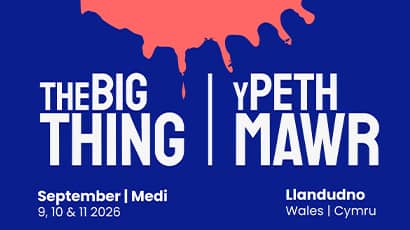
North Wales to host major UK immersive arts event ‘The Big Thing’
Artists, producers and technologists will gather in Llandudno in September as a national event exploring the future of immersive arts heads to North Wales.

20 July 2026
Student who overcame meningitis graduates with first from UWE Bristol
A student who suffered with meningitis as a child and experienced bullying while growing up has graduated from her law degree at UWE Bristol with a first.

16 July 2026
‘When I got the chance, I followed it with my heart’ – nurse graduates at the age of 64
An electronics technician who retrained as a registered nurse has graduated at the age of 64.