
UWE Bristol graduating students present Showcase 2026


A design for a community-led regeneration of Fishponds and a film about migration and motherhood are just some of the fascinating projects by UWE Bristol students featured in next month’s Showcase - the university’s annual degree show.
Taking place from Thursday 4 June to Wednesday 10 June, Showcase offers visitors the opportunity to discover a new generation of talent from the university’s College of Arts, Technology and Environment.
More than 1200 students from over 30 courses will exhibit their work at Bower Ashton, Arnolfini, Spike Island and at the University’s Frenchay Campus.
Members of the public are invited to attend the free, in-person exhibitions which will include a selection of undergraduate and postgraduate work from animation, architecture, art, creative technologies, design, engineering, fashion, filmmaking, media, performance, photography, product design and writing.
Professor Amanda Coffey, Deputy Vice-Chancellor and Provost at UWE Bristol, said: “Showcase presents a fantastic opportunity for fellow students, staff, families and visitors to experience the inspirational work of our graduating students. As the future creative workforce, driving new ideas here in the West of England and beyond, we are incredibly proud of their achievements.”
Some of the students exhibiting this year, include:
BA (Hons) Graphic Design student Lorelei von Leyden who has created a motion piece 'A Route to an Ideal Life'.
Two Hanover LED bus display boards programmed to present stages of life, critiquing the societally constructed and often perceived 'correct' route of life. One displays the 'ideal' life, next stop: marriage, children, wealth, retirement – while the contrasting board presents the 'unideal' life, featuring divorce, debt and breakdown, which was developed from verbal reactions by people viewing and critiquing how unrealistic the idealised version is.
Both sequences feature 'death' as a stop, emphasising the futility. The 'ideal' display concludes with 'the end', suggesting the closure of the perfect life. By contrast, the 'unideal' version ends with a question mark, opening up space for interpretation and encouraging a personal understanding of what life could mean.
Jasmine Mok, BA (Hons) Filmmaking. Born in Hong Kong, Jasmine is largely inspired by her culture and personal experiences within her filmmaking practice.
Her final project ‘Yuri’ is a 10-minute short documentary following a first-time Japanese mother in the UK, as she reflects on tender memories of her upbringing in Japan; confronting her identity quietly dissolves into parenthood while living between cultures.
The documentary comes from an interest in the subtle forms of identity loss and transformation that may occur through migration and motherhood. Jasmine says she is drawn to how identity can become fluid in this space between cultures, especially when language, routines, and practices all require reinterpretation. Rather than explaining identity, the film creates a space where lived experience, memory, and cultural positioning intertwine as ‘Yuri’ invites the audience to experience and reflect through the journey of transitioning identity.
Leandro Iniguez, BA (Hons) Architecture and Planning, has created a new vision for Fishponds through his architectural and master planning project.
The brief sought to examine the regeneration of the neighbourhood through a different approach. The proposal envisions the creation of a new self-sufficient and independent centrality in Fishponds that could be replicated around Bristol. The masterplan is anchored in a series of new and existing infrastructures, amongst which a building called The Shed stands out. This is a new kind of civic building named the Centre for Resourcefulness, which aims to bridge the gap between built environment professionals and the local community in the processes of regeneration taking place all over the city of Bristol, allowing both of these groups to learn from each other and engage in a long-term relationship as they redefine the future of their neighbourhoods.
In his exploration of Fishponds, the study of the Bristol and Bath Railway Path found that, while it stood as a symbol of connectivity and regional pride, it also represented an urban edge and an obstruction to permeability within the city of Bristol, especially in this area. The cycle path is concealed behind the parking lots of large supermarkets, yet it runs at the same height as the street, which is not common along the track. The idea was to make it a key location within the masterplan, a place where people converge and the neighbourhood comes alive, invoking the emotional ties to the train station that once stood there. The collage is a vision of when the cycle path stands as a true symbol of connection between cities in the West of England as well as a key public space for the people of Fishponds.
Pinyada Malirat studying MA Photography. Her work ‘Emodox’ is a photography and documentary project that explores burnout, emotional disconnection and recovery. It all begins with in-game photography from Final Fantasy XIV and shows how digital environments reflect different emotional states. The project name 'Emodox' represents emotional detachment, a feeling of being out of sync with the world, and the project uses photography to express emotions that are hard to put into words. This project also talks about transition through isolation, the unknown and moments of clarity. Finally, Emodox is about personal change shaped by emotion, nostalgia, and experience.
BA (Hons) Fashion Textiles student Florence Walker’s final year project ILLEGIBLE OBJECTS II focuses on recontextualisation and illegibility. Her approach to design is material-led with a heavy focus on experimentation.
Florence believes there is a real disconnect to physical experience with the growing emphasis on digital engagement; she explores this by producing a collection of objects which have intentionally unclears functions and force the user to interact in order to contextualise and make legible.
Fashion Textiles students will be holding a live fashion procession at Bower Ashton campus on Friday 5 June (during the preview evening).
For those who can’t attend the physical exhibitions, the digital Showcase launches on 1 June, featuring the work from graduating students. This online platform showcases new talent to a wide audience, helping graduates join the future creative workforce.
For further information, including opening dates and times, please visit the UWE Bristol website.
Related news
02 July 2026
Postgraduate Art and Design students showcase personally-inspired work
Discover emerging talent at UWE Bristol’s MA Showcase at Spike Island, with art and design work spanning illustration, photography and more.
29 May 2026
Emerging filmmakers challenge industry barriers with new accessible short film
A group of UWE Bristol filmmaking students are hoping to reshape how films are made, shared and experienced with their new short film ‘What I Meant to Say’.
15 April 2026
Art students celebrate Spike Island’s 50th year at annual Open Studios weekend
A mysterious archive of artworks donated by studio holders and staff will be unveiled by UWE Bristol students during Spike Island's Open Studios.
26 August 2025
UWE Bristol MA students present Showcase at Spike Island
Students from MA Fine Art, MA Graphic Arts, and MA Multi-Disciplinary Printmaking will exhibit their work at the Showcase MA Degree Show, from 4 September.
30 May 2025
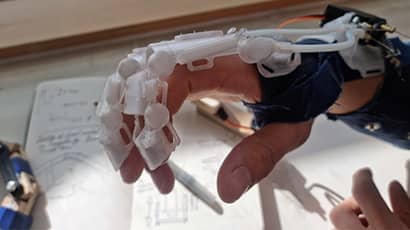
UWE Bristol student develops exoskeletal bionic glove to aid stroke recovery
A product design student from Iron Acton will unveil a prototype bionic glove to aid stroke rehab, during UWE Bristol’s annual Showcase starting on 5 June.
21 May 2025
Students reveal creative responses to real-world experiences at UWE Bristol Showcase
UWE Bristol’s Showcase, celebrating student creativity and innovation across the College of Arts, Technology and Environment, returns this June.
20 August 2024
UWE Bristol art and design students explore diverse global issues at MA Degree Show
UWE Bristol’s Showcase: MA Degree Show returns to Spike Island on 5 September, featuring the extraordinary artwork of around 50 graduating students.
04 June 2024
Urban places and spaces should be accessible for all, says UWE Bristol student
Student Emily Annakin is hoping to land her dream job, using her own experience of visual impairment to design inclusive urban spaces.
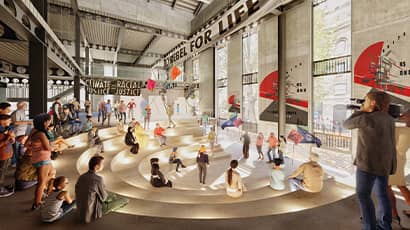
07 May 2024
Graduating students gear up to present their work at annual Showcase
UWE Bristol's Showcase offers visitors the chance to discover a new generation of talent from the College of Arts, Technology and Environment.
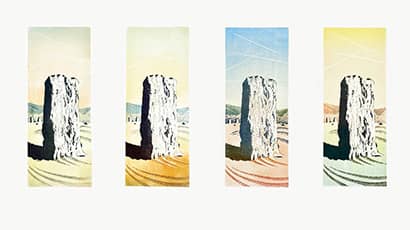
30 August 2023
Emerging talent exhibited during MA Showcase
Students studying MA Design, MA Graphic Arts and MA Multi-Disciplinary Printmaking will exhibit their work at a special Showcase this month.
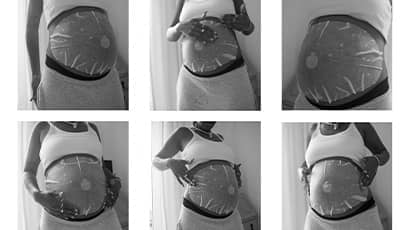
01 June 2023
Degree Show beckons for UWE Bristol students
An annual end of year celebration of work by students at the University of the West of England (UWE Bristol) takes place next week (8-15 June).
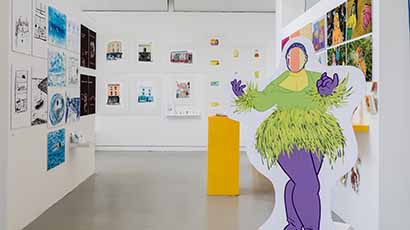
28 April 2023
UWE Bristol graduates to unveil work at annual degree show
The exceptional talent of graduating students at the University of the West of England (UWE Bristol) will be celebrated at the annual Degree Show this June.
You may also be interested in

Media enquiries
Enquiries related to news releases and press and contacts for the media team.
Find an expert
Media contacts are invited to check out the vast range of subjects where UWE Bristol can offer up expert commentary.