
Volunteers experience life as wild animals for pioneering nature conservation project


A group of volunteers experienced life as if they were wild animals for an innovative nature conservation project co-led by UWE Bristol.
Eighteen volunteers ‘lived’ as red deer, otters, earthworms, kestrels and salmon around the River Tone in Somerset to identify the risks to wildlife in human-dominated landscapes.
Over the course of the six-month research study Risks Beyond Human Eyes, they took on the roles of animals for a few hours at a time to understand the unique threats they face in their bid for survival.
Participants were given a detailed briefing in advance about the animals they chose to embody, particularly how they sense the world around them, before going into the wild along the river near Taunton to experience life as their selected species.
They fed back their testimonies to project organisers, with the perceived risks to food availability, shelter and safety being mapped out on a digital visualisation tool of the river catchment.
Risks reported by volunteers included the impact of dogs being walked in the area and entering the river with flea treatment, the impact of train noise on wildlife, the difficulty of crossing roads for otters, and an absence of long grassland in which kestrels could hunt for food.
UWE Bristol project lead Miguel Prado Casanova, a senior lecturer in philosophy, said: “Embodying these animals was something that challenged certain psychological assumptions. We tried to make clear to the participants that while things like light pollution and noise pollution are not a big deal for humans, they could be massive for an animal whose sensory capacities get easily overwhelmed.
“It was a case of realigning the way in which they experience the world. This is a very complicated thing because there is no way for us as humans to get close to experiencing the way in which an animal smells or sees, for example.
“All the participants handled it in different ways. There were some cases, for instance the participant who was embodying an Atlantic salmon - which faces extinction - where they became very emotional when they were giving their testimony about what they had experienced.
“Overall, we wanted to produce a methodology that could be used by the community to gain knowledge about other sensory worlds and navigate this space by taking into account things that otherwise would be overlooked.”

UWE Bristol was joint lead investigator on the study alongside Accelerator for Systemic Risk Assessment (ASRA), with funding coming from the Ecological Citizen(s) Network. The project was delivered with the support of Friends of Longrun Meadow and Somerset Wildlife Trust.
As part of the project, Miguel worked with ASRA to produce an Animal Collaboration Guide - pairing hands-on practices with data on the five species selected for the study - which participants read before taking to life as their chosen animal.
The study stemmed from Miguel’s earlier work on the More-Than-Human Lens Toolkit, which he created with anthropologist and design researcher Patricia Fraga and was supported through Higher Education Innovation Funding and Impact Accelerator Accounts funding.
Miguel explained the study also considered the types of mitigations that could be introduced to address the risks that had been identified by the participants.
He said: “For example, looking more broadly at places like Ashton Court where they regularly hold music festivals. It’s a sanctuary for deer - they have been living there for centuries - and they are massively affected by the music when the festivals are held and feel threatened by the noise.
“And in heatwaves in the UK, people enjoy wild swimming but have sun cream on their skin when they enter the water. This is bad for the animals and the ecosystem. Many fish have electrochemical receptors and they perceive the cream as a toxic agent. There are many situations where, if we could think in terms of the sensory apparatus of animals, we would do things differently.”
Looking ahead, Miguel, programme leader on the BA(Hons) Philosophy course at UWE Bristol, added: “The volunteers involved in this study who live near the River Tone will continue working with this methodology. They have a plan for responding to the risks that they’ve identified.
“They have a lot of agency, with the tools and with the data from this study, to make changes. They’ve become more robust as a community of wildlife volunteers.
“They are very invested in mitigating those risks and to will now start thinking about the risks for other animals that were not included in this study.
“In the future, we would like to hold more workshops with different communities to see if we could employ these same methodologies in different settings and contexts. This study has demonstrated that they work very well.”
The findings from the study will later this year be submitted for publication in an academic journal. Researchers will also present their work at the Digital Design Weekend at the V&A South Kensington in September.
Related news
08 October 2026
UWE Bristol signs Armed Forces Covenant
UWE Bristol has signed the Armed Forces Covenant (AFC) in recognition of the challenges faced by service and ex-service personnel and their families.
08 October 2026
Innovative new app created to help stroke patients with rehabilitation
A UWE Bristol researcher led a project to develop an innovative new app to help patients recover after having a stroke.

29 September 2026
Findings from study suggest Government guidance on smartphones in schools may not go far enough
A Government decision to leave interpretation of new smartphone policy guidance to individual schools has been questioned by new research from UWE Bristol academics.
24 September 2026
Professor receives international honour during commemorative event for historical Ethiopian diplomat
A UWE Bristol professor whose research has highlighted Bath's connections with Ethiopia's history has received an international honour recognising his work.

17 September 2026
UWE Bristol leads £2 million project helping government departments deliver better economic data
UWE Bristol researchers will lead a team providing academic expertise to key government departments as they work to deliver better economic data.
07 September 2026
UWE Bristol wins Heroes Award for Anti-Racism Strategy
UWE Bristol’s Equity, Diversity and Inclusivity (EDI) team has been recognised with a prestigious prize at the University Alliance Awards 2026.
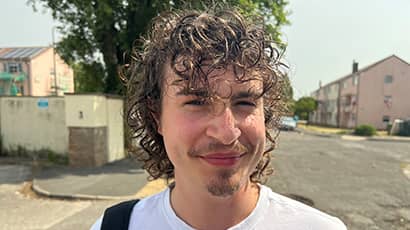
10 August 2026
Graduate photographer breathing life into Weston-super-Mare’s own identity
A graduate photographer from Weston-super-Mare has created a 'love letter' to his home town to shine a light on struggling coastal communities.
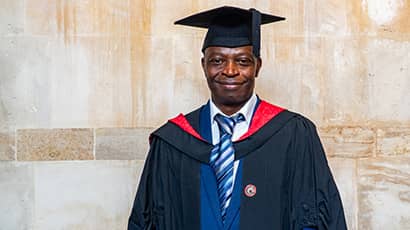
16 July 2026
‘When I got the chance, I followed it with my heart’ – nurse graduates at the age of 64
An electronics technician who retrained as a registered nurse has graduated at the age of 64.
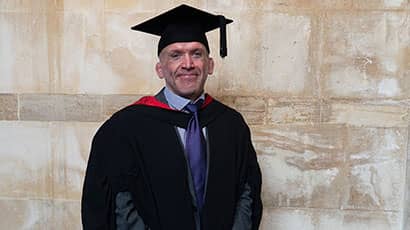
13 July 2026
Emotional graduation for mature student who collects degree after mother’s death
A mature student whose mother passed away three months before he completed his degree has graduated in an emotional ceremony.
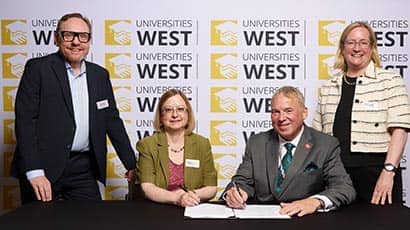
01 July 2026
West of England universities and colleges formally launch joint forums to boost skills, growth and opportunity
Universities West and Colleges West have announced their formal launch, bringing together the West of England’s universities and colleges through two new regional forums to strengthen collaboration, support economic growth and improve opportunities for learners.
17 June 2026
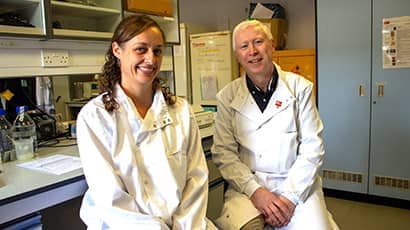
Scientists develop low-cost tests for people with bleeding and clotting disorders
Patients with bleeding and clotting disorders living in low-income countries could benefit from new low-cost testing devices being developed at UWE Bristol.
15 June 2026
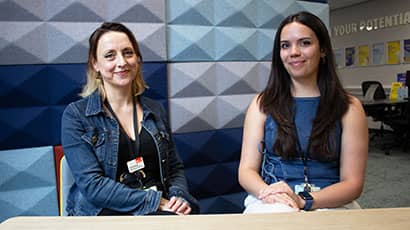
Researchers develop new approach for connecting people with substance use dependency to community support
UWE Bristol researchers have developed a toolkit to help people living with drug and alcohol dependency access community services that support their long-term health and wellbeing.
You may also be interested in
Media enquiries
Enquiries related to news releases and press and contacts for the media team.
Find an expert
Media contacts are invited to check out the vast range of subjects where UWE Bristol can offer up expert commentary.

Innovation
We’re passionate about taking ideas into solutions that positively impact people, communities and our planet.
School of Social Sciences
If you want a career in social sciences, our inspiring courses will teach you to apply what you've learnt so you can start making a difference as soon as you graduate.