
Lessons from Yemen: building community resilience and hope in one of the world’s most fragile settings


In Taiz, Yemen’s third-largest city, a group of young people are playing a key role in safeguarding one of the country’s most prominent historical and architectural landmarks - Al-Qahira Castle.
The 11th-century fortress, perched nearly 1,500 meters above sea level, is a symbol of Yemeni identity but is also a testament to centuries of history now threatened by the combined forces of climate change and conflict.
Rising temperatures, water scarcity and increasingly erratic rainfall threaten livelihoods and stability; at the same time, years of conflict have devastated this cultural landmark. However, new evidence reveals that climate change – not war – has become the greatest threat to the site’s survival. Its loss would mean erasing a vital link to Yemen’s history and a focal point for community life.
As climate change intensifies and conflicts disrupt communities, protecting heritage sites like Al-Qahira Castle becomes essential for maintaining a sense of continuity and hope.
In response, an innovative educational initiative - led by the University of the West of England (UWE Bristol) - places the young people of Yemen at the heart of preserving this historic site and offers a blueprint for how heritage can be protected in places shaped by conflict and climate change.
The project is the first of its kind in the country to explicitly link heritage protection with climate resilience. Launched in March 2025 with support from UWE Bristol’s AHRC Impact Acceleration Account (IAA), it provides a vital step for the local community towards building long-term awareness of cultural identity, environmental responsibility, and sustainable interaction with historic sites.
Working in partnership with Heritage for Peace, represented by Dr Isber Sabrine and architect Mariam Abdullatif, alongside field support from the General Authority for Antiquities and Museums in Taiz, the project selected seven final-year architectural engineering students from the University of Taiz as research fellows. They have been recording climate-related damage, conducting structural decay analysis, drone and photogrammetry surveys, and climate-risk assessments.
“The castle is very important to the people of Taiz. We used to visit it every weekend when we were young. However, today, visitors are not allowed to enter the fortress itself due to its current condition and safety concerns. They are restricted to exploring externally – outside the walls where the castle stands within the landscape,” said architect Mariam Abdullatif, who has been supervising the students together with Mr Ramzi Al-Dumaini and his colleagues Belal Al-Makash, Mahboad Mahyoub and Abdulkhaliq Alfotaih.

The university students have also engaged the younger generations in Taiz by leading immersive educational experiences for local schoolchildren within the castle. Pupils from preparatory schools in Taiz have participated in field visits, where they explored the impacts of climate change, including the risks posed by climbing plants to the stone fabric and the effects of drought on traditional water systems. They are taught simple agricultural practices that encourage planting as a response to environmental challenges.
“Our outreach includes going into schools to raise awareness about the castle, the impact of conflict, and especially climate change,” added Mariam. “We have been showing the pupils how the castle used to look and explaining why preservation matters. This is especially important for children who have never seen it in its original state.”
The project is supported by UWE Bristol’s Professor Lisa Mol, whose research focuses on the impact of climate change on conflict-affected heritage. She believes the programme offers a new approach: “This hands-on involvement fosters a sense of responsibility towards both nature and heritage, nurturing a new generation of custodians for historical sites, such as Al-Qahira Castle.
“If heritage is ignored, recovery will be slower and communities more vulnerable to future shocks. But through this project, the team is working with local stakeholders to develop practical roadmaps for anticipating climate risks and safeguarding heritage sites for future generations. In doing so, they are strengthening the role of heritage as a living expression and celebration of Yemen’s rich cultural identity.”
Despite a modest budget, the project has delivered substantial impact, including the creation of 10 local jobs, provision of drones and field equipment, publication of new research, as well as providing climate education activities across Taiz schools. Community initiatives are already emerging, strengthening local pride, identity and awareness of the risks facing Yemen’s heritage.
“The project also addresses a critical gap in climate adaptation strategies by emphasising cultural resilience,” continued Professor Mol. “Through education and capacity building, it empowers young people to become active participants in safeguarding their heritage and environment, ensuring that these treasures remain vibrant and relevant.”
The research fellows have now completed the project and will use their confidence and autonomy in climate change adaptation to develop roadmaps for heritage conservation for the coming years. They will also continue to inspire the younger generations to value, celebrate and nurture their heritage, passing on their scientific knowledge to their communities.
Dr Isber Sabrine, President of Heritage for Peace and researcher at the Spanish National Research Council, added: “This project shows how cultural heritage can play an important role in strengthening resilience, even in places facing extremely difficult conditions. In Yemen, where conflict and climate challenges overlap, sites like Al-Qahira Castle are much more than historic monuments. They represent memory, identity, and a sense of continuity for local communities.
“What makes this initiative especially meaningful is the involvement of young people and local actors. By combining documentation, climate-risk assessment, and community engagement, the project has helped build local capacity while also encouraging a renewed sense of responsibility toward heritage and the environment.
“Experiences like this remind us that even with limited resources, meaningful impact is possible when communities are empowered to care for their own heritage. Supporting local knowledge and youth engagement is essential if cultural heritage is to remain a living source of resilience, identity, and inspiration for future generations.”
Related news

08 October 2026
Innovative new app created to help stroke patients with rehabilitation
A UWE Bristol researcher led a project to develop an innovative new app to help patients recover after having a stroke.

29 September 2026
Findings from study suggest Government guidance on smartphones in schools may not go far enough
A Government decision to leave interpretation of new smartphone policy guidance to individual schools has been questioned by new research from UWE Bristol academics.

24 September 2026
Professor receives international honour during commemorative event for historical Ethiopian diplomat
A UWE Bristol professor whose research has highlighted Bath's connections with Ethiopia's history has received an international honour recognising his work.
14 September 2026
Immersive Arts announces £8.5m second phase funding
Immersive Arts has secured over £8.5 million to continue supporting UK artists working with immersive technologies until 2030.

11 September 2026
New book delivers decades of machine vision research into the hands of students, engineers and researchers
Practical Machine Vision: 2D, 3D and Deep Learning Systems for Real-World Applications is a new practical guide to machine vision that draws on almost three decades of research.

04 September 2026
Most money laundering arrests involve people under the age of 30
A new study has highlighted gaps and inconsistencies in law enforcement of money laundering offences in England and Wales.

19 August 2026
Researcher to lead £455k body image project supporting people with head and neck cancer
A UWE Bristol researcher has been awarded almost half a million pounds to lead a project to develop a body image programme for people living with and beyond head and neck cancer.
08 July 2026
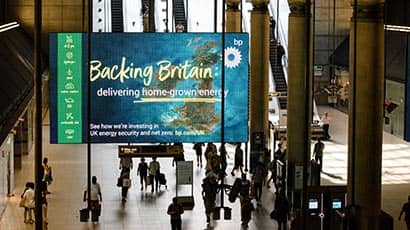
Researchers develop guidance to tackle ‘high carbon’ advertising on London’s transport network
Researchers have answered the Mayor of London’s call for guidance regarding a possible ban on the advertising of ‘high carbon’ products and services on the capital’s public transport network.

01 July 2026
Volunteers experience life as wild animals for pioneering nature conservation project
A group of volunteers experienced life as if they were wild animals for an innovative nature conservation project co-led by UWE Bristol.

23 June 2026
UWE Bristol awarded £233k for project working with children to develop water efficiency solutions
UWE Bristol been awarded £233,000 for a project that will see researchers work with children across the UK to explore their ideas for sustainable water use.
17 June 2026
Scientists develop low-cost tests for people with bleeding and clotting disorders
Patients with bleeding and clotting disorders living in low-income countries could benefit from new low-cost testing devices being developed at UWE Bristol.

15 June 2026
Researchers develop new approach for connecting people with substance use dependency to community support
UWE Bristol researchers have developed a toolkit to help people living with drug and alcohol dependency access community services that support their long-term health and wellbeing.
You may also be interested in

Media enquiries
Enquiries related to news releases and press and contacts for the media team.
Find an expert
Media contacts are invited to check out the vast range of subjects where UWE Bristol can offer up expert commentary.