
Postgraduate Art and Design students showcase personally-inspired work



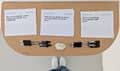
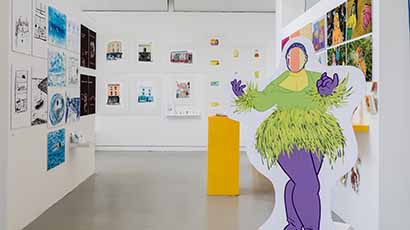
An illustrated book for children living with Type 1 diabetes and photographs exploring Timorese identity are just some of the incredible art and design works on display at UWE Bristol’s MA Showcase at Spike Island this month.
From Thursday 16 July to Wednesday 22 July, the event will include over 60 graduating students from MA Fine Art, MA Fine Art: Curating, MA Fine Art: Photography, MA Fine Art: Printmaking, MA Design Communication: Illustration, and MA Design Communication: Graphic Design.
The free exhibition will offer visitors the chance to discover a mix of creative talent, celebrating the postgraduate students’ knowledge, the understanding of their craft and their hard work during their course.
Will Grant, UWE Bristol’s Associate Director of Postgraduate Taught Studies, said: “We are so proud of all our students’ achievements this year. Their work is highly accomplished and reflects their individual identities and experiences, making for a thoughtful and compelling exhibition for the public to enjoy.”
Some of the postgraduate students taking part are:
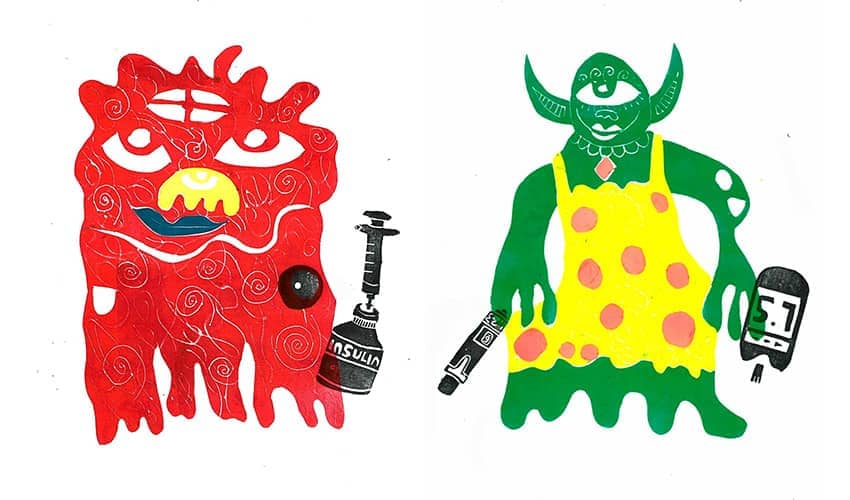
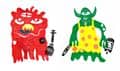
Melody Addicott, studying MA Fine Art: Printmaking: Melody's final project is an illustrated children's book designed for young people living with Type 1 diabetes who are experiencing difficulties, frustrations, or ‘wobbles’ in managing their condition.
Diagnosed with Type 1 diabetes at the age of two, Melody draws heavily on her own experiences. The book was inspired by a personal health crisis when she developed diabetic ketoacidosis after attending a party dressed as an alien character. During her time in hospital, she reflected on the seriousness of diabetes and how easily self-management can become overwhelming. After researching existing resources, she found very few books aimed at children already living with diabetes who were experiencing setbacks, which motivated her to create one herself.
Through a colourful alien world and engaging characters, the project encourages children to understand that feelings of frustration, burnout and disappointment are a normal part of living with a lifelong condition.
Beginning as a series of illustrations based on the alien character, the project has evolved through experimentation with lino printing, foam printing, and rubber stamping. Melody is currently developing a series of vibrant alien characters that incorporate diabetes devices and medication technologies. By including a variety of devices rather than only those she personally uses, she hopes children will recognise and relate to the characters while also helping parents, siblings, and friends gain a better understanding of life with diabetes through a fun and accessible story.
She said: “Living with Type 1 diabetes can be exhausting at times, and even after having it for most of my life, there have been moments where I've felt frustrated and asked myself, ‘Why me?’. Through this project, I want children to know that those feelings are completely normal and that they don't have to manage them alone.
“Exhibiting this work at the MA Showcase is an exciting opportunity to share a project that is deeply personal to me and one that I hope can make a positive difference to children living with diabetes.”
Melody was born and raised in Bristol and hopes that once the book is completed, it can be shared with young patients through the Bristol Royal Hospital for Children diabetes team, as well as organisations such as Diabetes UK.
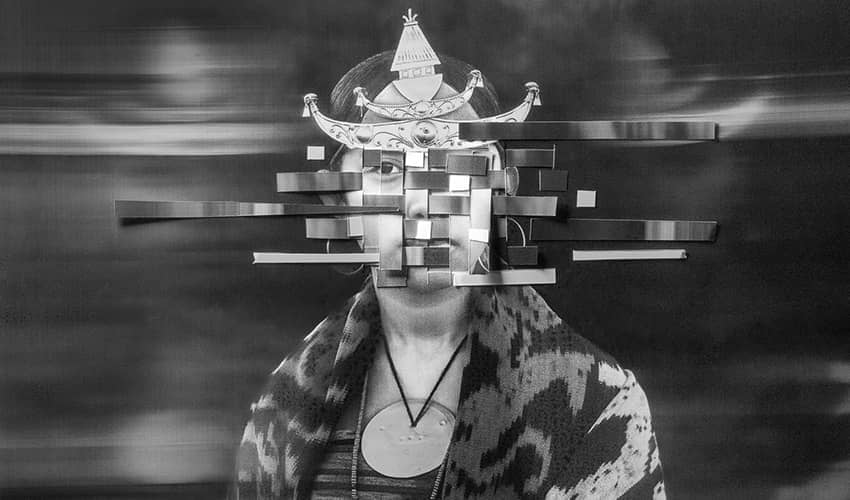
Rikii Altamirano, studying MA Fine Art: Photography: Rikii is a Timorese visual artist. His work is deeply personal and rooted in his homeland, a place where he says, “my core is buried”. He uses photography as a tool to open up real conversations about Timorese identity post-independence, “looking back at our past to understand where we are heading”.
Rikii said: “Right now, my focus is on the Timorese diaspora in the UK, a community that often feels invisible to the public eye.
“My current project ‘Fitar’, was born out of frustration with how we are represented online, as we are often reduced to viral clips of violence, which does not reflect the real lives I see around me. Through Fitar, I want to show another perspective that highlights the resilience, hard work, and humanity of the Timorese here in the UK, who I see as true national heroes.
“My art is a commitment to showing the real, layered reality of Timorese life, moving away from misrepresentation and toward an authentic portrait of who we are.”
Ash Lewis, MA Fine Art: Curating. Ash is an international student from the USA currently in a curatorial residency with Art in Motion (AIM), a Bristol-based organisation that collaborates with learning-disabled and neurodivergent artists.
An excerpt from Ash's paper, ‘A Neurodivergent Raver’, reads: “How does a space make me feel so seen? What allows me to let go entirely, to exist without filtering myself or holding back?”.
Ash has been exploring these questions through creative writing, making, exhibitions, workshops, and research. Their work is interested in sensory experience, embodiment, rhythm, atmosphere, participation, and the moments when people feel connected to a space, an idea, or each other. From reflecting on experimental music events and neurodivergent ways of sensing the world, to their current residency with AIM, they have become increasingly interested in how creativity, access, care, and collaboration shape people’s experiences.
Ash commented: “What I've loved most is discovering how expansive curating can be. Through exhibitions, workshops, collaborative projects, writing, and my residency with AIM, I've been able to experiment with different ways of creating and connecting with others. I'm especially excited that the curating students are part of the MA Showcase this year. Our cohort has formed such a strong bond, and we're using this opportunity to share something about who we are together, not just as practitioners but as friends. It's exciting to celebrate all the different forms curating can take and to invite people into the conversations, collaborations, and creative processes that have shaped our time on the course.”
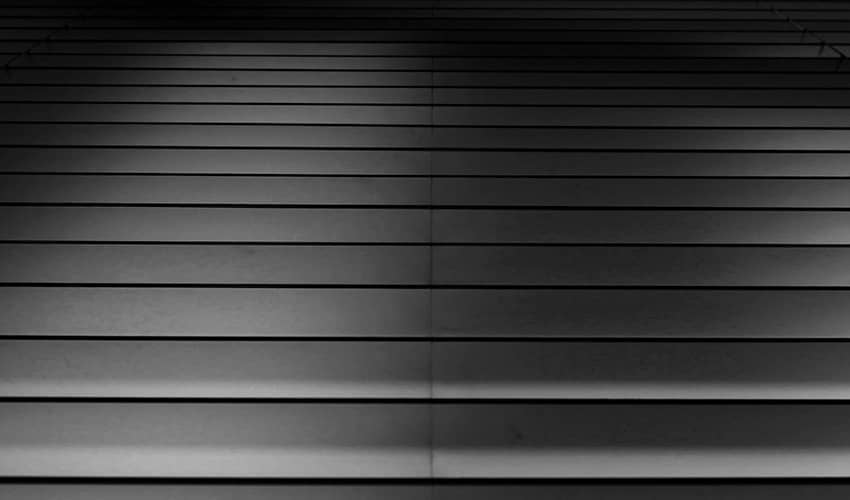
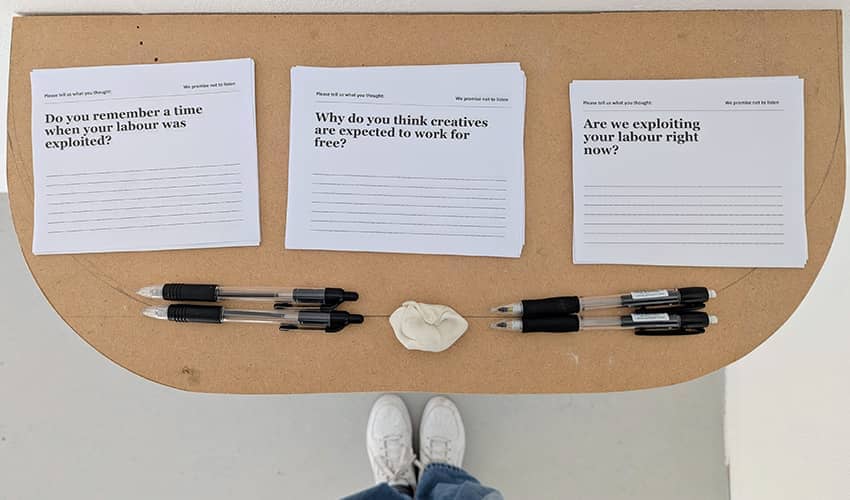
Eliza Jessie Benefield, MA Fine Art: Originally trained as a painter, Liza utilises an expanded painting practice which now includes sculpture, moving image, performance and photography. The work embodies the abstract nature of the grid, using their construction to demonstrate internal architectures. Facilitating an escape from the reality imposed on her by current sociopolitical climates, she offers a relevant perspective to audiences about their own existence within present-day society. By posing reflective questions, her work intends to engage viewers in the lived experience of capitalism, considering themes of labour, repetition, emotional fatigue, oppression, and the search for meaning within contemporary life.
“Studying for an MA in Fine Art at UWE has been a hugely fruitful experience. It has added critical depth to my practice, helped me develop professional skills and given me the opportunity to work collaboratively with other artists.
“I have been continuously encouraged to pay attention to what deeply inspires and drives my work. I was given space to assess my obsession with repetitive pattern deeply, and in turn, came to conclusions that my work was more than just a love letter to line and form. This process has resulted in a practice that feels polished and authentic. I feel proud to be exhibiting these developments in the MA Showcase 2026 and I am looking forward to inputting these skills into my future career and utilising my new abilities in critical analysis for any further study I may pursue.”
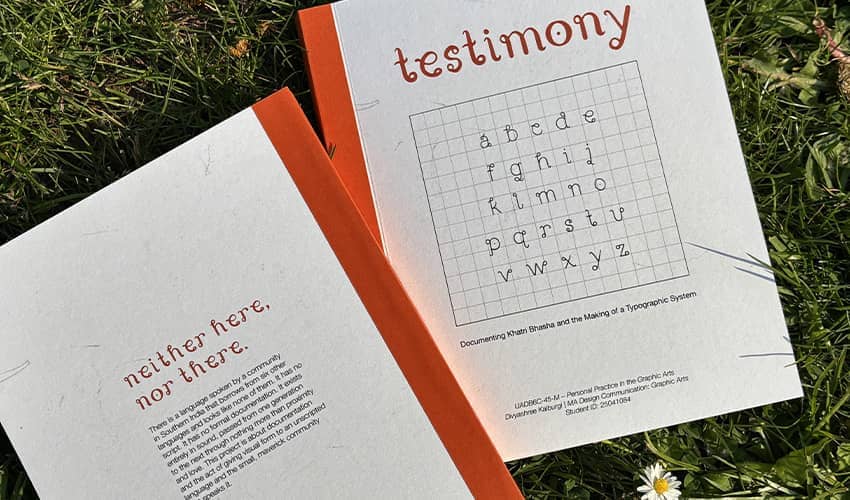
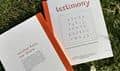
Divyashree Kalburgi studying MA Design Communication: Graphic Design. A community, a language, and a typeface. Divyashree’s final project, Bhasha, is an experimental typeface and visual design system for Khatri Bhasha, an oral language spoken by a small community in southern India that has never had a written script.
Divyashree commented: “I grew up within this community in Bengaluru, India, where I always feeling like I was part of it without quite belonging to it. This project has become a way of placing myself back within the language and the community it belongs to.
“There is no dictionary for this language, no textbook, no archive. Everything that exists, exists in someone's memory and someone's voice. I wanted to find out what it means to give that kind of language and community a visual form and to document it.”
The typeface was hand-drawn and digitised from scratch, built specifically to carry the sound and rhythm of a language with no existing written precedent. The wider design system extends into risograph-printed zines, posters, a motion piece, and a coffee table book documenting the language and the community that speaks it, tracing the journey from unfamiliarity to recognition.
“This project sits between documentation and design,” said Divyashree. “It is about what gets lost when a language is never written down, and what it means for me to find my own place in it. This MA course at UWE has given me the room to design around something that actually matters right now, not just to me, but to a much wider conversation about language and loss.”
For anyone curious about where a creative postgraduate degree could take them, the School of Arts will host a postgraduate drop-in event and an opportunity to meet programme leaders during the MA Showcase at Spike Island, on Saturday 18 July from 12:00–14:00.
More information about the MA Showcase is available on the UWE Bristol website.
Related news
29 May 2026
Emerging filmmakers challenge industry barriers with new accessible short film
A group of UWE Bristol filmmaking students are hoping to reshape how films are made, shared and experienced with their new short film ‘What I Meant to Say’.
18 May 2026
UWE Bristol graduating students present Showcase 2026
A design for a community-led regeneration of Fishponds and a film about migration and motherhood are just some of the projects to be featured in Showcase.
15 April 2026
Art students celebrate Spike Island’s 50th year at annual Open Studios weekend
A mysterious archive of artworks donated by studio holders and staff will be unveiled by UWE Bristol students during Spike Island's Open Studios.
26 August 2025
UWE Bristol MA students present Showcase at Spike Island
Students from MA Fine Art, MA Graphic Arts, and MA Multi-Disciplinary Printmaking will exhibit their work at the Showcase MA Degree Show, from 4 September.
30 May 2025
UWE Bristol student develops exoskeletal bionic glove to aid stroke recovery
A product design student from Iron Acton will unveil a prototype bionic glove to aid stroke rehab, during UWE Bristol’s annual Showcase starting on 5 June.
21 May 2025
Students reveal creative responses to real-world experiences at UWE Bristol Showcase
UWE Bristol’s Showcase, celebrating student creativity and innovation across the College of Arts, Technology and Environment, returns this June.
20 August 2024
UWE Bristol art and design students explore diverse global issues at MA Degree Show
UWE Bristol’s Showcase: MA Degree Show returns to Spike Island on 5 September, featuring the extraordinary artwork of around 50 graduating students.
04 June 2024
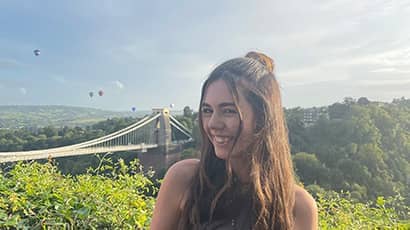
Urban places and spaces should be accessible for all, says UWE Bristol student
Student Emily Annakin is hoping to land her dream job, using her own experience of visual impairment to design inclusive urban spaces.
07 May 2024
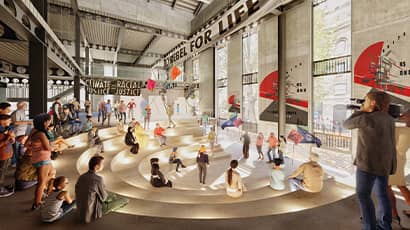
Graduating students gear up to present their work at annual Showcase
UWE Bristol's Showcase offers visitors the chance to discover a new generation of talent from the College of Arts, Technology and Environment.
30 August 2023
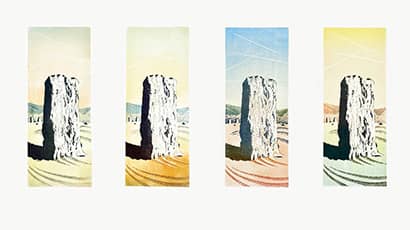
Emerging talent exhibited during MA Showcase
Students studying MA Design, MA Graphic Arts and MA Multi-Disciplinary Printmaking will exhibit their work at a special Showcase this month.
01 June 2023
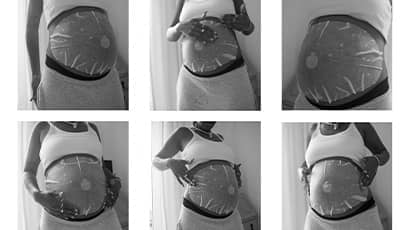
Degree Show beckons for UWE Bristol students
An annual end of year celebration of work by students at the University of the West of England (UWE Bristol) takes place next week (8-15 June).
28 April 2023
UWE Bristol graduates to unveil work at annual degree show
The exceptional talent of graduating students at the University of the West of England (UWE Bristol) will be celebrated at the annual Degree Show this June.
You may also be interested in

Media enquiries
Enquiries related to news releases and press and contacts for the media team.
Find an expert
Media contacts are invited to check out the vast range of subjects where UWE Bristol can offer up expert commentary.