
Mapping safer roads: Robotics, behaviour and the future of infrastructure
Creating safer, smarter road systems demands more than better vehicles. It requires a deep understanding of infrastructure, human behaviour and the complex interactions between them.
At UWE Bristol, Professor Lars Kunze, Professor in Safety for Robotics and Autonomous Systems, is leading bold research that sits at the intersection of robotics, transport and human-centred design – redefining how we map and understand road environments for a safer future.
The RobotCycle project
Through the RobotCycle project, Professor Kunze and collaborators have developed new approaches to Mapping and Understanding Road Infrastructure and Road User Behaviour. Originally initiated with his research group at Oxford and recently published in the IEEE Journal on Field Robotics under his UWE Bristol affiliation, this work advances how autonomous and robotic systems perceive and interpret real-world road environments.
Rather than treating roads as static maps, RobotCycle recognises them as dynamic ecosystems shaped by infrastructure design, cyclist behaviour, pedestrian movement and informal social rules. Using robotics-based sensing and mapping techniques, the project captures detailed representations of road layouts while simultaneously analysing how cyclists and other users interact with them.
This dual focus is critical. Infrastructure alone does not determine safety; human behaviour, perceptions of risk and cultural norms play an equally powerful role. RobotCycle brings these strands together, building a data-rich understanding of how infrastructure design influences behaviour and how behaviour, in turn, challenges current road systems.
Human-centred safety for autonomous systems
At the heart of this research lies a fundamental question: how can autonomous systems operate safely and ethically in environments dominated by human decision-making?
Autonomous vehicles and delivery robots must interpret subtle cues – a cyclist’s hesitation, a pedestrian’s glance, an unexpected manoeuvre. RobotCycle contributes to this challenge by producing structured environmental models that combine physical road features with behavioural patterns. This creates a foundation for robotic systems that are not only technically capable but socially aware.
Current doctoral research under Professor Kunze’s supervision extends this work further. A PhD researcher is conducting in-depth user studies with cyclists, examining perceptions of safety, risk-taking behaviours and interactions with emerging autonomous technologies. Parallel studies focusing on pedestrians are underway, ensuring that vulnerable road users remain central to technological development.
This emphasis on user studies signals a clear position: safety cannot be engineered in isolation. It must be co-informed by the people who use the system every day.
RISE: securing a green, resilient future
Encouraging active travel such as cycling and walking is essential to reducing urban emissions and achieving climate goals. Yet safety concerns remain a major barrier. By providing robust, data-driven insights into how infrastructure and behaviour interact, this research informs safer road design, smarter urban planning and more trustworthy autonomous mobility systems.
In doing so, it strengthens the case for sustainable transport systems that are both technologically advanced and socially responsible.
Road safety is often framed as an engineering problem or a behavioural problem. This research demonstrates it is both and more.
By integrating robotic mapping, behavioural insight and infrastructure analysis, UWE Bristol is helping to build transport systems that understand people as well as they understand space. For researchers, the project opens new interdisciplinary pathways between robotics, urban studies and social science. For industry, it provides scalable methodologies for safer autonomous deployment. For cities, it offers evidence to design infrastructure that genuinely supports active, low-carbon travel.
This is research that does not simply observe road systems. It reimagines them.
Contribution to the UN 2030 sustainable development goals
UWE Bristol is proud to align our research to the UN sustainable development goals. This research aligns with the following goals:
You may also be interested in
Bristol Robotics Laboratory
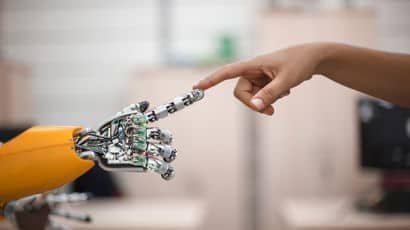
Bristol Robotics Laboratory (BRL) is a nationally – and internationally – recognised as a centre of excellence for advanced robotics research.
College of Arts, Technology and Environment
With over 12,000 students and 750 staff, our interdisciplinary approach to teaching, research and partnerships creates new opportunities for our students, our staff and the communities we serve.
Securing a green, resilient future
We're tackling global challenges by promoting social justice, empowering communities and protecting the environment, helping to make Britain a Clean Energy Superpower.

Research
Our active, collaborative research community of bold, original thinkers break boundaries, immerse themselves in the now and open the way to new futures.