
Creative Economies Lab
The creative economy is one of the UK’s most dynamic sectors but also one of its most fragile. Fragmented work, uneven access to opportunity and vulnerability to economic shocks all pose long-term challenges, as well as a lack of recognition for the vital role that arts and culture play in the sector.
At UWE Bristol, researchers are responding with research that is rigorous, people-centred and grounded in real-world impact. Bringing together researchers, creative practitioners, policymakers and industry, Creative Economies research at the Digital Cultures Research Centre is redefining what sustainable success looks like for the creative industries.

Understanding creative economies as ecosystems
The research approaches creativity not as a single sector, but as an interconnected ecosystem shaped by people, place, policy and technology. This is now part of the wider creative industries research environment thanks in part to Dr. Tarek Virani’s edited volume Global Creative Ecosystems (2023, Palgrave Macmillan). As such the research interrogates dominant assumptions about growth, productivity and value, asking difficult but necessary questions: Is growth the only measure of success? Who benefits from creative economies and who is left behind?
By working directly with creatives, artists, makers, technologists, policymakers and stakeholders, this research has helped reframe how creative economies are understood, particularly in the Bristol and Bath region. This work provides a robust evidence base for alternative models that prioritise equity, sustainability and long-term resilience alongside innovation and economic contribution.
This foundational research co-developed with cultural institution Watershed underpins major UKRI-funded R&D programmes – ensuring that interventions are informed by lived experience, grounded in data and designed for lasting change.
Bristol + Bath Creative R+D
One of the most significant initiatives was Bristol + Bath Creative R+D, a six-year programme (2018–2024) supporting creative businesses, freelancers and artists to experiment, innovate and grow.
Co-delivered with long time collaborator Watershed, and with partners across the region, the programme provided funding, time, business support and public platforms for creative R&D. Its impact is substantial:
- Engagement with 332 creative companies and freelancers
- £1.6 million awarded directly to creatives through over 140 investments
- Leveraged £20.2M further investment into the sector
- 82 new jobs, 18 new businesses formed, and hundreds of members of the public engaged
- Support for the development of new talent across academia and the creative sector
Crucially, research by Associate Professor Simon Moreton, Senior Research Fellow Liz Roberts and Research Fellow Jack Lowe has demonstrated that innovation in the creative sector is most powerful when it is people-first. Rather than chasing scale at any cost, the programme enabled creatives to test ideas, build confidence and develop sustainable practices rooted in their communities.
Building resilience in the creative industries
Resilience has emerged as another major theme of the research strand – particularly in the wake of COVID-19. Led by Associate Professor Dr Tarek Virani, this body of work examines how creative micro-businesses and small arts and cultural institutions as well as freelancers survive, adapt and evolve in the face of disruption.
Drawing on ESRC-funded research and regional data, Virani developed a Resilience Toolkit for Creative Micro-Businesses – a practical, evidence-based resource that helps organisations assess risk, diversify income, strengthen networks and plan for uncertainty.
The toolkit moves resilience from an abstract concept to an actionable strategy, empowering creative businesses to make informed decisions about their future. It has been widely recognised as a model for translating academic insight into tools that deliver immediate value for industry. This, as well as the numerous workshops and recent public events that Dr. Virani has been invited to have elevated organisational resilience for the sector as a policy priority. Indeed this led to Virani’s work on the evaluation report for the Mayor of London’s Creative Enterprise Zone scheme, which was reinstituted on the back of his research.
Developing the creative workforce
Alongside research and innovation, UWE Bristol’s Creative Economies research plays a vital role in strengthening skills pipelines into the creative industries. Through initiatives such as Creative Workforce for the Future, led by Dr. Tarek Virani, delivered in partnership with Watershed, researchers have supported young people, particularly those from underrepresented backgrounds, to access creative careers.
These programmes combine placements, mentoring, portfolio development and industry exposure, helping participants transition into employment, freelance work or further study. Evaluation work led by UWE Bristol ensures that learning from these initiatives informs future policy and practice across the sector.
UWE Bristol as an anchor institution for creative economies
Through this Creative Economies research, UWE Bristol acts as an anchor institution - convening partners, shaping policy conversations and supporting creative communities locally, nationally and internationally. This is visible in the work of Watershed’s Pervasive Media Studio, co-funded by UWE Bristol, Watershed, and University of Bristol, which ensures that there is a space for creatives to meet, collaborate, and develop.
From immersive arts and creative technologies to regional R&D networks, the work demonstrates how universities can lead collaborative, interdisciplinary research that delivers cultural, economic and social value.
By embedding creativity within the RISE framework, UWE Bristol is not only responding to the challenges facing the creative industries – it is actively shaping their future.
Contribution to the UN 2030 sustainable development goals
UWE Bristol is proud to align our research to the UN sustainable development goals. This research aligns with the following goals:


You may also be interested in
Digital Cultures Research Centre (DCRC)
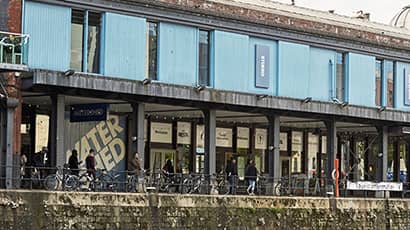
The Digital Cultures Research Centre (DCRC) is a loose-knit, collaborative and anti-disciplinary network of researchers distributed across UWE Bristol.
College of Arts, Technology and Environment
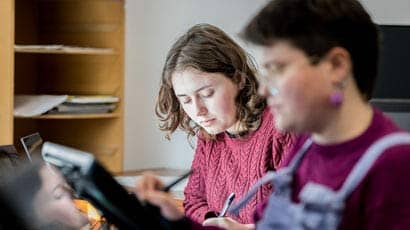
With over 12,000 students and 750 staff, our interdisciplinary approach to teaching, research and partnerships creates new opportunities for our students, our staff and the communities we serve.
Securing a green, resilient future
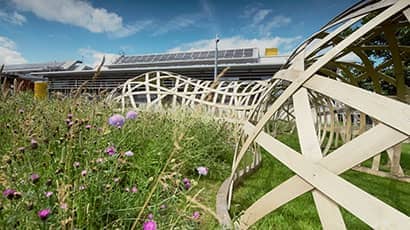
We're tackling global challenges by promoting social justice, empowering communities and protecting the environment, helping to make Britain a Clean Energy Superpower.

Research
Our active, collaborative research community of bold, original thinkers break boundaries, immerse themselves in the now and open the way to new futures.