
Immersive Arts: Building the future of creative technology
Harnessing creativity and technology at national scale
Immersive art is not a fringe experiment. It is one of the defining cultural forms of the 21st century – blending storytelling, digital innovation and audience participation in ways that challenge traditional boundaries between artist, technology and experience.
At UWE Bristol, we are not simply observing this shift. We are leading it.
Immersive Arts is a UWE Bristol-led national sector development programme supporting artists across the UK to experiment, expand and share immersive work. Backed by £3.6 million in grant funding and £6 million from Arts and Humanities Research Council (AHRC) and four national arts funders, the programme is building the infrastructure, research and creative confidence needed to shape the UK’s immersive future.
This is research in action – creative, collaborative and industry-facing.

From experimentation to ecosystem
Immersive Arts does more than fund projects. It strengthens an entire creative ecosystem.
In its first round alone, the programme received over 2,500 applications and supported 83 awardees across England, Scotland, Wales and Northern Ireland. Artists working across dance, theatre, music, visual arts, film, games, live art and sculpture have explored technologies including virtual and augmented reality, spatial sound, 360° film, motion capture, machine vision, AI and haptics.
The programme’s tiered funding structure – Explore (£5,000), Experiment (£20,000) and Expand (£50,000) – enables artists at different stages to test ideas, develop prototypes and significantly progress immersive projects. This laddered approach reduces risk while encouraging bold experimentation.
At its core, this is research into how creative practice, technology and audiences intersect and how new models of production and distribution can be built sustainably.
Research that shapes practice
Immersive arts sits at the intersection of creative practice and academic inquiry. Led by Associate Professor Verity McIntosh and colleagues within UWE Bristol’s Digital Cultures Research Centre, the programme embeds research directly into sector development.
Its research themes address the critical challenges facing immersive arts today:
- Artists and audience development
- Immersive tools and technologies
- Infrastructure and ecosystem design
This work goes beyond documentation. It generates actionable insight. Upcoming research outputs include toolkits and reports addressing environmental impact, access and inclusion by design, the ethics of integrating AI and immersive technologies, XR business models, and sector insight with investment and policy recommendations.
Together, these outputs position UWE Bristol not only as a funder or facilitator, but as a thought leader shaping how immersive work is made, shared and sustained.
Centring equity, diversity and inclusion
Immersive technologies can either reinforce barriers or dismantle them.
From the outset, Immersive Arts has centred equity, diversity and inclusion as a core principle. This is not an add-on; it informs funding decisions, programme design and research priorities.
By supporting artists across rural and urban locations throughout all four UK nations, and by embedding “access and inclusion by design” into its research agenda, the programme actively challenges the idea that immersive work belongs only to large institutions or tech-heavy urban hubs.
This approach aligns directly with UWE Bristol’s RISE commitment to inclusive innovation – ensuring that creativity and technology empower communities rather than exclude them.
Convening the arts sector
Leadership is also about convening. Immersive Arts’ flagship annual event – described by Owen Hopkins, Arts Council England’s Director of New Technologies and Innovation as a “significant event” emerging under its umbrella – has become a national meeting point for artists, technologists, producers and funders.
Panels, artworks, labs and conversations create space not just to showcase immersive projects, but to shape the future of the field collectively.
Alongside inspiration days, development labs and tailored support, the programme nurtures peer networks and cross-sector collaboration, reinforcing UWE Bristol’s role as a connector within the creative industries.
Immersive Arts and RISE
Immersive Arts exemplifies the RISE beacon Harnessing Creativity and Technology. It demonstrates:
- Research with purpose by embedding inquiry into real-world creative production.
- Innovation with impact by enabling artists to prototype, test and scale new work.
- Enterprise that fuels progress by exploring sustainable XR business models.
- Skills that empower by supporting artists to build technological confidence.
By combining funding, research, training and national convening power, UWE Bristol is shaping not just individual projects but the long-term resilience of the immersive arts sector.
What's next?
The programme continues to evolve, with new funding calls, sector reports, policy insights and a major final showcase planned through to 2027.
The question is no longer whether immersive arts will define the future of culture. The question is who will shape that future.
At UWE Bristol, we already are.
Contribution to the UN 2030 sustainable development goals
UWE Bristol is proud to align our research to the UN sustainable development goals. This research aligns with the following goals:


You may also be interested in
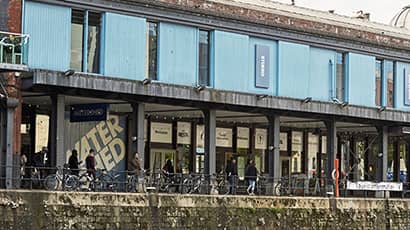
Digital Cultures Research Centre (DCRC)
The Digital Cultures Research Centre (DCRC) is a loose-knit, collaborative and anti-disciplinary network of researchers distributed across UWE Bristol.
College of Arts, Technology and Environment
With over 12,000 students and 750 staff, our interdisciplinary approach to teaching, research and partnerships creates new opportunities for our students, our staff and the communities we serve.
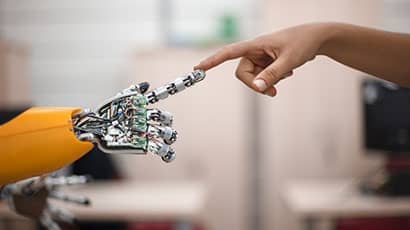
Harnessing creativity and technology
Harnessing creativity and technology to power economic growth, we're working with industry and the public sector to develop skills, talent, and innovation for the future economy.
Research
Our active, collaborative research community of bold, original thinkers break boundaries, immerse themselves in the now and open the way to new futures.