
Architecture Hands-On
Research through live community practice at UWE Bristol.
At UWE Bristol, architecture research does not stop at theory, drawings or studio critique. Through Hands-on-Bristol, the UWE Bristol's School of Architecture and Environment has established a bold, practice-led research model where design is tested in the real world, alongside communities, civic organisations and industry partners. This is architecture as action – a form of research that generates knowledge by doing.
Hands-on-Bristol positions live community architecture as a serious and rigorous mode of inquiry, one that challenges conventional boundaries between education, research and professional practice. It demonstrates how universities can act as civic institutions: embedded, responsive and accountable to place.
Image credit: Studio Kinnect – Cube for Co-creation

What is Hands-On Bristol?
Hands-on-Bristol is a long-running collaboration between School of Architecture and Environment, UWE Bristol and local, national and international communities. It operates as both a knowledge hub and a delivery platform, documenting over a decade of live projects led by staff and students.
The initiative is underpinned by a shared definition of live community architecture:
"A form of spatial agency which involves a community or not-for-profit organisation collaborating with architects and/or architecture students to co-create a brief, timescale, budget, product and process for mutual benefit, with the intention of making a positive impact."
Projects span feasibility studies, co-designed public spaces, temporary and permanent structures, exhibitions, internships, residencies and long-term knowledge-exchange partnerships. Each project responds to a specific context but collectively, they form a coherent research programme asking a bigger question:
How can live projects, as a form of knowledge generation, facilitate meaningful research and design collaborations between the academy and the community?
Live projects as research, not just teaching
A core contribution of Hands-on-Bristol is its reframing of live projects as research in their own right. Rather than treating community-engaged work as “extra-curricular” or purely pedagogic, the programme positions it as a method for producing new architectural knowledge.
Three interlinked research themes sit at the heart of this work:
- Re-thinking the relationship between education and practice
- Live architecture as a research methodology
- Re-defining the relationship between the academy and the wider community
Through these lenses, Hands-on-Bristol explores whether live projects can bridge the long-recognised gap between architectural education and professional practice -producing graduates who are not only technically skilled, but socially and ethically literate.
Students learn how architecture operates under real constraints: budgets, timescales, planning, procurement, community accountability and environmental responsibility. In parallel, staff generate insights into collaborative design processes, participatory ethics and the role of architects as facilitators rather than sole authors.
Knowledge that emerges from practice
Hands-on-Bristol demonstrates that architectural knowledge does not emerge solely from texts and precedents, but through situated, collective action in real-world contexts. Knowledge is generated through the process of negotiating briefs with community partners, translating lived experience into spatial proposals, and testing materials, construction methods and environmental responses in practice. Critical reflection is embedded throughout this work, particularly around questions of power, authorship and representation in design, ensuring that learning is both socially and ethically grounded.
This research is cumulative rather than episodic. In 2024, UWE Bristol researchers undertook a major retrospective study cataloguing twelve years of live project activity, capturing both quantitative reach and qualitative impact. The findings have been shared at national forums, shortlisted for education and social value awards, and selected as a case study within the Young Foundation’s National Civic Impact Research – positioning UWE Bristol at the forefront of evidence-based civic design research.
Local roots, global reach
While deeply embedded in Bristol and the West of England, Hands-on-Bristol also operates internationally. Long-term partnerships have supported live projects where UWE Bristol architecture students have worked alongside local organisations to design and build structures using locally sourced, low-impact materials.
A recent example saw Masters students collaborating in Entoto Park, Addis Ababa, delivering a bamboo pavilion as both an architectural intervention and a research project exploring material culture, labour, climate and place-based design knowledge. The project culminated in a public lecture and film, extending its impact beyond the site itself.
These projects reinforce UWE Bristol’s position as a global contributor to debates on sustainable construction, ethical international engagement and culturally grounded design practice.
Leading the future of architectural research
Hands-on-Bristol positions UWE Bristol as a national and international leader in hands-on architectural research. It challenges traditional hierarchies of knowledge, re-centres community expertise, and proves that research excellence can be grounded, collaborative and publicly accountable.
For researchers, it offers a robust model for practice-based inquiry. For students, it provides an education rooted in reality. For industry and communities, it demonstrates what is possible when universities commit to working with people, not just studying them.
Contribution to the UN 2030 sustainable development goals
UWE Bristol is proud to align our research to the UN sustainable development goals. This research aligns with the following goals:
You may also be interested in

Research in the College of Arts, Technology and Environment
The College of Arts, Technology and Environment (CATE) has a well-established and continuously developing research environment.
College of Arts, Technology and Environment
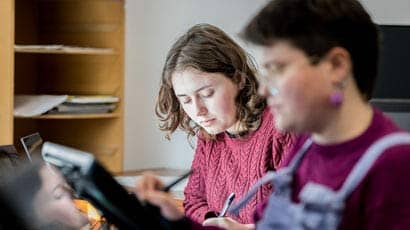
With over 12,000 students and 750 staff, our interdisciplinary approach to teaching, research and partnerships creates new opportunities for our students, our staff and the communities we serve.
Enriching culture, place and community
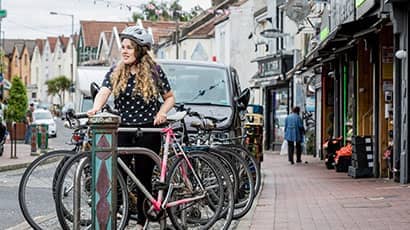
We collaborate with national policymakers, local authorities, educators and industry to improve public spaces, infrastructure, and communities.

Research
Our active, collaborative research community of bold, original thinkers break boundaries, immerse themselves in the now and open the way to new futures.