
UWE Bristol secures funding to develop computers made from proteins


The University of the West of England (UWE Bristol) has been awarded a £812,000 research grant from the Engineering and Physical Sciences Research Council (EPSRC), to investigate a radically different approach to computing: using networks of biological proteins instead of conventional silicon circuits.
The four-year research project, Computing with Actin Network, led by Professor Andrew Adamatzky at UWE Bristol’s Unconventional Computing Laboratory, will explore whether networks of actin filaments can be used to process information, perform logical operations and develop new types of computing devices
Actin is one of the most abundant proteins in living cells. It forms microscopic filaments that support cellular structure, movement and internal transport. These filaments can assemble into complex networks and conduct electrical and ionic signals. Researchers believe that these properties could be exploited to create computing systems at molecular and microscopic scales.
Professor Adamatzky said: “We are exploring the possibility of making computers from the same proteins that form the internal skeleton of living cells. Instead of manufacturing every component, we want to investigate whether networks of protein filaments can grow into structures capable of processing information. This is fundamental research, but it could open entirely new directions in computing technology.”
The project will investigate how actin networks can be grown, organised and controlled to perform computational tasks. Researchers will develop experimental prototypes of electronic components made from actin filaments, including resistors, capacitors and transistor-like devices. They will also explore whether these networks can implement logical circuits, store information, recognise patterns and perform analogue computations.
Professor Adamatzky added: “Unlike conventional computers, which rely on precisely manufactured semiconductor circuits, actin-based systems could exploit the natural ability of biological materials to self-assemble, reorganise and respond to their environment.”
The research builds on earlier theoretical studies of computation in actin networks and preliminary laboratory observations of electrical activity in actin filament assemblies. The new EPSRC funding will allow researchers to move from theoretical models towards experimental computing devices.
Potential long-term applications include biodegradable electronics, molecular-scale information processing, unconventional computing architectures and hybrid systems combining biological materials with conventional electronics. The project may also contribute to understanding how electrical signals and information are processed within the cytoskeleton of living cells.
The research will bring together expertise in unconventional computing, molecular biology, polymer chemistry, nanotechnology and electronic engineering. Its findings, experimental methods and prototype designs will be shared with the wider scientific community.
The project is funded by the Engineering and Physical Sciences Research Council (EPSRC), part of UK Research and Innovation (UKRI).
Professor Andrew Adamatzky’s new book Weirdware: Touchable Unconventional Computers, published by World Scientific, reveals how living organisms, chemical reactions and unusual materials can process information, solve problems and challenge our understanding of what a computer can be. The book takes readers into a world where computers are not necessarily built from silicon chips, electronic circuits or conventional software. Instead, they can emerge from slime moulds, fungal networks, crystals, chemical reactions, droplets and liquid metals.
Related news

06 November 2026
Health initiative for male sex workers led by UWE Bristol researcher wins prestigious award
A co-produced digital health initiative led by a UWE Bristol academic designed to improve access to HIV prevention, sexual health information and wellbeing support for male sex workers has been recognised with a prestigious award.

03 November 2026
Graduate wins ‘Green Oscar’ for sound production
A UWE Bristol graduate who discovered post-production sound while studying at the university, has won one of wildlife filmmaking’s most prestigious awards.
28 October 2026
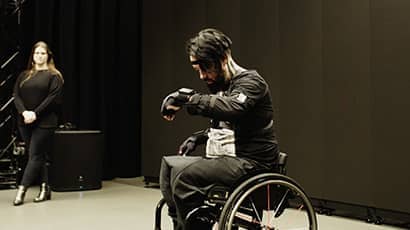
Technology used widely in entertainment and health sectors is failing disabled people, study finds
A major technology used widely across the entertainment and healthcare sectors is failing to serve disabled people, a new study led by UWE Bristol has revealed.

26 October 2026
UWE Bristol professor brings Cary Grant home to Bristol in celebration of the city's film heritage
Charlotte Crofts, Professor of Cinema Arts, will welcome audiences from across the UK to Bristol for the seventh edition of the Cary Comes Home Festival.
22 October 2026
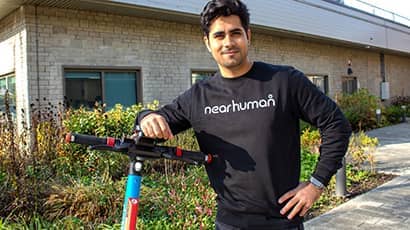
UWE Bristol graduate leads startup focused on improving e-scooter safety
A startup founded by a UWE Bristol graduate has secured £350,000 from investors to develop new technology to improve e-scooter safety.

09 October 2026
UWE Bristol Fine Art graduate wins prestigious painting prize
Charli-Ann Padilla’s painting was chosen from a shortlist of 12 undergraduate student artists from across the UK to win the Freelands Painting Prize.
08 October 2026
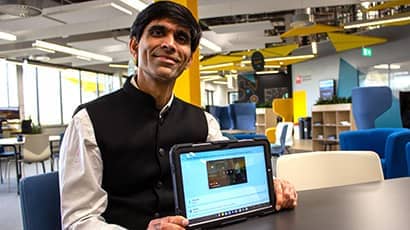
Innovative new app created to help stroke patients with rehabilitation
A UWE Bristol researcher led a project to develop an innovative new app to help patients recover after having a stroke.
14 September 2026
Immersive Arts announces £8.5m second phase funding
Immersive Arts has secured over £8.5 million to continue supporting UK artists working with immersive technologies until 2030.

11 September 2026
New book delivers decades of machine vision research into the hands of students, engineers and researchers
Practical Machine Vision: 2D, 3D and Deep Learning Systems for Real-World Applications is a new practical guide to machine vision that draws on almost three decades of research.
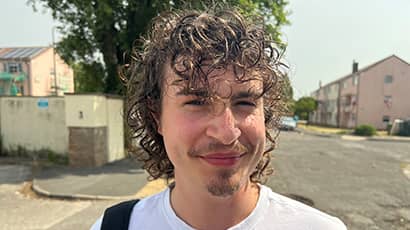
10 August 2026
Graduate photographer breathing life into Weston-super-Mare’s own identity
A graduate photographer from Weston-super-Mare has created a 'love letter' to his home town to shine a light on struggling coastal communities.
27 July 2026
North Wales to host major UK immersive arts event ‘The Big Thing’
Artists, producers and technologists will gather in Llandudno in September as a national event exploring the future of immersive arts heads to North Wales.
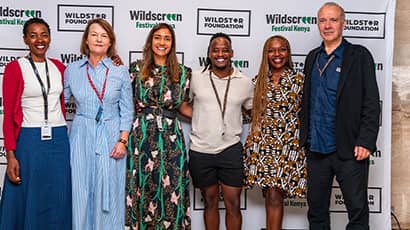
03 July 2026
UWE Bristol strengthens international wildlife filmmaking links at Wildscreen Festival Kenya
UWE Bristol played a key role at Wildscreen Festival, Kenya, bringing together established and aspiring filmmakers, educators, and industry professionals.
You may also be interested in

Media enquiries
Enquiries related to news releases and press and contacts for the media team.
Find an expert
Media contacts are invited to check out the vast range of subjects where UWE Bristol can offer up expert commentary.