
Microplastics under the microscope
Tackling invisible pollution
Microplastics aren’t just confined to oceans, they’re in the air we breathe. These particles, often shed from clothing and household materials, are small enough to enter our lungs. However, unlike microplastics in water and in our food, there is little research out there about microplastics in the air we breathe.
UWE Bristol’s research is changing that. We’re providing evidence-based insights that will inform environmental measurement, public health policy and consumer behaviour whilst co-creating methods and solutions with communities, empowering them to RISE with us.

Empowering communities to detect airborne microplastic
The Homes Under the Microscope project was part of citizen science initiative, looking at the presence of airborne microplastics in people's homes. Participants in Bristol and Bradford were equipped with low-cost microscopes and passive air samplers; they then collected and analysed airborne microplastics in their own homes. Using machine vision technology, participants were able to work with our researchers to characterise particles by size, shape, and colour, before we performed confirmatory analyses to identify fibre types.
This work was further developed through co-development with schools, in a project called Schools Under the Microscope, enabling children, teachers and families to learn about microplastics, sustainability and environment. Between July 2023 and June 2024, the project engaged 90 Year 6 pupils, three teachers and five parents, with teachers co-creating resources and children measuring airborne microfibres in classrooms.
Combined, these studies generate vital data, democratise science and put citizens at the heart of scientific discovery.
Setting the global benchmark for airborne microplastic monitoring
Not only is UWE Bristol leading locally, but it’s also shaping global standards. As Co-Investigator on a Pushing the Frontiers project, our researchers are helping to develop the first global standard for airborne microplastic monitoring. This ambitious initiative addresses a critical gap in environmental policy and regulation.
UWE Bristol is laying the foundation for international collaboration by harmonising data collection and analysis methods across borders and influencing policy. This work is a perfect example of RISE’s mission to secure a green, resilient future and drive systemic change.
The journey ahead
UWE Bristol continues to expand its Biospheric Microplastics Research Cluster, bringing together experts in air quality, policy, marine ecology, and public engagement. This interdisciplinary powerhouse is driving forward new methods, new partnerships, and new solutions.
From classrooms to policy rooms, from homes to global forums UWE Bristol is leading the way.
Contribution to the UN 2030 sustainable development goals
UWE Bristol is proud to align our research to the UN sustainable development goals. This research aligns with the following goals:
You may also be interested in

Science Communication Unit (SCU)
The SCU is internationally renowned for its diverse and innovative activities, designed to engage the public with science.
College of Arts, Technology and Environment
With over 12,000 students and 750 staff, our interdisciplinary approach to teaching, research and partnerships creates new opportunities for our students, our staff and the communities we serve.
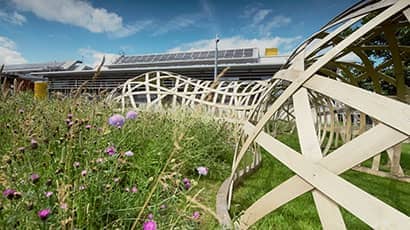
Securing a green, resilient future
We're tackling global challenges by promoting social justice, empowering communities and protecting the environment, helping to make Britain a Clean Energy Superpower.

Research
Our active, collaborative research community of bold, original thinkers break boundaries, immerse themselves in the now and open the way to new futures.