
Food security and vulnerability in Bristol
Author: Dr Lotta Takala-Greenish, Associate Professor in Economics
As a development and political economist at UWE Bristol, my research looks into a critical gap in the UK’s social infrastructure: how we support people facing food insecurity. Focusing on Bristol as a case study, I'm asking what a systematic, government-backed response to food vulnerability could look like, especially in times of crisis.
During the COVID-19 pandemic, charities and NGOs in Bristol mobilised quickly to feed those most at risk, from homeless individuals to those leaving care or unable to shop due to clinical vulnerability. But the response, while heroic, was ad hoc and grassroots. The problem is, there isn’t a systematic support structure, so if someone leaves an organisation, we risk losing institutional memory.
Recognising this need, I have worked to co-create a Disaster Recovery Management Plan with organisations like Feeding Bristol and Bristol Food Network. We’ve designed it as a replicable model to help ensure no one falls through the gaps again.

"Food access is a human right. And it’s universal. Everybody needs access to food. We want to make that food available and accessible in ways that are not shaped solely around prices or money."
Dr Lotta Takala-Greenish Associate Professor in Economics
The value of volunteer infrastructure
Societies don’t just run on money. These services are being delivered on shoestring budgets by volunteers and they’re central to how our economy actually works. One of the most surprising findings in my research is that even in one of the world’s wealthiest economies, access to food isn’t guaranteed. It took something like COVID to reveal a need that was always there, but we don’t have a national system in place to ensure access to food or identify the needs of those outside the typical market system.
The thing I like about the work I do is that it challenges traditional economic thinking. My work shows that essential services like food access can’t rely solely on price-based systems. Vulnerable groups often sit outside these systems entirely, and unless their needs are built into infrastructure, their support remains uncertain and fragile. I get to do something about that and change the way society views these essential systems.
A scalable model for crisis resilience
This is just the beginning. We’re starting with food, but the same questions apply to energy, water and other essential services. By working directly with frontline charities, my research takes a collaborative, pluralist approach, centring the experience of those already doing the work and learning from them about what works and what needs to change. We’re not just collecting data; we’re co-creating the plan with them. That’s critical to building something useful.
The ultimate goal is to test and refine the food disaster recovery plan in Bristol and then scale it both to other regions and to other essential services. The model will also explore how to address ongoing vulnerabilities, not just those triggered by a crisis.
This work doesn’t just expose systemic gaps; it offers a practical blueprint to fix them. By recognising food as a right and embedding it into a planned, national system of support, this research stands to reshape how we think about resilience, inequality and care.
Contribution to the UN 2030 sustainable development goals
UWE Bristol is proud to align our research to the UN sustainable development goals. This research aligns with the following goals:
You may also be interested in
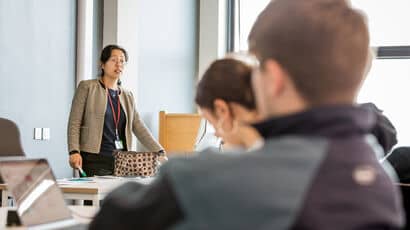
College of Business and Law
The College of Business and Law comprises Bristol Business School and Bristol Law School who provide a range of undergraduate, postgraduate, higher research and professional courses.
Bristol Research in Economics (BRE)
Find out more about Bristol Research in Economics interdisciplinary research activities.

Research
Our active, collaborative research community of bold, original thinkers break boundaries, immerse themselves in the now and open the way to new futures.
Enriching culture, place and community
We collaborate with national policymakers, local authorities, educators and industry to improve public spaces, infrastructure, and communities.