
Co-creation of digital tools for public authorities and citizens
Harnessing creativity and technology to shape resilient, people-centred digital futures.
Across Europe, public authorities and communities are grappling with complex decisions about climate resilience, urban development, public health and liveability. These decisions rely on data, yet the real challenge is rarely technological. It lies in translating diverse, often conflicting needs into digital tools that work for the people who use them.
At UWE Bristol, researchers in Computer Science have spent more than a decade developing a collaborative approach to designing digital tools for public authorities, health providers and citizens. This work positions UWE as a leader in co-creation, human-centred software engineering, and applied AI for civic decision-making. It also offers a blueprint for how universities can drive digital transformation.

CoReS method
The Collaborative Requirements Engineering and Stakeholder Engagement (CoReS) method, developed and refined at UWE Bristol, underpins multiple high-profile European projects, has shaped tools adopted by local governments across the continent, and continues to evolve in response to real-world challenges. From city planning and climate reporting to community conversations about road safety, UWE Bristol’s research is enabling smarter, more inclusive systems for thousands of people.
Building with people, not just for them
The longstanding difficulty in public-sector innovation is not a lack of ideas – it is the lack of mechanisms for capturing what people actually need. Public authorities, planners, citizens and technical providers operate with different vocabularies, priorities and expectations, making it difficult to design tools that work.
The CoReS method was created to address this gap. Rather than treating stakeholders as consultees, CoReS places them at the centre of the software development process. Researchers combine groundwork, structured workshops and iterative validation to translate broad civic challenges into precise, technical requirements.
This approach has been applied and stress-tested across a series of major European programmes and now two Horizon Europe flagship initiatives: GREENGAGE and CLMS-Cities. Each project has strengthened the method, expanded its reach, and generated new insight into how co-designed tools can unlock efficiency, trust and clarity for public authorities.
CoReS is complemented by the CIM evaluation method (Criteria, Indicators and Metrics), another UWE Bristol innovation that enables cities to rigorously assess usability, performance and impact. Together, these methods create an ecosystem for participatory development. They ensure engagement is not symbolic but substantive, and they give public authorities the confidence that their digital systems genuinely meet the needs of citizens and service providers.
Digital tools shaping cities and decision-makers
UWE Bristol’s co-creation research has underpinned several major tools now supporting decision-making across Europe. Through projects including UrbanAPI, DECUMANUS and Smarticipate, city planners in Vienna, Bologna, Vitoria-Gasteiz, Hamburg, London and Rome were able to test and refine decision-support systems ranging from visualisation to participatory modelling. These tools improved transparency for citizens, strengthened cross-departmental collaboration and helped reduce development time for technology providers – demonstrating that co-created solutions are not only more democratic but also more efficient.
Building on earlier satellite-enabled urban modelling developed through FP7 DECUMANUS, the CURE project extended this work into the climate domain. UWE Bristol's researchers co-designed new services that translate satellite data into accessible tools for cities monitoring urban heat, air quality and greenhouse gas emissions. One outcome, the CO₂ monitoring service, has since been taken forward into the Horizon Europe CLMS-Cities programme. This continuity demonstrates a clear impact pathway: early co-creation and rigorous requirements engineering enabled solutions to evolve, commercialise and support a broader group of mission-driven cities committed to achieving climate neutrality.
In CLMS-Cities, UWE Bristol now leads stakeholder engagement for a consortium working to produce greenhouse gas emission inventories for ten plus European Mission Cities with the aim to scale it to all Mission Cities. Many of these cities have signed climate contracts and are legally required to report accurate emissions data every six months. UWE Bristol’s role is to bring cities, policymakers, data specialists and environmental agencies into a shared space where technical requirements are defined collaboratively rather than imposed.
Co-creation at the heart of community decision-making
While much of UWE Bristol’s impact has been at the city and peri-urban level, GREENGAGE demonstrates the power of co-creation at the scale of neighbourhood life. Working with Bristol City Council, Knowle West Media Centre (KWMC) and Praxis Research, UWE Bristol researchers are helping communities explore how environmental changes, such as liveable neighbourhood schemes, affect every-day experiences.
The Conversation Station, a GREENGAGE innovation by KWMC – a mobile voice recording setup, allows residents to speak freely about issues such as public spaces, transport, accessibility, safety and wellbeing. UWE Bristol’s contribution sits in the analytical pipeline. Researchers anonymise and transcribe audio data, apply large-language-model-based thematic and sentiment analysis, and transform these conversations into clear, visual dashboards.
For many residents, this is the first time they have seen their own words represented as meaningful community insight rather than buried within a consultation form. For public authorities, the dashboards offer something rare: transparent, fine-grained evidence about what people feel; not just what they tick on a survey. Early feedback has been striking. Citizens described the dashboards as empowering, while local forums are already incorporating the findings into discussions with Bristol City Council about the future of East Bristol Liveable Neighbourhoods.
The GREENGAGE example captures the essence of UWE Bristol’s philosophy. Co-creation is not simply about tools; it is about relationships, shared understanding and the creation of trustworthy spaces for dialogue between people and institutions. It shows how AI-enhanced data analysis can support, not replace, community voice.
Shaping digital futures with and for communities
As public authorities face growing pressure to make decisions that are transparent, evidence-driven and socially legitimate, the need for co-created digital tools has never been greater. UWE Bristol is meeting that need with bold research, sophisticated technological development and a commitment to placing people at the centre of innovation.
From satellite-driven climate tools to street-level community conversations, UWE Bristol’s work is demonstrating that when digital systems are built collaboratively, they do more than solve technical problems; they strengthen democracy, accelerate climate action and give citizens a meaningful role in shaping the places they live.
Contribution to the UN 2030 sustainable development goals
UWE Bristol is proud to align our research to the UN sustainable development goals. This research aligns with the following goals:

You may also be interested in
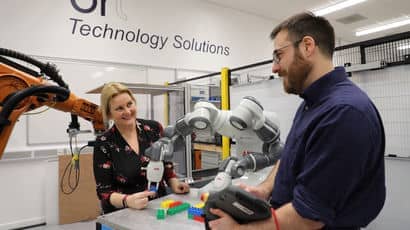
Research in the College of Arts, Technology and Environment
The College of Arts, Technology and Environment (CATE) has a well-established and continuously developing research environment.
College of Arts, Technology and Environment
With over 12,000 students and 750 staff, our interdisciplinary approach to teaching, research and partnerships creates new opportunities for our students, our staff and the communities we serve.

Innovation
We’re passionate about taking ideas into solutions that positively impact people, communities and our planet.
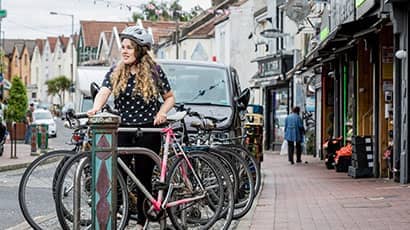
Enriching culture, place and community
We collaborate with national policymakers, local authorities, educators and industry to improve public spaces, infrastructure, and communities.