
Opinion: UWE Bristol partnership with Frenchay retirement community shares knowledge across generations


Universities are often seen as places for young people, learning and innovation. But they also have a vital role in acting as civic and anchor institutions, working in partnership to strengthen, the communities around them. This is especially true of retirement communities. At a time when society faces challenges ranging from loneliness and social isolation, ageing populations and growing divides between generations, partnerships between universities and retirement communities can create opportunities for mutual learning, knowledge exchange and social impact that benefit everyone involved.
One example of this can be found in Frenchay, where a partnership between the UWE Bristol and Extra Care's Stoke Gifford Retirement Village is bringing together students, academics and residents in ways that are enriching lives on both sides.
The idea for the partnership came from my own personal experience. When my father retired, I watched him struggle with the transition from working life. Like many people, work had provided him with a sense of purpose, routine and social connection. Losing that had a significant impact on his wellbeing and mental health.
Knowing that this could well be the case for other older adults, I wanted to find out whether residents at Extra Care would be interested in building closer links with UWE Bristol. I attended an event alongside Filton & Bradley Stoke MP Claire Hazelgrove where discussions were held on how to strengthen community engagement between Extra Care and local organisations. When I asked residents whether they might be interested in becoming more involved with UWE Bristol, I was met with overwhelming positivity.

One of the first activities involved introducing residents to UWE Bristol’s community-focused projects. Many were surprised to learn that initiatives such as the Repair Café, Library of Things, Eye Clinic and facilities across the Frenchay campus were open to them. Residents were invited onto campus to meet students, explore these opportunities and attend the final Repair Café of the summer, helping to make the university's facilities, knowledge and expertise more accessible to the local community.
At Extra Care’s recent Wellbeing Fair, staff and students from the Bristol Robotics Laboratory (BRL), School of Computing and Creative Technologies, School of Health and Social Wellbeing and School of Applied Sciences introduced residents to innovations in robotics, virtual reality, rehabilitation and assistive technologies through a series of talks and hands-on experiences. The event showcased pioneering work from across the university, including ‘Pepper’ an assistive robot and innovative exercise technology developed by Mic Palmer, Director of Partnerships at the School of Computing and Creative Technologies. The School of Health and Social Wellbeing’s Virtual Learning Van provided a VR experience that lets users explore a life-size 3D model of the human heart, this proved particularly popular, demonstrating that curiosity and a willingness to learn do not lessen with age.
Perhaps most importantly, the partnership has shown that residents want to be active contributors to research, not just passive recipients of it. By working directly with academics and students, they provide valuable real-world insight that helps shape projects through co-creation and knowledge exchange. In turn, students gain hands-on experience, develop professional and interpersonal skills, and deepen their understanding of healthy ageing and community care through meaningful engagement with older generations. A good example of this is Mic Palmer's assistive robot project, where residents worked alongside PhD students to explore and refine the robot Pepper, providing feedback that helped improve its accessibility and usability.
The partnership is still in its early stages, but there is already enthusiasm for future projects. Opportunities are being explored with environmental science students around citizen science initiatives, wildlife walks and community gardening. Residents themselves are also keen to continue exploring UWE Bristol, including a planned visit to the Bristol Robotics Laboratory. Together, these opportunities demonstrate how a single community partnership can develop into a broader platform for education, research, knowledge exchange and student experience.
At its heart, this partnership is about something simple: bringing people together. It shows that universities can be much more than places of education. They can be anchor institutions within their communities, helping to tackle loneliness, create connections and ensure that knowledge is shared across generations. The partnership reflects UWE Bristol's wider civic and regional commitment to working collaboratively with communities and partners, using the University's people, knowledge and resources to create positive social impact and respond to shared challenges, including healthy ageing and digital exclusion.
Dr. Bahareh Vahabi is an Associate Professor in Knowledge Exchange
Related news

09 October 2026
UWE Bristol Fine Art graduate wins prestigious painting prize
Charli-Ann Padilla’s painting was chosen from a shortlist of 12 undergraduate student artists from across the UK to win the Freelands Painting Prize.
09 October 2026
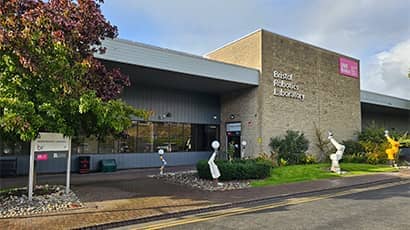
New £9.8 million robotics hub to benefit South West businesses
A new £9.8 million hub led by the Bristol Robotics Laboratory will help organisations across the region realise the productivity, resilience, and growth benefits of robotics and automation.
08 October 2026
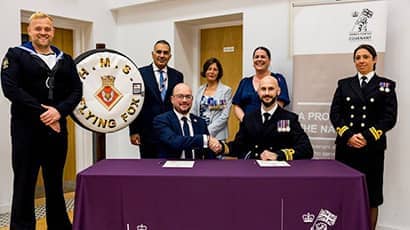
UWE Bristol signs Armed Forces Covenant
UWE Bristol has signed the Armed Forces Covenant (AFC) in recognition of the challenges faced by service and ex-service personnel and their families.
08 October 2026
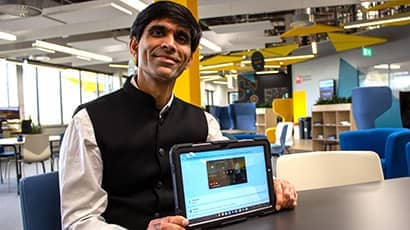
Innovative new app created to help stroke patients with rehabilitation
A UWE Bristol researcher led a project to develop an innovative new app to help patients recover after having a stroke.

29 September 2026
Findings from study suggest Government guidance on smartphones in schools may not go far enough
A Government decision to leave interpretation of new smartphone policy guidance to individual schools has been questioned by new research from UWE Bristol academics.

24 September 2026
Professor receives international honour during commemorative event for historical Ethiopian diplomat
A UWE Bristol professor whose research has highlighted Bath's connections with Ethiopia's history has received an international honour recognising his work.

17 September 2026
UWE Bristol leads £2 million project helping government departments deliver better economic data
UWE Bristol researchers will lead a team providing academic expertise to key government departments as they work to deliver better economic data.

14 September 2026
Immersive Arts announces £8.5m second phase funding
Immersive Arts has secured over £8.5 million to continue supporting UK artists working with immersive technologies until 2030.

11 September 2026
New book delivers decades of machine vision research into the hands of students, engineers and researchers
Practical Machine Vision: 2D, 3D and Deep Learning Systems for Real-World Applications is a new practical guide to machine vision that draws on almost three decades of research.

07 September 2026
UWE Bristol wins Heroes Award for Anti-Racism Strategy
UWE Bristol’s Equity, Diversity and Inclusivity (EDI) team has been recognised with a prestigious prize at the University Alliance Awards 2026.

04 September 2026
Most money laundering arrests involve people under the age of 30
A new study has highlighted gaps and inconsistencies in law enforcement of money laundering offences in England and Wales.

19 August 2026
Researcher to lead £455k body image project supporting people with head and neck cancer
A UWE Bristol researcher has been awarded almost half a million pounds to lead a project to develop a body image programme for people living with and beyond head and neck cancer.
You may also be interested in
Find an expert
Media contacts are invited to check out the vast range of subjects where UWE Bristol can offer up expert commentary.

Media enquiries
Enquiries related to news releases and press and contacts for the media team.

Our partnerships
Our partnerships with industry-leading organisations and businesses across the globe are what keep our courses relevant and our graduates in demand.