
Non-invasive electronic nose
Developing a non-invasive electronic nose to detect diseases quickly and save lives.
Author: Dr Saliha Saad, Associate Professor in Biomedical Sciences
I have a medical background with expertise in oral microbiology.
My work is mainly around oral biofilms. Biofilms are layers of bacterial communities that accumulate on many surfaces including the teeth, gums, and the tongue.
We know that the biofilm on the tongue can cause oral malodour also called bad breath. This condition which is of microbial aetiology is not life-threatening however, people who suffer from it can have, a complicated life. They can get isolated. It really affects their quality of life.

Tackling bad breath, increasing confidence
Bad breath is a very complex issue; however, it is well accepted that the volatile compounds produced by bacterial metabolism on the tongue are responsible for oral malodour.
I have been collaborating with many large companies in this area, including GSK, Procter & Gamble, Johnson & Johnson, Philips, Colgate-Palmolive to develop and test antimicrobial formulations and tools that can control this condition by reducing the number of microbes and the volatile compounds they produce.
Sniffing out disease
My work in this area also led to something very important. I am now exploring the link between the oral microbiome and systemic diseases, like diabetes. We know that there is a strong link between gum disease and diabetic foot ulcers. In collaboration with Aryballe, we want to be able to detect early stage of diabetic foot ulcers using electronic nose NeOse that ‘sniffs’ the mouth and the foot.
This means that we don’t have to swab the infected area. Taking a swab can be intrusive and labour intensive. It takes time to get results back too. So, we can speed this up and act to help the patient quicker and prevent severe complications like gangrene which often requires toe or limb amputation.
Early detection saves lives
The mouth is accessible and sampling mouth air is non-invasive. If we can detect disease early, we can reduce the burden on the NHS. We can save time, money and, importantly, save lives.
Contribution to the UN 2030 sustainable development goals
UWE Bristol is proud to align our research to the UN sustainable development goals. This research aligns with the following goals:
You may also be interested in

College of Health, Science and Society
The College of Health, Science and Society is a large, diverse and dynamic part of the University, bringing together experts from Health and Social Wellbeing, Applied Sciences, Education and Social Sciences.
Centre for Biomedical Research (CBR)
World-class research in the fields of biomedicine, plant science, bio-sensing technology and environmental science.
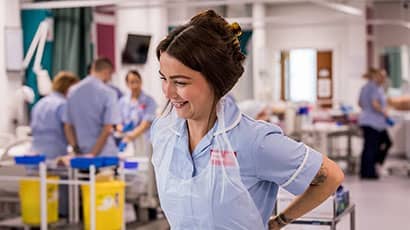
Shaping integrated healthcare
Driving innovation in health and social care education, workforce and technology to create a system that prioritises prevention, community-based care and digital transformation.
Research
Our active, collaborative research community of bold, original thinkers break boundaries, immerse themselves in the now and open the way to new futures.