
Reshaping climate education for every child
How UWE Bristol is crafting a sustainable future through climate education.
De-bordering education for climate action
The climate crisis requires action, hope, and the kind of deep, transformative learning that empowers everyone to imagine and build sustainable futures. Yet the practicalities of doing this, specifically climate education can remain abstract, anxiety-inducing, and inaccessible.
We are changing this. Through eco-craftivism, a participatory and inclusive approach to teaching that uses creative making to build what researchers call "de-bordered solidarities": connections between people, planet, and the material world around us.
This goes beyond teaching children about recycling. It reimagines how young learners understand their relationship with the environment, their communities, and their own agency to create green, sustainable and resilient futures.

Turning anxiety into agency: The EPICC Project
The Education in Primary Schools: Climate and Craft (EPICC) project worked with 120 children aged eight to nine across two Bristol schools, using craft-making workshops that transformed copper wire, cardboard, and socks into bracelets, puzzles, and puppets to empower the children to reflect on their relationship with the world around them. But the real empowerment came when children realised their power to create change.
The research breaks new ground by showing how caring about objects and understanding their origins and value can transform how children think about sustainability. The team calls this "solidarity with things," recognising that our relationship with items we make and use shapes both social justice and environmental futures.
This proved transformative in practice. As pupils traced the journeys of materials, they began connecting the dots between their choices and bigger environmental issues like deforestation and extinction. Pupils discovered that "we can still make nice stuff out of" recycled materials, challenging throwaway culture through mind set change and building healthier, more sustainable relationships with the things around them.
Before the workshops, pupils expressed worry and helplessness. Through these workshops exploring hands-on eco-craftivism, these perspectives shifted dramatically.
"I'm worried... there will be no more trees and there will be no more oxygen....not enough is happening... not many people are trying to help."
"Before the workshop, I was feeling like I couldn't do anything about climate change because I always heard things like, 'not only one person can change climate change', but then I realised that just you helping can actually make a difference."
From Bristol classrooms to national frameworks
The research is now actively shaping practice across multiple fronts, working towards green, sustainable and resilient futures through education.
The team is currently bidding for ESRC funding to scale up this work through a longitudinal evaluation of Climate and Sustainability Action Plans in schools across England. This will provide crucial evidence on what becomes possible in climate education at scale.
This project recognises that climate education must be accessible to all learners and have piloted adaptations for special educational needs settings and are now partnering with organisations across England to evaluate and improve provision for Special Educational Needs (SEN) learners. Historically this has been an under supported population in sustainability education research and we’re changing that. The impact is already visible in practice: workshops run by Global Goals Centre are now directly informed by EPICC's research, ensuring that both content and practice reflect evidence-based best protocol that foster hope, agency, and genuine understanding in young people navigating the climate crisis.
From local classrooms to national policy frameworks, UWE Bristol is demonstrating that climate education doesn't have to choose between honesty and hope. Through eco-craftivism, children learn to see themselves not as passive victims of environmental crisis but as creative agents in a society working towards change. This is education that enriches culture, place, and community. This is research that empowers those who will inherit tomorrow to shape it with creativity, hope, and collective action.
Contribution to the UN 2030 sustainable development goals
UWE Bristol is proud to align our research to the UN sustainable development goals. This research aligns with the following goals:
You may also be interested in
Education and Childhood Research Group (ECRG)
Information about the Education and Childhood Research Group (ECRG) based at UWE Bristol.

College of Health, Science and Society
The College of Health, Science and Society is a large, diverse and dynamic part of the University, bringing together experts from Health and Social Wellbeing, Applied Sciences, Education and Social Sciences.
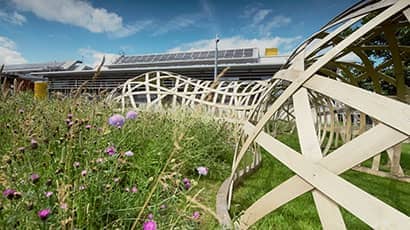
Securing a green, resilient future
We're tackling global challenges by promoting social justice, empowering communities and protecting the environment, helping to make Britain a Clean Energy Superpower.
Skills
We’re determined to ensure that individuals, regardless of their background or career stage, can acquire the skills to adapt and remain competitive in the job market.