
Universities West: The West of England cannot prosper while young people are left behind


In his role as Chair of Universities West, Professor Sir Steve West, Vice-Chancellor of UWE Bristol, calls for a shared regional commitment to collaboration and partnership to create clear pathways to education and employment.
A young person growing up in the West of England must be able to see a future for themselves here. They must understand the opportunities available, know how to reach them and have someone to turn to when the route becomes difficult.
That must be a basic expectation and priority of a successful region. It must also be a central test of our economic ambitions. What does prosperity mean if young people can grow up close to opportunity yet struggle to find a way into it?
As Chair of Universities West, I believe our universities have a shared responsibility to help answer that question. We can achieve far more by working together, alongside colleges, schools, employers and local government, than by pursuing separate institutional ambitions. Now is the time to step-up and lead through collaboration and partnership.
Youth participation belongs at the heart of economic strategy
The national picture demands attention. The Office for National Statistics estimates that 981,000 young people aged 16 to 24 were not in education, employment or training in April to June 2026. That represents 13% of this age group across the UK. These are estimates, and quarterly movements require care, but the scale of the challenge is clear.
Behind the acronym “NEET” are real young people with different circumstances and ambitions. Some need help to rebuild confidence. Others face barriers linked to health, caring responsibilities or the cost of participation. Some have lost their way between one stage of education and the next. All have potential to thrive and succeed with the right support.
We must resist any suggestion that this is simply a problem of low aspiration. Ambition needs somewhere to go. Young people need credible opportunities and practical support to reach them.
For the West of England, this is an economic imperative as well as a social responsibility. Our plans for growth must connect the skills employers need with the talent in our communities. Leaving young people outside education and employment diminishes their prospects and the region’s capacity to prosper.
Universities must see this challenge as part of our responsibility, including when the right next step for a young person lies outside higher education.
Collaboration must follow the learner
Universities West brings together Bath Spa University, the University of Bath, the University of Bristol and UWE Bristol. Its launch alongside Colleges West creates an opportunity to organise our collective contribution around the needs of the region. How we work with schools, businesses, public sector bodies, charities and importantly communities to join-up and deliver will shape out future.
Our colleagues in Colleges West have made a compelling case for a coherent regional skills system. Their recent paper argues that devolution should help partners shape better outcomes for learners and employers, rather than simply move the administration of separate budgets.
Higher education must join forces and help turn that ambition into practice.
A young person’s journey does not follow the boundaries between institutions or funding programmes. They may move from school to college, into an apprenticeship, then return to higher-level study later in life. They may need to change direction. Our arrangements must make those transitions easier. They must be seamless and transparent.
That means protecting learner choice while making routes and pathways through education more understandable. It means treating technical and academic pathways with equal seriousness. It also means asking a harder question of ourselves: are we helping someone find the right opportunity, even when it leads them to another institution?
For Universities West, that is an important test of collective leadership. Placing the young person at the centre of our offer.
Future Quest shows what sustained partnership can achieve
We already have experience on which to build.
Future Quest, the Uni Connect partnership serving Bristol and South Gloucestershire, predates Universities West. Its work offers a practical example of universities, colleges and community partners acting together to widen opportunity.
Since 2017, Future Quest reports reaching more than 40,000 students across 86 schools and colleges, with over 90,000 interactions. That distinction matters. Sustained engagement gives young people repeated opportunities to ask questions, explore choices and develop confidence about their future.
The progression evidence is encouraging. Our latest reporting records a higher education progression rate of 38% among Future Quest target students, compared with a national rate of 31.7% for young people from similar backgrounds. This comparison does not, by itself, establish how much of the difference the programme caused. It nevertheless gives us a strong reason to examine what works and sustain effective support.
There is also evidence of improved understanding. South Bristol Youth, a Future Quest delivery partner, reports that 94% of participants said the experience helped them understand the higher education opportunities available.
These findings matter because an opportunity only becomes useful when a young person can understand it and imagine themselves taking it.
We must be precise about what this evidence tells us. Higher education progression figures do not demonstrate that Future Quest has reduced the regional NEET rate. They do show the value of a collaborative approach to helping young people navigate their futures. We must apply that learning to a wider regional effort that supports participation and intervenes before young people lose contact with education or work.

A shared ambition for regional prosperity
The next step must be a shared regional commitment to participation and progression, developed with the young people it aims to serve.
Universities West and Colleges West must work with the West of England Combined Authority, schools and employers to identify where young people encounter barriers, where support falls away and where partners can act together.
We must begin with the transitions. Leaving school, completing college or changing course can bring uncertainty. A referral must lead to a named person and a clear next step. Young people must not have to repeatedly explain their circumstances to organisations that could coordinate their support.
We must also connect outreach more deliberately with employment. Employers can help young people understand what work involves and offer meaningful experience. Universities can contribute subject expertise and open up specialist facilities. Colleges bring essential expertise in technical education and progression. Together, we can make the relationship between learning and a future career more tangible.
This ambition reaches beyond the supply of skills. Universities must bring their research and business partnerships into the same conversation, helping employers innovate and create the opportunities into which local people can progress. A regional prosperity strategy needs to connect the development of people with the development of its economy.
Funding and accountability must reinforce that approach. Sustained relationships require continuity. We must make the case for longer-term support where the evidence justifies it, while judging success through outcomes that matter to learners.
How many young people remain engaged? How many make a successful transition? Who secures sustained employment or returns to learning? Where do inequalities persist?
Answering those questions together would give collaboration a clear purpose and make our collective contribution more accountable.
The responsibility we share
Universities will continue to have distinct strengths and ambitions. Those differences can benefit the region when we make them easier for learners and partners to access.
Universities West gives us a forum through which to do that. Future Quest and other initiatives like IntoUniversity provide experience we can learn from. Colleges West are developing a clear invitation to think across the whole education and skills system.
We must respond with a willingness to share responsibility for what happens between our institutions, as well as within them.
I would like to see us agree an initial programme of joint work focused on the transitions where young people face the greatest risk of losing their way, backed by shared evidence and a clear account of what each partner can contribute.
Our ambition must be a West of England where more young people can build a future, and where their talents help shape the region’s prosperity. Working together gives us a better chance of making that ambition real.
Related news

07 September 2026
UWE Bristol wins Heroes Award for Anti-Racism Strategy
UWE Bristol’s Equity, Diversity and Inclusivity (EDI) team has been recognised with a prestigious prize at the University Alliance Awards 2026.

11 June 2026
Research study identifies best ways to encourage weaker readers to take up reading for pleasure
Young children who struggle with reading would be more inclined to read for pleasure if they were offered books that matched their interests, a UWE Bristol study has found.
13 April 2026
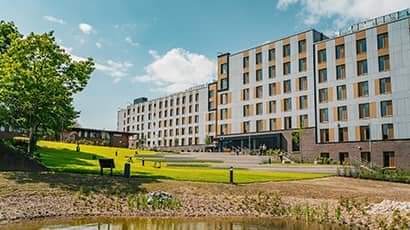
New report reveals UWE Bristol contributes over half a billion pounds to the West of England economy
A newly released report by Oxford Economics shares UWE Bristol's economic impact in the West of England and nationally.

09 April 2026
Two decades strong: building on a 20-year partnership to grow the region’s future workforce
Celebrating a 20 year partnership with City of Bristol College, Professor Marc Griffiths, Pro Vice-Chancellor for Regional Partnerships, Engagement and Innovation, looks ahead to strengthening the university's collaboration with the college to provide skills and learning opportunities that will drive economic prosperity.
25 November 2025
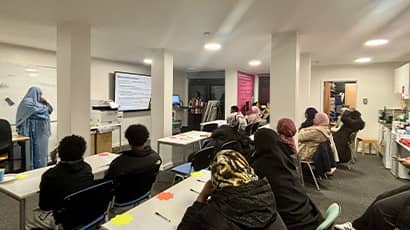
New community initiative launches to support parents in their child’s education pathway
A new community initiative supporting parents and carers to become champions for their children’s futures launched this month in Bristol.

19 March 2025
Professor plays key role in formation of Europe’s first conference for minoritised life scientists
A professor from UWE Bristol has played a leading part in organising Europe’s first conference supporting scientists from marginalised and underrepresented backgrounds.

07 March 2025
UWE Bristol and Ashton Park School transform urban landscape near university campus
Students bring creativity and a splash of colour to a well-used city underpass by painting a new mural celebrating diversity and inclusivity.

03 February 2025
Exhibition celebrates inaugural year of students’ creative agency
Students from UWE Bristol’s New Wave Creative Agency will showcase their work at an exhibition at Arnolfini from 8 February.
12 November 2024
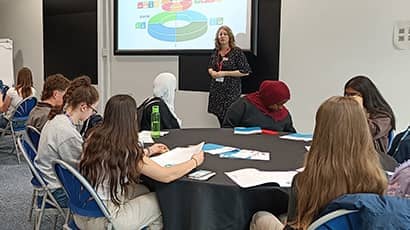
UWE Bristol to help inspire next generation of young people into green careers
UWE Bristol will play a key role in a new programme to educate more than 10,000 young people in the West of England about green skills and help them explore eco-friendly careers.

17 September 2024
Repair Café returns to UWE Bristol’s School of Engineering
UWE Bristol’s Repair Café returns this autumn with a special ‘repairs skills day’ on 25 September, ahead of the café reopening monthly from 9 October.

29 July 2024
Student who dedicated his time at university to helping disabled people graduates
A student who has dedicated his time at UWE Bristol to helping people with disabilities has graduated.
16 July 2024
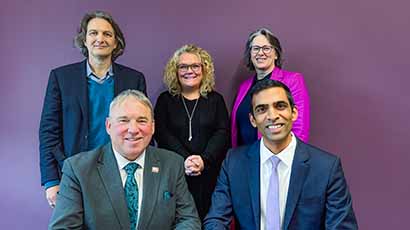
UWE Bristol launches major new suite of online degrees and expands partnership with Skilled Education
UWE Bristol is launching a major new suite of online degrees. In partnership with global experts in online higher education, Skilled Education, students can study Master’s degrees in Data Science, Education Leadership and Human Resource Management entirely online.